Adil Najam
 Government sources in Pakistan have just announced that Nawab Akbar Bugti, chief of the Bugti tribe, veteran politician, and senior Baluchistan leader, has been killed in a shootout between “tribal militants and government forces” in Balochistan.
This is very sad and disturbing news that cannot bode well for anyone. While details are still coming in, BBC reports:
The battle near his mountain hideout in south-west Pakistan also caused heavy casualties on both sides, reports say. More than 20 soldiers and at least 30 rebels died, officials say. The octogenarian has been at the head of a tribal campaign to win political autonomy and a greater share of revenue from Balochistan’s gas reserves. “It is confirmed, Nawab Bugti has been killed in an operation,” Information Minister Mohammad Ali Durrani told Reuters news agency. The battle reportedly took place near the town of Dera Bugti, not far from Mr Bugti’s hideout.
According to a newsflash posted on The News website:
Jamhori Watan Party (JWP) chief Nawab Akbar Khan Bugti was killed in a historical operation carried out by security forces in Kohlu and Murree tribal areas on Saturday night, Federal Information Minister Muhammad Ali Durrani confirmed… Pakistan People’s Party Parliamentarians (PPP-P) leader Makhdoom Amin Faheem termed Akbar Bugti’s death an incident which could worsen security situation in Pakistan.
The death, and the manner of death, of the veteran Baluch leader will indeed worsen the security situation in Baluchistan and exacerbate the feeling of marginalization amongst Baluchis. Nawab Bugti had, at various points in his life, ‘butted heads’ with just about all major leaders in Pakistan. His recent standoff with the Musharraf government was not the highpoint of his own political career but it may well be the lowest point of the Musharraf rule. However, more than the implications on immediate politics – which will become more clear and more pronounced over the next many days – this marks a tragic end to the life of an important political leader.
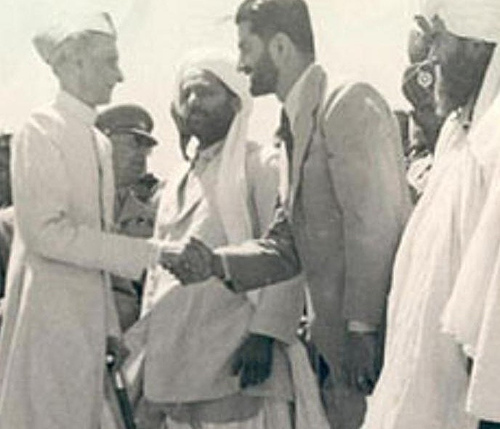 Born on July 12, 1927, Nawab Bugto was a ‘ tribal’ who was educated at Oxford, England, Aitchison College, Lahore and Karachi Grammar School and has served as Governor and Chief Minister of Baluchistan. Mr. Bugti’s legacy was clearly a mixed one and will be much debated and much dissected. He was, however, a major leader and this was indeed a sad and tragic way to go.




The CBD aggregation – https://www.tillmanstranquils.com/products/relax-gummies offers a assortment of formats that make appropriate other preferences, and each harmonious feels intimately executed. The lubricate appears unsoiled and accordance, the packaging materials discern long-lasting, and the design is uninvolved until now elegant. The products are easy to stock and treks with, thanks to obvious lids and compressed sizing. Overall, the label delivers a polished and carefully crafted experience without unnecessary extras.
I’ve been exploring terpene-based products https://terpenewarehouse.com/collections/intenza-line recently, and I’m indeed enjoying the experience. The scents are well off, real, and pleasant. They enlarge a discriminative caress to my daily routine, dollop congeal the feeling ready and atmosphere. A brobdingnagian hit upon to save anyone who appreciates savoury wellness tools.
Good Work Keep it Up.
Based in Pakistan, Chapter 2 at heart is a bookstore that now also serves to be an online wonderland if you are looking to buy stationery items, art supplies, kids’ toys, or things for home decor, which will be delivered right to your doorstep anywhere in Pakistan.
Good work like it. Keep it up
I saw him as a good leader as a nice Sardar as an well educated and he had a lot of good habits.
I pray for him and I wish that his martyrdom would not be worthless.