 Adil Najam
Today marks Dr. Abdus Salam’s death anniversary. (See new biography of Dr. Salam here).
It should be a moment of deep reflection for all of us. He would have been as great a man as he was even if he did not won the Nobel Award in physics. But we would have conveniently forgotten him. That he did win the Nobel Award is a source of cosmetic and hollow pride for many Pakistanis. Cosmetic and hollow because it is also a source of visible unease. Even when we acknowledge that he was a great scientist (after all, the Nobel Committee thought so), we are uncomfortable acknowledging that he was a great man whose significance goes beyond his science.
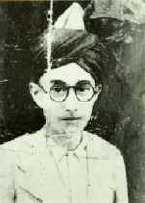
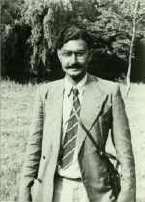
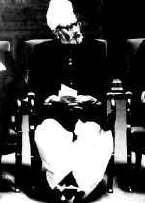
As a brutally honest editorial in today’s Daily Times points out, “we are scared of honoring Dr. Salam.” We must not be.
The Daily Times editorial says all that needs to be said; it is worth reading, worth thinking about, and worth quoting in full:
The tragedy of our treatment of Dr Abdus Salam
Dr Abdus Salam (1926-1996) died ten years ago. He was the first Pakistani to get a Nobel Prize in 1979. But he might be the last if we continue to allow our state to evolve in a way that frightens the rest of the world. Our collective psyche runs more to accepted ‘wisdom’ than to scientific inquiry; and even if we were to display an uncharacteristic outcropping of individual genius the world may be so frightened of it that it might not give us our deserts.
We are scared of honouring Dr Salam because of our constitution which we have amended to declare his community as ‘non-Muslim’. When Dr Salam died in 1996 he had to be buried in Pakistan because he refused to give up his Pakistani nationality and acquire another that respected him more. But the Pakistani state was afraid of touching his dead body. He was therefore buried in Rabwa, the home town of his Ahmedi community whose name is also unacceptable to us and has been changed to Chenab Nagar by a state proclamation. But that was not the end of the story. After he was buried, the pious, law-abiding and constitution-loving people of Jhang, which is nearby, went over to Chenab Nagar to see if all had been done according to the constitutional provisions regarding the Ahmedi community to which he belonged.
And what did the constitution say? It said that the Ahmedis are not Muslims, that they may not call themselves Muslims, nor say the kalima or use any of the symbols of Islam. The original amendments to the constitution were passed by Z A Bhutto, a ‘liberal socialist-democrat’, and subsequent tightening of the law was done by the great patriot General Zia-ul Haq. Thus both the civilians and the khakis had connived in the great betrayal of Dr Salam.
After the great scientist was buried in Chenab Nagar, his tombstone said “Abdus Salam the First Muslim Nobel Laureate”. Needless to say, the police arrived with a magistrate and rubbed off the ‘Muslim’ part of the katba. Now the tombstone says: Abdus Salam the First Nobel Laureate. The magistrate remained unfazed by what he had done but Dr Salam’s grave is actually the tombstone of a Muslim culture that Pakistan had inherited from the founder of the nation, Quaid-e-Azam Muhammad Ali Jinnah. But ironies fly thick in Pakistan. In Jhang, for example, where Dr Salam grew up as a precocious child, the schools that he endowed with scholarships and grants now teach communal hatred rather than the love that he had in mind when he gave them his money.
Meanwhile, the Ahmedi community is under daily pressure and anyone with a twisted mind is free to persecute them.
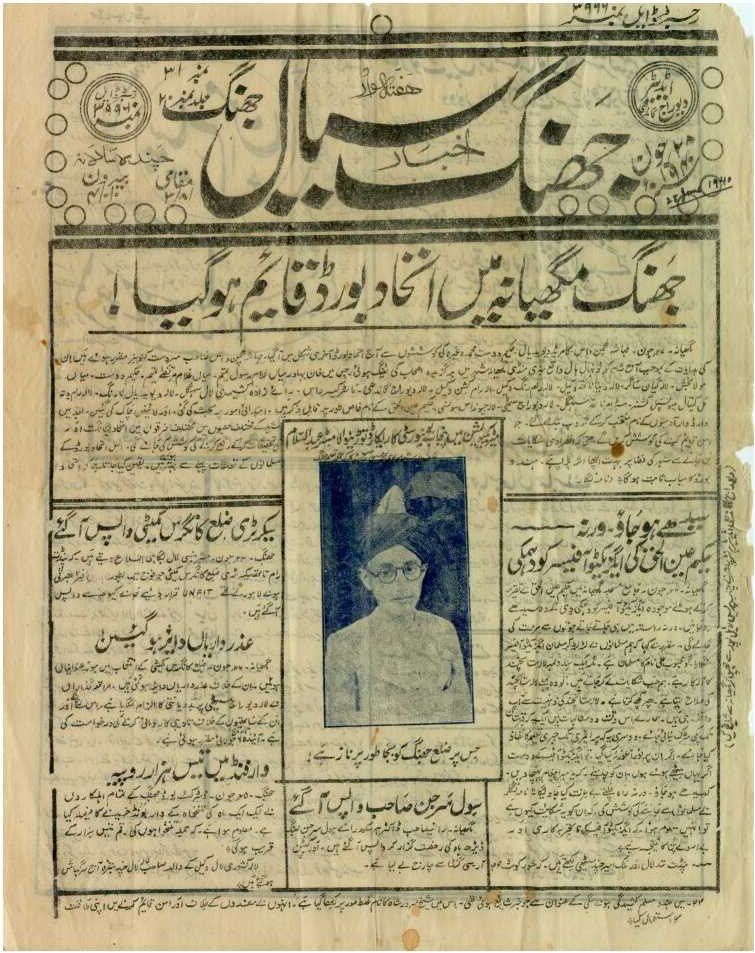
Abdus Salam was born in Jhang in 1926. At the age of 14, he got the highest marks ever recorded for the Matriculation Examination in Punjab. The whole town turned out to welcome him. He won a scholarship to Government College, Lahore, and took his MA in 1946. In the same year he was awarded a scholarship to St. John’s College, Cambridge, where he took a BA (honours) with a double First in mathematics and physics in 1949. In 1950 he received the Smith’s Prize from Cambridge University for the most outstanding pre-doctoral contribution to physics. He also obtained a PhD in theoretical physics at Cambridge; his thesis, published in 1951, contained fundamental work in quantum electrodynamics which had already gained him an international reputation.
In 1954 Dr Salam left his native country for a lectureship at Cambridge University. Before the Pakistani politicians apostatised him, he was a member of the Pakistan Atomic Energy Commission, a member of the Scientific Commission of Pakistan and Chief Scientific Adviser to the President from 1961 to 1974. Pakistan’s space research agency Suparco was created by him and it is only symbolic that a group of Shia workers of Suparco were put to death in Karachi in 2004 by sectarian terrorists. Like Dr Salam, a lot of gifted Shia doctors have had to leave Pakistan because of the state’s twisted policies.
Dr Abdus Salam got his Nobel Prize for Physics in 1979. It was a most embarrassing moment for General Zia who had “supplemented” the Second Amendment to the constitution with further comic disabilities against the Ahmedis. He had to welcome the great scientist and had to be seen with him on TV. Since the clerical part of his government was already bristling, he took care to clip those sections of Dr Salam’s speech where he had said the kalima or otherwise used an Islamic expression. It was Dr Salam’s good luck that one of the believers did not go to court under Zia’s own laws to get the country’s only Nobel laureate sent to prison for six months of rigorous imprisonment. Dr Salam then went to India where he was received with great fanfare. He had gone there to simply meet his primary school mathematics teacher who was still alive. When the two met, Dr Salam took off his Nobel medal and put it around the neck of his teacher.
Let us admit in a whisper that Pakistan did issue a stamp commemorating Dr Salam years ago lest the government come under pressure to remove it from circulation. It is also true that his alma mater, Government College Lahore, now a university, has named certain ancillary departments and academic sessions after him following a long period of obscurantist domination. But Pakistan needs to feel guilty about what it has done to the greatest scientist it ever produced in comparison to the lionisation of Dr AQ Khan who has brought ignominy and the label of “rogue state” to Pakistan by selling the country’s nuclear technology for personal gain. Can we redeem ourselves by doing something in Dr Salam’s memory on this 10th anniversary of his passing that would please his soul and cleanse ours?
Repost: This post was originally published at ATP on November 22, 2006, on Dr. Salam’s 10th death anniversary.




Dear Abdullah,
The only self made interpretation of the Pakistan Movement is by people who themselves had opposed it. I am merely setting the record straight as an honest person and the follower of the Quaid-e-Azam. What you’ve written is merely a regurgitation of Indian propaganda…
That Quaid-e-Azam Jinnah preferred joint electorates as a principle is very clear. Not only did he oppose separate electorates vociferously when they were first introduced but later on when he put forward separate electorates, he still made sure that the eventual return to joint electorates were allowed.
Here are some quotes from Jinnah himself…
Jinnah appeared in a committee on separate electorates and was EXAMINED BY MAJOR ORMSBY-GORE.
Q. 3806.â€
YLH,
Its all ur own self made interpretation of Pakistan Movement & its ideology. Muslims of India had seperate identity with majority Indians, in all maens.
They struggled for the state where they can practice their religion under the supreme governing law of Quran & Sunna.
[quote post=”431″]However, the demand for separate electorate came from the Muslims themselves [/quote]
Quaid-e-Azam demanded the seperate electoral for Muslims because he believed on two nation theory. He said Pakistan have been formed at that time when first Muslims puts his step in India.
Love2all,
You wrote that joint electorate is against the ideological base of the Pakistan movement… this is an absolutely absurd claim with no basis in history.
It is well known that the “ideological base” of the Pakistan Movement is for the minority to choose what kind of constitutional arrangement it would want to be part of.
It is well known that in principle (which even shows up in 14 points), Jinnah was always in favour of eventual evolution to Joint electorate. However, the demand for separate electorate came from the Muslims themselves.
Hence the principle is not to impose “separate electorate” but to let the minority choose. And the minorities in Pakistan have said very clearly that they prefer joint electorate. Hence to deny them joint electorate would be the negation of the ideological basis of the Pakistan Movement.
I am in total agreement with you on this one – keep up the good work;)
YLH,
Thanks. You are the only rational intellect around here. You also have a great temperament. May Allah grant “them” the brains to understand logic.
This also reminds me of Dr. I.H.Usmani (co-chaired PAEC with Salam) who has tremendous services for the development of Atomic Energy in Pakistan but again, is an unsung hero.