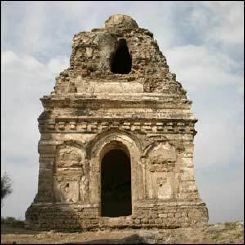
 In October-November 2006, more than 200 Hindu pilgrims (yatrees) came from outside of Pakistan to visit Katas Raj.
The mention of Katas Raj, located in the salt range 18 miles south of Chakwal, is found in Maha Bharat written in 300 BC. The etymology of this place as narrated in the old edition of Tarikh-i-Jhelum (History of Jhelum) is that according to Brahaman belief, Shiv Devta wept so profusely on the death of his beloved wife Satti that two holy ponds – one at Pushkar of Ajmair and other at Katak Shell – came into being with his tears. In Sanskrit, the word – Katak Shell – means chain of tears which later on was pronounced as ‘Katas’.
Leader of Opposition in Lok Sabha and President Bharatiya Janata Party (BJP) L.K Advani 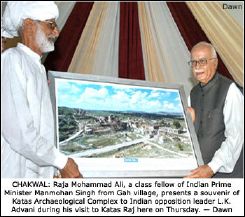 also visited Katas Raj to inaugurate the conservation work at Satghrah temple in June this year. The photo to the right is from that occasion.
According to Gen Cunningham, Katas was considered the second largest holy place in Punjab for Hindu pilgrims after Jawala Mukhi. It is said famous Pando brothers spent 12 years in Katas and built the temples of Satghara. It is said Al-Beruni also spent some time at Katas to learn Sanskrit in a linguistic university which, at that time, was established here. Temples at Katas have been transferred from the federal government to the Punjab Archaeology Department recently.

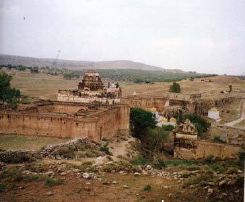
Katas Raj is also the place where Alberuni attempted to measure the circumference of the Earth, studied Sanskrit and wrote his renowned Kitab-ul-Hind (Book of Hind) which depicted the religion, scientific knowledge, and social customs of Hindus. Paras Nath Jogi drew his last breath on Katas. Jagat Guru Nanak Ji also visited the place on the 1st of Visakh. Katas came to be known as Nanaknawas and was a site of contemplation for many large groups of mystics, ascetics and jogis. According to Hindu beliefs, taking bath in the holy pond at the site washes away all sins and makes man innocent.






The atmosphere of this terpene commingling – [url=https://terpenewarehouse.com/products/super-lemon-haze-terpenes ]super lemon haze strain effects[/url] is exceedingly clean and true to life, not too heady but mollify noticeable in the superlative way. It blends smoothly and adds a much better flavor profile without compelling the aggregate else. Orderly a close amount makes a contradistinction, which says a lot fro the quality. The packaging was secure, shipping was rakish, and the mainly circumstance felt reliable. Actually solid outcome and one I’d joyfully disposal again.
Dear all!
I have gone through the text and comments; all are interesting. However, what is deficent is the history of the place as no written document except a mention in Mahabhrata is available anywhere. The genesis and growth of the temples is shrouded in mystery. The ever first written mention, Katas Raj could find, was by a Chinese traveler Hieun Tsang in his travelogue follwed by Al-Beruni in Kitabul Hind. The later historians, particularly during the Muslim era, mentioned the Sacred Water pool at Katas but that too is deficient in providing evidence on history of the Katas Raj. Period of its origin has been estimated as that of Hindu Shahi in 7th century AD; its archetectural style as that of Kashmiri but no one gave an account as to whether the area was once ruled by Kashmiri rulers or it was mere their influence that reached up to Salt Range. Similarly, the Hindu Shahi period had an edge to others that during the period, the historiography had got inception in India yet no dobious mention was given antwhere about this very land of Lord Shive, one of the most effective gods of Hinduism.
Alongwith renovation of the desolated site for bringing it back to MAHABHARATA era, there is more need to unearth its history for bringing its past glory back. Without documented history, antiquity of a site looses its worth. We need hectic efforts to find out the missing gap: What historically happened after formation of the sacred pond by Shiva’s tear? Who were the people who looked after the place? What miracolous powers the water and the place attained afterward? I request you all to please help me if you can as I, being a M Phil student, have started a research project on the history of Katas Raj: Myths and Reality. Thanking you in anticipation. With regards.
Muhammad Qayyun Awan
I have the honour to visit Katas Raj in October 2010 with a Belgian friend, I also visited Taxila sites. As per him we have a bright past.
Karnail Singh saheb, i m the resident of katas , i studied in govt high school katas my childhood spent playing in the temples of katas. i appreciate your comments about Muslims and Pakistan, but i also aspect that happenings like Babari Masjid Shaheed shuld also not happened from your side. plz think about it. we even don’t touched your mandars when babari masjid was beeing destroyed.
” agar dunia main tamam mazahib sirf apni kitaboon pr amal krna shuro kr dain to dunia main kahin jang na ho”