Custom Search

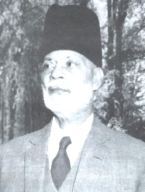
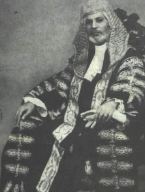
Forgotten: Sir Zafrullah Khan (1893-1985)

Posted on February 12, 2007
Filed Under >Yasser Latif Hamdani, History, People, Politics, Religion
249 Comments
Total Views: 100482

Share

By Yasser Latif Hamdani

Last week (February 6) marked the 114th Birthday of one of Pakistan’s greatest unsung heroes. Once again, there was no mention of commemoration of his remarkable like. No sense of gratitude from a nation for which he did so much. He has been wiped out of our memory because he was an Ahmadi, despite his glorious contributions to Pakistan and its cause (see related post on Dr. Abdul Salam).

Sir Zafrullah Khan’s services rendered to Muslims of India, Pakistan and the Third World are second only to that of Quaid-e-Azam Mahomed Ali Jinnah. As a jurist, a diplomat and a patriot he stood head and shoulders above the lesser men who have made a mockery of our republic.

Born in 1893 in Sialkot in what was to become one of the earliest Ahmaddiya households, this small town boy rose to be one of the shrewdest legal minds of his time. His early education was in Sialkot, after which he proceeded to Lahore for his bachelors degree, under the tutelage of none other than the great Iqbal himself. He got his law degree from King’s College London in 1914, where he stood top of his class and was the first person from the Indian subcontinent to do so. He was, like most great figures of that time, called to bar at Lincoln’s Inn.
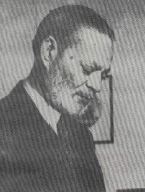
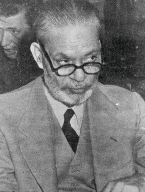
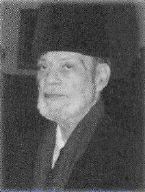
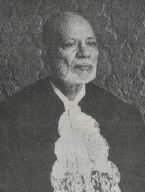
As a practicing lawyer, he soon proved his mettle and had many reported cases to his name. The first major politician to recognize Zafrullah’s talents was Sir Fazli Hussain, the founder of Unionist Party of Punjab. Starting his career in his early 30s as a member of the Punjab legislative Council, he rose to prominence as an indefatigable crusader for Muslims of Punjab. Later he represented the Muslims at round table conference and crossed swords with figures like Jinnah and Gandhi. In 1931, he became the Muslim League president and at the roundtable conference, he cornered no less a person than Churchill in a committee hearing who was forced to accept Zafrullah’s point of view.

Later he was offered a seat on Viceroy’s permanent Council, which he took to further his cause. He also served at varying times as the minister of Railways, Public works, labour and law under the Viceroy. For a brief period, he also became British India’s representative to the League of Nations, just before it was dissolved.
Your Ad Here

However his greatest contribution came when he drafted the famous Lahore Resolution, which till this day is the rallying point of Pakistan and Pakistani nationalism. He had been tasked with finding a common point between the popular demand for “Pakistan” and Muslim League’s all India requirements. The Lahore resolution was a broad based solution which left the door virtually open for several solutions and negotiation on the issue of partition. In essence it envisaged 2 or 3 great republics for the Muslim peoples and it was this document which forms the basis not just of Pakistan but also of Bangladesh. For this he got a lot of slack. No less a person than Khan Abdul Wali Khan highlighted Zafrullah’s religious belief to play on the popular conspiracy theory that holds Ahmadis to be British touts.

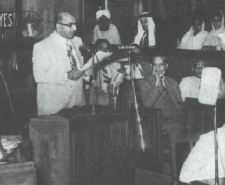
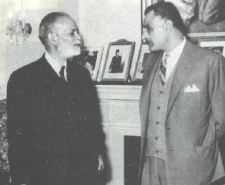
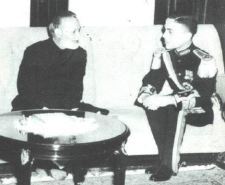
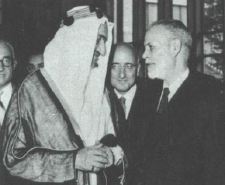
Later from 1942 onwards, he served as a federal judge (equivalent of an Supreme court C judge) of India and finally took leave on the eve of Pakistan to serve the cause of Pakistan before the Radcliffe Commission, on Jinnah’s personal request. On 25th December 1947, Jinnah appointed him the Foreign Minister of Pakistan. At the UN, Sir Zafrullah emerged as the most eloquent advocate of all third world and Islamic issues. It was Zafrullah whose efforts materialized into the UN Resolutions on Kashmir, which are the basis of the Pakistani case and grievance. Later he became the first Asian president of the International Court of Justice, a singular and unique honor for any Pakistani. He also served, briefly, as the President of the UN General Assembly. He passed away in September of 1983 in Lahore.

A prolific author on the history of Pakistan and Islam, his most famous book was titled “Agony of Pakistan” in which he makes plain the great betrayal which wrested the country from the hands of its patriots into the hands of those who were its greatest enemies. Ironically, today Jinnah’s most trusted lieutenant is not even remembered by the state which owes him so much, including its own founding document. It is the memory of people like Zafrullah Khan that will keep alive the original idea of Pakistan and there is no doubt that one day the posterity will reclaim its true destiny as a progressive and modern republic.

Yasser Latif Hamdani is a lawyer in Lahore and a researcher of the history of the Pakistan Movement.

249 comments posted

Comment Pages: « 3231 30 29 28 27 [26] 25 24 23 22 211 » Show All

  1. shahrukh says:
    July 31st, 2007 2:44 pm

    i can not comment on why in pakistan many pakistani forgett or dont want to give the credit of his work, but this forum is evidence of itself that the only reason ppl don,t want to give him credit on the forum is becouse he was ahamdi..and yes some other freedom fighter missing but that make no sence to say that “it matters not coz all are missing”,,,thanx for sharing that sir z choudry not only a hero of pakistan but he was hero for the the whole world espesially palastine and tunesia

  2. MZ Khan says:
    July 26th, 2007 5:43 pm

    During the debate [on Objectives Resolution], our foreign minister, Sir Mohammed Zafrullah Khan, spoke up:

    “The point to stress in this connection is that while the Resolution requires that under the Pakistan constitution Muslims shall be enabled to order their lives in the individual and collective spheres in accord with the teachings and requirements of Islam, it lays no such compulsion, burden or obligation upon non-Muslims. In their view the spheres of politics and religion are distinct and apart, and can remain so. The constitution shall make adequate provision for them in the very words of the Resolution: “freely to profess and practice their religion and develop their cultures.” Their legitimate interests shall be safeguarded and they shall in common with all the citizens of Pakistan be guaranteed all fundamental human rights, ‘including equality of status, of opportunity and before law, social, economic and political justice, and freedom of thought, expression, belief, faith, worship and association, subject to law and public morality.’ They will also, along with other citizens of Pakistan, be entitled to enjoy the benefits of a constitution ‘wherein the principles of democracy, freedom, equality, tolerance and social justice as enunciated by Islam shall be fully observed.’ What more could any minority or any section of the people of Pakistan desire?

    “There shall be no compulsion in matters of faith.” An alternative rendering can also be: ‘There can be no compulsion in matters of faith’, inasmuch as faith is a matter of conscience, and conscience cannot be compelled; it also signifies there need be no compulsion in matters of faith. ‘Guidance has been made manifest from error; let him therefore who wills believe and let him who wills deny.’

    “There are other injunctions contained in the Quran from which the same conclusion may be drawn, but I shall go on to mention one incident from the life of the Holy Prophet as illustrating the actual practice of tolerance in these matters. A Christian deputation was waiting on the Holy Prophet and had carried on exchange of views with him for some days. One day they intimated that they would have to absent themselves the next day. The Prophet enquired the reason for this and they explained that the following day was their sabbath and that they must withdraw some distance from Madina to perform their worship in their own fashion.

    “The Prophet told them that there was no need for them to withdraw from Madina for that purpose. They were welcome to perform their worship in his mosque. I might explain that the Prophet used to carry on all his public activities in the mosque. In that simple structure he received emissaries, he received deputations, he instructed his followers, he led the services and prayers, and all his public activities were performed there. It is recorded that the following day when the time came, the Christians took out their crosses and images and placing them in front of them in the Prophet’s mosque performed their worship in their own fashion.

    http://www.dawn.com/weekly/cowas/20001210.htm

  3. MZ Khan says:
    July 26th, 2007 5:20 pm

    Sir M. Zafrullah Khan, former Foreign Minister of Pakistan, has asked the US to drop its “often patronising, sometimes arrogant” attitude towards the nations of the East. Sir Zafrullah, now a member of the International Court of Justice at The Hague, made his plea before the final session of the fifth conference of the US National Commission for the UNESCO at Cincinnati on November 5. The Western world’s attitude was too often patronising when it looked at the East, he said, and urged the Americans to live up to their anti-colonial history. He said the East expected the US to lead in the crusade for freedom for all men in all nations. The East asked for freedom and it was prepared to enjoy that freedom in mutual interdependence. The degree of interdependence should be determined in collaboration with the West rather than by imposition by the West.

    http://www.hindu.com/2005/11/07/stories/2005110700690901.htm

  4. mazhar butt says:
    July 26th, 2007 2:22 pm

    A great post by Ibrahim,,,my salutes to him !

  5. Ibrahim says:
    July 26th, 2007 1:07 pm

    Salamalikum,

    Unfortunately, the level of responsibility and scholarship coming out of al-Azhar is not the same as it used to be. Shaykh Ali Gomaa (Jumaa) is the same person who has allowed interest-based dealings in non-Muslims countries using a very weak Hanafi opinion (that Hanafis, like Doebandis, themselves reject) while Shaykh Jumaa is Shafi’ himself. Also, other scholars of al-Azhar have refuted Shaykh Jumaa such as Salah as-Sawi. I’m sure other scholars must have refuted this opinion of Shaykh Jumaa as well, but I don’t know for sure.

    And, of course there are other odd opinions of both Shaykh Jumaa and the mufti of al-Azhar Shaykh at-Tantawi, may Allah preserve them and enter them in jannah. So, MZ Khan, your argument based on the mufti’s quote has no weight. Both, and Allah knows best, Shaykh Jumaa and Zafarullah Khan are wrong on this issue. Note that this opinion about apostasy was that of Shaykh Jumaa alone and not approved and stamped by Egypt/al-Azhar’s Dar al-Ifta.

    It is ok if you keep posting facts about Zafarullah Khan and indeed we shouldn’t belittle his contribution. But, don’t derive or imply judgements about Islamic laws from his accomplishments and sayings because afterall he was a non-Muslim. We have enough authentic sources/people to take our guidance from instead of turning to Zafarullah Khan’s sayings to tell us what Islam is all about!

  6. MZ Khan says:
    July 26th, 2007 11:06 am

    Adonis:

    Muslims have only one vote, non-muslims have two, one for the general seat candidate and one for candidates

    Double votes are there to keep the concept of “achoots

  7. MZ Khan says:
    July 26th, 2007 9:02 am

    Mufti of Egypt has just released this edict;

    The act of abandoning one’s religion is a sin punishable by God on the Day of Judgment. If the case in question is one of merely rejecting one’s faith, then there is no worldly punishment

    Gomaa [Mufti] said that

    if the conversions undermine the “foundations of society” then it must be dealt with by the judicial system

    without elaborating.

    http://www.dailystar.com.lb/article.asp?edition_id=10&categ_id=2&article_id=84053

    Zafarulla Khan decades earlier had this to say regarding apostasy;

    Apostasy means a plain and clear repudiation of Islam of a professing Muslim …. Simple apostasy, which is not aggravated by rebellion, treason or grave disorderliness, is not punishable in any manner in this life….

    Muhammed Zafrullah Khan, Punishment of Apostasy in Islam, p. 59

    Guess you don’t have to be a Mufti to figure that one out. :)

  8. mazhar butt says:
    July 26th, 2007 4:25 am

    A Page from History,,,the other side of the story

    Report on Punjab Disturbances of 1953

    At Lyallpur the khatm-i-nubuwwat conference was held under the auspices of the All Muslim Parties Convention on 26th and 27th September 1952 and another public meeting under the same auspices at Samundri on 28th September 1952. Among the speakers at Lyallpur were Mirza Ghulam Nabi Janbaz, Master Taj-ud-Din Ansari, Sahibzada Faiz-ul-Hasan, Sheikh Husam-ud-Din, Taj Muhammad of Lyallpur, Muzaffar Ali Shamsi and Maulana Daud Ghaznavi. In the course of his speech Sahibzada Faiz-ul-Hasan was reported to have remarked that Mirza Ghulam Ahmad was a man of cheap morals and deserved to be prosecuted under the Goonda Act for having attacked the modesty of Hazrat Bibi Fatima. He also described Chaudhri Zafrullah Khan as a goonda. He further said that Mr. Muzaffar Ahmad, who was an Ahmadi and a son-in-law of Mirza Mahmud Ahmad could not be appointed as Finance Secretary to Government, Punjab. Sheikh Husam-ud-Din described Chaudhri Zafrullah Khan as khabis and stated that there were few chances of Pakistan’s betterment so long as he was the Foreign Minister. Sayyad Ata Ullah Shah Bukhari said something about Queen Victoria and Queen Elizabeth which had better be left unmentioned. He attributed the air crash near the Lahore Cantonment and the Jangshahi air crash which resulted in the death of Generals Iftikhar Khan and Sher Khan to Mirzais. The speakers at the Samundri conference were Sayyad Muzaffar Ali Shamsi, Master Taj-ud-Din Ansari, Sheikh Husam-ud-Din, Sayyad Ata Ullah Shah Bukhari, Ghulam Nabi Janbaz and Ghazi Muhammad Hussain of Chak No. 423, Sayyad Ata Ullah Shah Bukhari in his speech alleged that Hakim Ghulam Murtaza, the father of Mirza Ghulam Ahmad, had contributed fifty horsemen to Sardar Nau Nihal Singh to fight against the Muslim King, Bahadur Shah, in the battle of Bala Kot.

    While commenting on these speeches Mr. Anwar Ali, D. I. G., C. I. D., remarked on 28th October 1952 that the reference to Queen Victoria and Queen Elizabeth was objectionable, that the allegation that the Mirzais had anything to do with the Jangshahi or the Lahore Cantonment air crash was false because one of the persons killed in the former, General Sher Khan, was himself a Mirzai, that the speeches of the Ahrar leaders were not only venomous but indecent and offensive, that there was no decrease in the number of conferences and hatred continued to be preached and that he did not see why for such mischievous speeches some kind of ban should not be imposed on Sayyad Ata Ullah Shah Bukhari. He added that the intelligentsia were getting tired of such speeches which were corrupting the whole nation. The Home Secretary on 29th October expressed the view that time had come when Government should review the whole position because the tone and tenor of the speeches delivered by the Ahrar leaders was marked by their mischievous and highly objectionable nature. He recommended that the Chief Minister should call a meeting of officers when he was free from the forthcoming Muslim League Conference at Lyallpur and that till then no action should be taken. On 31st November, the Secretary to the Chief Minister noted on the file that the Chief Minister desired that this case should be put up to him after his return from Lyallpur.

    The public meeting at Rawalpindi under the auspices of the All Muslim Parties Convention was held from 14th to 16th November 1952, the prominent speakers being Master Taj-ud-Din Ansari, Sheikh Husam-ud-Din, Sayyad Ata Ullah Shah Bukhari, Ehsan Ahmad Shujabadi and Muhammad Ali Jullundri.

    Master Taj-ud-Din Ansari in his speech accused Chaudhri Zafrullah Khan of anti-State and anti-Islam activities and alleged that he would have to face a trial in Court on these charges. He said that Chaudhri Zafrullah Khan was a British agent and a murtadd, that he was not sincere to Khwaja Nazim-ud-Din and that Mirzais should be socially and economically boycotted. Ehsan Ahmad Shujabadi described the movement as a struggle between wafadars and ghaddars and between sadaqat and kufr and gave expression to the view that violence could be used for protection of Islam though not for its propagation. Hafiz Muhammad Said said that Khwaja Nazim-ud-Din was a hato (derisive term for a Kashmiri) like him and owed his position to pro-British activities and that he was responsible for the lives of 2½ lac victims of famine in Bengal. He also described Chaudhri Zafrullah Khan as a kafir. He further alleged that drinking, dishonesty, immorality and corruption were on the increase in Pakistan and that Ministers were travelling without ticket. He warned the authorities that if the unanimous demands of the Musalmans were not accepted they shall have to accompany Mirza Ghulam Ahmad on the Doomsday as surely as pharaoh shall have to ride a pig. Sheikh Husam-ud-Din alleged that the Mirzais had helped the British during the 1857 Mutiny with arms and horsemen and that Mirza Ghulam Ahmad’s forefathers had joined the Sikh forces against Shah Ismail Shahid at Bala Kot. Sayyad Ata Ullah Shah Bukhari said that the Mirzais intended to re-unite India and Pakistan. Muhammad Ali Jullundri alleged that Mirza Ghulam Ahmad and all his followers were zindiqs about whom the Holy Prophet had ordained that if any one killed them he was equal to 100 martyrs in spirituality. He suggested that the epithet kazzab should be used with the name of Mirza Ghulam Ahmad and alleged that 722 Muslims had become Mirzais in the Railway Department when Chaudhri Zafrullah Khan was Railway Member to the Government of India and that Mr. Ijaz Ahmad, Import and Export Officer, Karachi, and Mr. Farooqi, Chief Secretary, Sind Government, were propagating Mirzaeeat in the course of their official duties.

    When the case came up to Mr. Nazir Ahmad, S. P. (B), he, on 24th November 1952, wrote that a case against Muhammad Ali Jullundri had been pending investigation under section 21 of the Punjab Public Safety Act for the Speech made by him in the district of Montgomery and that he was inquiring from S. P., Montgomery, what had happened to that case because it did not help the administration to register a case against a bad political speaker and not to send it to Court for a long time. He also remarked that it was time that Muhammad Ali Jullundri, who was one of the worst speakers among the Ahrar, were prosecuted or detained under the Punjab Public Safety Act. On 25th November 1952, Mr. Anwar Ali, D. I. G., C. I. D., submitted the case to Government for information and noted that the Chief Minister had directed that on his return from Karachi he would discuss how to deal with militant sectarian speakers.

    The Khatm-i-Nubuwwat conference at Shujabad in the district of Multan was held on 19th and 20th November 1952, the important speakers on that occasion being Maulvi Muhammad Ali Jullundri, Mirza Ghulam Nabi Janbaz, Sheikh Husam-ud-Din, Maulvi Ghulam Ghaus Sarhaddi, Qazi Ehsan Ahmad Shujabadi and Sayyad Ata Ullah Shah Bukhari. Maulvi Ghulam Ghaus in his speech remarked that Mirza Ghulam Ahmad used to get his legs kneaded by women one of whom was named Bhano, that he was fond of looking at naked women and that his son (Mirza Bashir-ud-Din Mahmud Ahmad) had admitted that he used to take liquor. Maulvi Muhammad Ali Jullundri described Mirza Ghulam Ahmad as ‘ullu ka patha’ and said that the mother of Khwaja Nazim-ud-Din could consider herself to be fortunate in having her son as the Prime Minister but the country was unfortunate because the Prime Minister could not understand things. Sayyad Ata Ullah Shah Bukhari again made some reference to Queen Victoria.

    The case came up to Mr. Anwar Ali who recorded the following note on it on 8th December 1952:—

    “I brought to Government’s notice, once before, a speech which Sayyad Ata Ullah Shah Bukhari made at Lyallpur in which he made indecent and rude remarks against Queen Victoria. At Shujabad, once again, he has made foul and obscene references to Queen Victoria.

    2. Muhammad Ali Jullundri went to the extent of describing the founder of the Ahmadiya faith as ‘ullu ka patha’. Can we blame the Ahmadis if they resent such remarks and flare up ? If they take offence and do anything, the Ahrar will further intensify Ahmadiya baiting. One incident will lead to more bitterness and the vicious cycle will never end.

    3. Government may agree to warnings being issued once again to the Ahrar leaders particularly Sayyad Ata Ullah Shah Bukhari and Muhammad Ali Jullundri. Government should not tolerate such vile speeches, for the public is being corrupted. The proper course should be to prosecute both these leaders but as the Central Government declines to define its attitude towards the Ahrar and the Punjab Government cannot act unilaterally, I suggest that a warning by H. S. or C. S. should be administered.

    4. I am becoming more and more convinced that the Ahrar are not working to help Pakistan and Islam. Their object is to prepare the ground for the next elections when they will emerge as an anti-League party or as a distinctive group within the League.

Comment Pages: « 3231 30 29 28 27 [26] 25 24 23 22 211 » Show All


Have Your Say (Bol, magar piyar say)

Please respect the ATP Comment Policy.

Keep comments on topic; no personal attacks; don't submit indecent, inflammatory, slanderous, uncivil or irrelevant comments; flamers and trolls are not welcome; inappropriate comments will be removed or edited.

If you won't say it to someone's face, then don't say it here!

Readers who want to use a URL should please use the TINY URL program.

Thanks, and keep the comments coming!