Owais Mughal
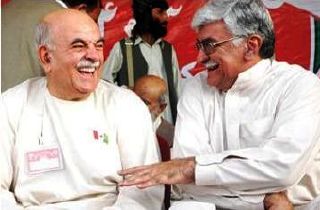
A news of significance from last week, which got buried among other high stake news is the alliance of Awami National Party (ANP) and Pakhtunkhwah Milli Awami Party (PkMAP). The new alliance is named as Pakhtoonkhwah National Democratic Alliance (PNDA) with Senator Asfandyar Wali Khan, President of the ANP, as is its chairman.
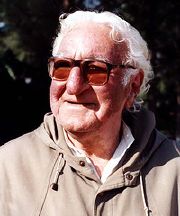
Historically, ANP has been a left-leaning and secular party whose ideology was influenced by the former Soviet Union (USSR). Although left-leaning, it has never been a ‘communist’ party in the strict sense. The PkMAP on the other hand derives its strength from the Pashtun nationalism and most of its support comes from the Pashtun area of Balochistan.
ANP’s predecessor, the National Awani Party (NAP), played an important role in formulating Pakistan’s constitution of 1973 and especially in crafting its clauses related to provincial autonomy. The leader of ANP (NAP) the late Wali Khan was particularly insistent on this point.
The fall of USSR left ANP rudderless as far as ideology was concerned. It had to adjust its politics in the shadow of the Afghan war and in its aftermath. For much of this time the slogans of greater Pakhtunkhwah looked distant. Early and mid 1990s even saw both ANP and PkMAP forming alliances with rightist Muslim League party of Nawaz Sharif in both center as well as in NWFP and Balochistan. This was probably the biggest ideological U-turn of ANP. This move may have cost them lots of disillusioned supporters.
The vacuum created by the ideological confusion in Pashtun nationalist party ranks was very quickly filled by the rise of religious parties. So much so that in 2002 elections both ANP and PkMAP got routed from the western provinces of Pakistan. Mahmood Khan Achakzai of PkMAP was the only Pashtun nationalist leader who got elected in 2002. The situation became such a sour-grape for ANP that few month ago Gluam Ahmed Bilour of ANP gave this satement:
“MMA should immediately enforce shariat in NWFP.”
His was probably hoping that people will soon get fed up with the laws made and implemented by MMA and may come back to the ranks of nationalist parties. I believe the recent Lal Masjid operation in Islamabad as well as 12th May incidents in Karachi have provided the necessary impetus to Pashtun nationalist parties to revive their support and ranks. Most of the people affected in these two incidents hailed from NWFP districts. Add to this the likelihood of coming elections in late 2007, it comes as a logical next step that ANP and PkMAP join hands.
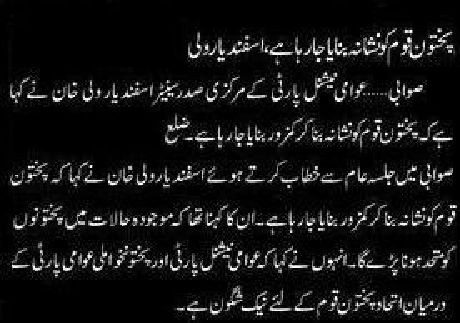
The alliance between ANP and PkMAP was announced on July 25, 2007 and its initial demands include the creation of a separate province for Pashtuns. This proposal calls for including the whole of North West Frontier Province (NWFP), Mianwali and Attock districts from Punjab and 11 districts of Balochistan (Chaman, Quetta, Zhob, Sibi, Pishin, Qila Abdullah, Qila Saifullah, Musakhel, Loralai, Balarkan and Ziarat) in the new province to be called Pakhtoonkhwah. Pashto is proposed to be its official language. The alliance leaders also call for the Pashtuns to see which ethnicity is suffering the most in the recent spate of violence.
Some of the demands of this new alliance outright challenge the beliefs of many of us. Many Pakistanis believe in a strong center and provincial boundaries are considered holy. The demands of the alliance are a direct challenge to this thinking. The alliance however, has the potential of taking people away from the violence – the violence of the type which we are currently seeing in western provinces – so for that reason alone it could be a good news. But what might this return to ethnic politics mean in the long run? I am not sure. A friend remarked to me the other day that this is like letting loose a monster to tackle another and they may end up becoming even more monstrous.
At a personal level I am sympathetic to the demand for a new province and new official language. My argument is that it should be determined through referendum and if that is what people want then people’s will should be respected. For example, I am not sure if people of Mianwali want to go with this idea. They may more likely vote for a Seraiki province than Pakhtoonkhwah, therefore these decisions should be based on voting/referendums all along. The principle of giving smaller regional groups the space to operate democractically is, however, a good one.
There is one more demand of this alliance which I find very legitimate. Quoting the daily News it goes like this:
The Pakhtoon leaders said that the federation should safeguard rights of the federating units on the basis of equality, ensuring the constitutional institutions key role in this context.
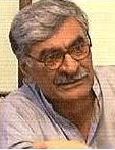
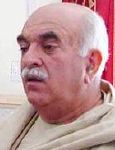
This is not end of story here as there is yet another dimension to this alliance. A lesser known fact is that ANP and PkMAP both have a very strong support in Karachi city. Their call for Pashtun unity in Karachi area is probably timed around elections as ANP-PkMAP may be eyeing a few provincial or even a National Assembly seat from the city. The events of May 12 have only highlighted the importance of this dimension. Since May 12 incident both Asfandayar Wali and Mahmood Khan Achakzai have made several trips to Karachi and talked about Pashtun unity. In the local city politics context it may cause even more polarization of people on the basis of ethnicity and to me it does bring back the haunted memories of what the city went through in fifteen years period of 1983-1998. While pride in one’s ethnic identity is a good thing, politics based of ethnic rivalries cannot be good for the country.
Whether this loose alliance of ANP-PkMAP will result in an electoral alliance is still to be seen. Yesterday’s news is that the verbal agreement between Asfandyar Wali Khan and Mehmood Khan Achakzai has not materialized on ground yet. So far no headway has been made to form bodies for making recommendations for a merger or formation of an electoral alliance of these parties. I guess, only time will tell how this alliance plays out in long term.
Now looking beyond this particular alliance, there is a strong ethnic under-current running in Pakistani politics today. This factor is stirring the pot slowly and the outcome can become a major defining force in the future of Pakistan politics. Possibly as major a force as religion has become today. Those who think about Pakistan politics should keep a close watch on how this under-current develops. People didn’t talk about it in open but these differences were very visible even in CJP reinstatement issue where it was very clear which geographical area of Pakistan were drawing support for or against him.
In next elections, I will not be surprised if Baluch nationalist parties sweep the whole Baluch belt of Baluchistan as well as make inroads into PPP’s stronghold in Southern Karachi towns.
Therefore the need of the hour is to face the reality and be inclusive of regional parties; To build unity through diversity; To acknowledge and address the legitimate concerns of smaller provinces and groups, and to create the mechanisms for them to participate meaningfully in national politics.
I will here present the argument that most of the regional parties have played their national roles whenever they are considered worthy of it. ANP, PkMAP, MQM, BNP, JWP have (or had) all joined hands with federal parties in the past. ANP uses English and Pakistan’s national language Urdu only at its website to promote their message. Ms Hameeda Khoro whose past has been associated with Jiyay Sindh party has played continuous active role at federal level.
We can see a stronger Pakistan with more and more participation of regional and provincial parties at National level. Most of the regional issues and people behind them need an acknowledgement of their issues at Federal level. They sometimes play the role of an angry child who needs more recognition. Just listen to them, talk to them and at the very least try solving their issues sincerely. We will get a stronger Pakistan in return.



I think people should be allowed to have whatever regional language they want to have as their official language. India has multiple regional languages as their respective official languages and I have never seen that causing any rift.
Moreover, multiple provinces is not going to hurt if it helps people in sorting out their problems and voicing their opinions. The army has created the same situation as was before Bangladesh by silencing the smaller provinces in the name of extension of writ of state.
My only fear is that having more provinces might result in more MPAs at a cost of national exchequer without any significant benefits to trickling down. But when Shortcut Aziz can have one of the largest cabinets in the world and take largest entourages in the history of Pakistan on international trips, additional MPAs wont hurt the national kitty that much.
Owais, Good to see you write on politics. I agree with your message. An other name that can be mentioned here is rasool bakhsh palejo, a die hard sindhi nationalist, who during the cj saga and after the historic lahore reception had a change of heart and said he was wrong on his previous stances and that brothers can have arguments wih each other. A cliched statement but coming from him it meant something. People like him must also be given a role in national politics.
Owais: I am with you for the most part. However ‘regionalism’ and ‘ethnic politics’ are not the same. While regionalism demands a fair share for a certain region from the national resources and therefore must be respected, the ethnic politics is divisive and poisonous for the national unity. The nation must help promote development in disadvantaged areas of the country. The regional politicians have a role to play in that respect. But ethnic politics concerns itself with a certain ethnic group only; it borders with racism. It is a myth that only ethnic Bloch live in Baluchistan and only ethnic Pashtun live in areas claimed as ‘pashtunistan’ by the ethnic Pashtun politicians. The reality is that as many non-ethnic Bloch live in Baluchistan as ethnic Bloch do and same could be said for Sindh. It may come as a surprise that not every body in Punjab is an ethnic Punjabi. There are more ethnic Kashmirs in Punjab than in Kashmir itself. At the end these are just election year posturing on the part of politicians who can not ‘cut’ at the national scene.
I agree with PMA. Regional politics is welcome but ethinic is poisnous to Pakistan. I grew up in Karachi and I have seen how two ethinic parties have pitted ppl to fight with each other in 1986.
Why? All ppl in Karachi are facing same problems. Any one who is born in Karachi will face “marginalizing” in government jobs on base of quota system. All Karachities face issue of “power outage”. Why not use “Karachities” slogans instead of an ethinic one.
very well pointed out Owais.
I agree with you that the need of the hour is a stronger federal bondage.
The solution is simple, give provincial autonomy.
A pakhtoon jirga is far more democratic, effective and efficient than our federation, they can handle themselves better. As for Sindh, the perception (of autonomy) is the same, although the nationalist parties in Sindh and Balochistan aren’t as impressive as their counterparts in Sarhad but they are real.
But since Punjab is not willing to do so, this is bound to happen, and infact it SHOULD happen IF the greater federation keeps on hurting Islamic values AND deny provincial autonomy (e.g. Kalabagh issue)
After reading about our history, I still cant understand how can four different provinces with different cultures, language and traditions come to a single platform ‘Pakistan’ if it was not for a common religion. If Jinnah envisioned a country for ‘muslims’ rather than Islam, then why not fight for their rights within India, he made a separatist movement based on a religion turned ethnicity: ‘muslims’, why can’t Wali and Achakzai do the same, when in their case, the ethnicity is real?
Owais, I’m not sure I follow your argument when you say:
Dear Lefty Prof, my argument is that the alliance has the potential of taking people (especially natives of NWFP) away from religious parties which are becoming a fodder in the violence in western provinces.
It is natural for political vacuums to create centifugal forces that promote more ethnic politics.
Both Ayub Khan and Zia via stubborn efforts to control mainstream opposition exacerbated ethnic tension despite proclamations of being Pakistani only.
Much the same is happening now under Musharraf, regional and ethnic dispariries have increased in his time and these create the focus for ethnic or regional parties to flourish. Add that to a heavily manipulated electoral system and it’s a recipe for trouble.
It is really funny. There are people here at ATP who in one breath will argue that India and Pakistan have same culture and hence ought to be one country, and then in the same breath will also say that all four provinces of Pakistan have different cultures and nationalities. Please give me a break. Giving autonomy to the provinces amounts to putting fate of millions in the hands of divisive ethnic politicians. Generations of ‘sarhadi ghandi’ family have tried to implement the ‘gandhian vision’. Well, Pashtun have never bought it in the past and won’t do it now either. And lets not pin the blame for our own failings on those who got us this country.
Any political party that uses a specific ethnic stance and uses a specific ethnic name and promotes any specific ethnic group must be banned and should not be allowed to take part in any type of elections. They are separatists and want to split the nation.
Only parties who dont have any such agenda and consider all areas of Pakistan equal and think neutrally should be recognized by the people (yeah wake-up plz) and such parties should reflect that by having members from various ethnic groups. As these are the mature parties. Division of provinces is also critically important to solidify Pakistan.
DB9, don’t you think that banning the parties will just send them underground and make people even more alienated. I think they should be brought out in open and allowed to take part in elections and let people decide their fate. Overtime they will be filtered out by the democratic process.
Division of provinces is an important topic. I wish if we could have debate expilictly on “division of provinces”.
Why are provinces so important? If all citizens have equal rights then what is with provinces? All resources in all provinces should be pooled together and declared common property of the nation; oil, gas, electricity, food whatever…
Provinces are a problem not a solution.
“I wish if we could have debate expilictly on
Dear Waheed. What you are suggesting has already been experimented before in the form of One-Unit by Ayub Khan. The results were disastrous. Lahore was made the provincial capital of W.Pakistan. People from Sindh’s villages had to go to all the way Lahore to get access to provincial govt offices. Agricultural lands of Kotri barrage and Sukkur barrage were alloted to out-of-province people in the name of National unity and in the name of pooling common resources but it worked the other way. Local people felt alienated. The scars of One-Unit are deepest in Sindh. Therefore I will argue against the proposal of doing away with the Provinces completely. Provinces and their set up provide localized sharing of resources. I think it should be encouraged.
Waheed are you suggesting “one unit”? Just try to find out why there are 26 states in India or 50 states in USA.
News: The Muttahida Majlis-i-Amal government has finally decided to seek a non-controversial name — Afghania — for the NWFP which has been without a
As far as I can see this new alliance will bring Pushtun nationalists in collision with Baloch nationalists in Balochistan… as well as Hindko speakers and other non-Pushtun residents of NWFP.
The main demand is a new Pukhtunkhwa province carved out of Punjab and Balochistan merged with NWFP.
Do you think the Baloch leaders will agree?
Given that the nationalists have indeed been forced to look at Karachi and other places means that linguistic/ethnic politics have gone nation-wide.
In this case- here is a theory I came up with a few months ago…. which could use this kind of politics as a building block for a true national Pakistani identity:
Here are the details of what I had in mind:
Proposed Tri-cameral Legislature
Lowest house (Federation of communities principle) i.e. People?s assembly:
1000 seats? Two votes per person: Religious (including sectarian) identity, Linguistic identity
100 each linguistically for Punjabi (including 50-50 for Saiki Non-Saraiki, Sindhi, Balochi, Pushto and Urdu-speaking? 50 of each to be elected from within the province of origin 50 from out side of it. That is 500 seats. 100 seats for Shias 100 seats for Sunnis 100 seats for Christians 100 seats for Hindus 100 seats for miscellaneous communities. Provision calling for 50-50 ratio on all seats for men and women? hence 500 men to 500 women. This would allow Gender Parity and Majority/Minority parity as well as Shia-Sunni parity in the lower house.
National Assembly (One person One vote democracy)
270 seats. One person One vote wth provision that each party has to put 33% women and 10% Non-muslims as candidates in the election.
Senate (Federation of regions principle)
As at present? 100 seats indirectly elected through NA and PA.
Prime Minister allowed from any house through vote in all three houses in joint session.
President to be elected through Parliament and provincial assemblies.
Fiscal matters – I understand- would be the exclusive domain of the National Assembly
@Owais:
Provinces divide us and take focus away from the fact that we are one nation and that it
Now that the new coalition is demanding attock and mianwali from Punjab, why don’t they demand part of Karachi as well where pakhtoons are in large numbers? If we could have geographically distinct East- and West- Pakistan, we can surely have north and south pakhtoonistans. :)
Heck even 15% of Lahoris are of afghan origin. That can go in there too; west pkhtoonistan?
Interesting question though why they are not asking for pakhtoon dominated areas from baluchistan.
The reason they have given is
It is a myth that only ethnic Bloch live in Baluchistan and only ethnic Pashtun live in areas claimed as
As a pashtoon, i want to preserve my language through the constitution and i want the prosperity of our culture, language and people. why should pashtoons be marganalised in the sense of the above mentioned categories. i think pashtoons should be one and as they once ruled the area and were feared, shall be now too! call me hot headed or whatever, but it is our right to be what we want to be! do not dictate our way of life, freedom, culture, language and nationality: Pashtoons
When ANP fights for pukhun rights, it is very conveniently labelled as “ethnic politics” by the punjabis who are literally running pakistan and sucking it dry. Why do people forget that ANP is not a national party with seats all over pakistan? ANP is for/by/of the people of pukhtun ethnicity and there is absolutely no harm in it whatsoever!
ANP has always been the most popular party until the recent public backlash in light of the American invasion of afghanistan.
when the democratically elected nwfp assembly adopted a resolution to renaming nwfp, the federal govt vetoed it, how unfair! all this in the name of a greater democracy!
waziristan gets bombed by Pak Army as a matter of routine, the americans fire missiles in it for target practice and the beghairat pak-fauj generals just sit bak and enjoy. i wonder how the punjab will react if lahore is bombed by a pakistani f-16 or an american drone!
we the people of pukhtunkhwa have just about had enuff of the “pakistan dillusion”, if we are not given our due rights and the provincial autonomy which the Quaid and the constitution promised us, then I am happily ready to ask for formal independance of pukhtunkhwa. If yougaslavia and USSR can breake up, then so can pakistan, not to mention pakistan has already been broken once before.
pukhtun nation will not be subjected to the rule of punjab, this is not what we fought for!
long live pukhtunkhwa!
Here’s what we should do:
a) Give NWFP to Afghanistan. They are brothers and they deserve each other.
b) Divide up Baluchistan into 1400 independent countries based on tribal boundaries. If they want autonomy, heck just give it to them.
c) Give Punjab and Sindh to India.
d) Dump Karachi into the Arabian Sea, because that’s what you do with garbage. You get rid of it.
DISCLAIMER: Do not take this comment seriously!
The mentality of our nation has been screwed up since the creation of Pakistan. We always thought about “rights” and “privileges” on the basis of our ethnic, sectarian and linguistic back ground and smaller provinces always thought that their rights were violated by Punjab. Ethnic nationalist parties always threw gasoline on that fire to gain political power because dividing people is easier than uniting them.
In 1971 Bangladeshi citizens also had this feeling of being used and Mujeeb used to say in his speeches ” Sorah paisah Bangoli banata hai aur sorah paisah Punzaabi kha jota hai” (my poor attempt at Bengali accent) . After the creation of Bangladesh how many questioned him that Sheikh Sahib what happened to that sara paisa? if Bangladesh was running two countries with its revenue then it should have been an economic power by now since it had to care for only half the people from its reported revenue? The reality is that even today Pak Army’s aviation rescue team has to go to rescue poor people from flooded plains of Bangladesh.
The matters of revenues and royalties have been blown out of proportions by these so called political parties. Today NWFP demands royalties from power generation even though the dams were built and paid for by the whole nation, not just Pakhtuns. Same situation arises in Balochistan when it comes to Sui Gas or copper mining. I am not saying that the local population should not enjoy these assets but in my point of view they don’t have any special rights on them just as much as the rest of the Pakistani people do.
People who get emotional on these issues should stop and think for one second. What happens if Punjab all of a sudden imposes 50% tax on all wheat and rice that is grown in Punjab and is exported to other provinces in the name of “royalty” ? How would they react?
Please don’t take my comments in the wrong sense. I am all for developing the small provinces and giving the local population all the facilities of a modern life and opportunities to advance but not on the basis of how much power is generated on their lands and how much gas is available there but based on the fact that they are all Pakistanis and deserve the same rights and opportunities available to the rest of the nation, nothing more and nothing less.
As a side note, does anybody know how much “royalty” Punjab gets from the mining operations that were developed by the British and not by the national revenue? The answer will surprise you.
I forgot to add! PAKISTAN ZINDABAD :-) For once guys please act like a nation and not a crowd.
Haris Siddiqui i found no issue in giving provinces autonomy. As for “wheat”, if punjab is imposing tax on wheat then other provinces may be given choice to import it from India.
Provincial autonomy will make Sind,NWFP and Baluchistan happy. We should also think of creating “seraike” province because a smaller Punjab will be better for federation of Pakistan. I will support changing name of NWFP but dividing Baluchistan will not be acceptable to Baluchis and Baluchis have already suffered a lot from Pakistani federation.
Faraz, may I propose a transit fee in pujab for all Indian goods destined for these other provinces. You’ll still buy our wheat, just at double the price.
Faraz,
“Wheat from Punjab” was noway intended as a suggestion, merely a hypothetical scenario for the people who demand “royalty” for national assets.
As far as provincial autonomy is concerned, I am not a big fan of it. I am a proponent of a strong federation with provincial governments playing their administration roles like it is.
In a perfect world, I would divide Pakistan into 25 to 30 “districts” based on population and would abolish the provinces all together because in my view they promote nothing other than hatred. In a smaller administration structure people will have easier access to the government and the system will get more streamlined, at least in theory.
Haris I also believe in strong federation. But it can be acheived by giving more powers to units. Why in most of world including India and USS they have given autonomy to states?
In USA every state has its own constitution and its own flag.
I support Asghar Khan scheme of creating 10 provinces but thats debatable. I myself opposes racial politics but dont understand what is issue with giving more autonomy to provinces as exist in most of the world.
Pakistan is not U.S and it will be a long time before we can rise as one nation. U.S states don’t have the problems of ethnic hatred weakening the foundation. German, English, Irish, Italian etc. etc. are not at each others’ throat claiming exploitation.
As far as the autonomy is concerned, the states do enjoy some of it but majority of the administrative autonomy lies in county and city governments especially public services, education and peace.
Like I said divide Pakistan in 25 to 3o units and call them whatever you want, provinces, states or districts.
All flags of U.S states are flown below the national flag in sharp contrast to French Canadian Quebec where the state flag flies above the Canadian flag, do you see the problem in geographic boundaries based on ethnic divisions even in a developed country??
faraz, what do you mean by giving more autonomy to provinces?
Also did you see what MQM did in Karachi on 5/12? Do you want them to do it in the whole sindh and say they are autonomous and neither other provinces nor federal government can interfere with their business? Provinces are just not ready.
Waheed there is a conept called “civil rights” which balances autonomy and saves rights of ethinic minorities. In USA civil rights is guarnteed by federal government. Life is one of the civil rights. Similarly migration from one state to another is another civil right.
Whenever there is suspicion that state or local government is not fair, FBI can always interfere on basis of civil rights.
So in Pakistan such a system can be implemented. Haris I think ppl will not cut each other throat if they are given more freedom to run their local afairs. Yes I think suggestion of making every division a province is a better one.
Latest news: court orders release of Javed Hashmi.
While the demands of the nationalists are rather extreme, some degree of provincial autonomy is necessary even from a purely administrative point of view. Besides, if the provinces have a bit more resources in their hands, it should give them a sense of ownership and help in reducing tensions between the various units. For example, if most of the public sector development budget is given to the provinces, it won’t bring the heavens down, but the provinces will be able to plan and implement their own development schemes.
However, the issue of provincial autonomy should be addressed in a wholistic manner along with devolution to the grass roots and not in isolation as most of its proponents in the political parties, media and civil society are doing in a typical display of the band wagon phenominon. If there is one good political thing that Mush brought, it is devolution. Yes, its form leaves much to be desired, and he may have had his vested interests too, but the solution is to acknowledge its good points and identify its flaws rather than ridiculing the whole exercise in a myopic manner. One thing that Pakistan could certainly do without are those analysts who go on opposing everything coming from a leader they dislike, instead of debating it on its merit.
A positive news covered in brief in national media of August 5 is that JWP faction of Talal Bugti (Akbar Bugti’s son) has decided to side with PML(N) in next elections. Now whether we like PML(N) or not (i don’t b/w of their lotacracy) the positive thing is a national party has talked to a regional party and they’ve decided to play it together at national level. JWP is not left to isolation. That is a positive development.
Pakistan has serious structural faults and these are getting more and more stressed at the joints with the continuation of status quo.
I fear that if common sense does not give soon, the structural joints will (give up).
The present reality of Pakistan is that it is a community of communities; regardless of what the dreams and aspirations may have been when it came into existence in 1947. And as it stands now, it isn’t anyone’s ancestoral property that they can decide what “they” will “give” or “not give”. There is urgent need to wake up from such delusions, lest we are all consigned to the pages of history once more. The situation in Sindh, Balochistan and, perhaps now, in NWFP is fast becoming untenable.
The socio-political contract of Pakistan needs to be re-negotiated from scratch. And what its constituent communities can all eventally agree to, is what it will be, if it is going to “be” at all. Otherwise, it does not take a deep intellect to see balkanization emerging in the northwestern corner of South Asia.
Whether we have the maturity to start re-building starting from this, not necessaily ideal, reality will determine the long term destiny of our country. The good news is that it is possible for us to work our way back to the originally desired level of bonding, with some good judgement now and a lot of hard work in coming years and decades.
Without being overly optimistic or pessimistic, I hope and pray that we are up to it.
Once a visiting jounalist (and poet) recited one of his
poems in Ottawa, Canada:
har taraf tAk lagA’E huv’e gidh baeThE haeN
One can already see them circling overhead …
Yes, the ill-omened vultures are swarming all over
As expected the alliance calls for the unity of Pashtuns and criticizes religous leaders- reporte in today’s Dawn here:
yeah i agree pakistan is a bteer fedartiona and multi-enthic union where even nawaz sharif and wali khan can be united even britain or indian states dont allow that flexilabity to say APHC leadres sit with prsident hu of china etc/
well yes i would say that both PML-N and PTI have some understanding with ANP and JWP to keep pakistan united becuse these parties esp. the JWP r progressive and leftist in thier outlook to keep pakistan as strong fedaerl unit.
i would say one thing pakistan is still the best comprisme betwwen strong uniatry states like france and others like canada or ussr which r more conferadl and r liable to break up whereas pakistani fedreation is based on equality freedom and socail justice for all the poels and enthnic groups of pakistan.
ANP-PkMAP are working together to tie-up their student wings closer to eachother. Details from Dawn newspaper here:
The Pakhtoonkhwah National Democratic Alliance (PNDA) which started with lots of fan fare in July 2006 is apparently all but dead. After JI’s boycott in NWFP, ANP suddenly sees itself fit to get some seats and is taking part in the elections. ANP is also eyeing a National Assembly and atleast 3 Sindh Assembly seats from Karachi. For NA seat of Sohrab Goth, Karachi area it has allegedly got an understanding with the JUP candidte of the constituency to consolidate Pashtun vote in the city.
ANP is trying so hard to win a seat from Karachi that there were reports of a team coming from ‘Baacha Research Center’ Peshawar to Karachi (September 2007) to get a good estimate of Pashtun vote in the city. Apparently National Census doesn’t count the ethnicity correctly as Pashtun voters in the city are usually enumerated with their permanent residence in NWFP instead of Sindh.
PkMAP who had no chance of getting more than 2 or 3 seats from Baluchistan sees itself fit to ‘boycott’ the elections so that ‘izzat-e-saadaat reh jaye’. Thus Achakzai is currently playing the boycott game.
PNDA which had started last year to consolidate pashtun vote now lays as divided as the two constituent parties viz. ANP and PkMAP
ANP has so far got 2 provincial assembly seats from Sindh also. This is amazing and their best performance in Sindh in the history of Pakistan.
I agree Owais. But one must remember, as I have heard numerous times, the largest pushto speaking city in Pakistan by population is Karachi NOT Peshawar.
Way to go X-3 or W11, I should say ;) My apologies to non-karachiites.
After looking at ANP’s success, Mahmood Khan Achakzai must be thinking about what if he had stayed with ANP instead of breaking the alliance and then going the way of boycot with APDM
You have find a good Seat, Please improve your party position. i love my Party ANP. Plz keep attention about peoples not on money.all the pukhtoon Nation trust on you plz plz dont waist the NWFP like before, plz dont try about sabotage, go for peace not for kala bagh and other issues. plz remove the lable of tererizium. re arange the pushtoo culture again on TV and in Books. plz collect all the pushtoon all over the Pakistan.
from Miandad Khan. Koe Barmol. 0346- 9033729.
0301-5249869
“ANP won’t press for restoration of judiciary”. This is the title of a dawn news today.
I am gald to hear that all the pashtoons (in pakistan) have make The new alliance called Pakhtoonkhwah National Democratic Alliance (PNDA) Because we all pashtoons are brother.It doesn’t matter which country we are(Afghanistan, Pakistan,Hindustan etc) we shall try to came to gather to sapport each other z.
CHIEF JUSTICE OF PAKISTAN ARMY
All the Pakistanis are fascinated by daring decision by the Army Chief to redefine the role of Army thus pulling it away from its controversial connections with politics and governance. Such a courageous step combined with other professional and welfare measures reflects his new visionary outlook for this great institution as its chief executive. It is equally if not more important if the General also asserts himself as Chief Justice of Pakistan Army. While he does internal legislation for future, he has to display the audacity and capacity to undo the injustices done to the members of army in the recent past as a result of political expediency. Certain arbitrary policy decisions based on personal whims are believed to have long term adverse effects on the Army in general and the under command in particular. The Army Chief has three hats of executive, legislative and judiciary and the Army, contrary to the civil services and Indian Army sharing same British traditions does not allow its officers to question his decisions, if they feel to be wronged. Such an autocratic approach betrays the concept of basic human rights and social justice to those who pledge to lay their lives on the orders of their superiors.
Should that mean that the decision makers in the armed forces are angels or perfect human beings? Certainly not; that is why some wise men introduced the term REVIEW in the promotion board results. However, this clause had been omitted for brigadiers sometimes back for unknown reasons thus denying the possibility of reviewing the decision of a promotion board. A specimen of blatant violation of established policy was witnessed during last promotion board from brigadier to major general resulting in unprecedented supersession of officers with admirable profile. This board as a convention considers two long courses for promotion to maintain a balanced relationship between induction and promotion as two courses join PMA every year. This time, however, a decision was taken by Military Secretary to include an other PMA Long course on the pretext of non availability of qualified officers in armoured corps. It required no genius to conclude that this decision would lead to unnecessary competition in certain arms, as the vacancies remained generally unchanged and arms specific. Later some vested interests were able to get two more graduate courses included to ensure early promotion of some crony thus forcing the staff to find justifications for enlarging the scope of the board. Such innovative arrangements minimized competition in armoured corps in the next board aimed at benefiting some more cronies, while the results revealed that only infantry officers suffered as the ratio of qualified infantry officers became exponentially higher to the number of vacancies available, resulting in massive superseding of officers with comparable profile. It is assumed that infantry was used as a
Hello, Dear I really like Asfandyar Wali khan. He is the best Leader in pakistan. he is a really hard worker. In all pakistan there is one Asfandyar wali khan Which we like very very very much. thank u very much dear Asfandyar wali khan.
salam to all anp and buneri anp broters ……
Mr. Owais Mughal.
For real political parties their principles are each and everything. And Boycott of PkMAP proved today that they were on right path. Another thing you should know that PkMAP is not running for Government but for Independence.
esanollah
i am a Pakistani pushtoon and i get it that you are from afghanistan.I agree with you when you we are all brothers.however,i am a muslim,then a Pakistani and then a Pushtun.my loyalties take the same order…and so do those of most of my friends(we are from Peshawar)…as well as those of most of the Pukhtunkhwa and Karachi Pushtuns…so you afghans can give up any irredentist dreams you may harbor…
esanollah
i am a Pakistani pushtoon and i get it from your display name that you are from Afghanistan.I agree with you when you we are all brothers.however,i am a Muslim,then a Pakistani and then a Pushtun.my loyalties take the same order…and so do those of most of my friends(we are from Peshawar)…as well as those of most of the Pukhtunkhwa and Karachi Pushtuns…so you afghans can give up any irredentist dreams you may harbor…i should remind you that most online jargon advocating “Pukhtunkhwadat” and Pukhtun separation from Pakistan is from Afghani Pushtuns,not Pakistani ones…
actually these 4 provinces did not exist in their present forms at the time of Pakistan’s creation….the original number of federating units was 18,not 4….Yahya Khan in dissolving West Pakistan province artificially produced them ignoring ethnic or historical lines.so in reality the provinces are multi-cultural and new entities…not ethnic or historical ones…and do not have a basis in either case…and yes Atif Abdul-Rahman …india is a country with EXTREMELY diverse cultures which make difference between pakistani cultures seem puny…different indian languages even employ vastly differenig scripts and different ethinicties have vastly differing history…and they are one country…so why can’t we be one?maybe its because indian politicans have actually made efforts to keep the country united whereas if our politicians were the same then the 1971 debacle wouldn’t have happened…they just don’t seem to care…
owais mughal
the west pakistan scheme was a failure due to adminstrative faults brought upon by inexperienced and corrupt politicians…..look at the american states of texas and california…both roughly the size of pakistan…and they are working fine due to proper decentralizaton down to the district and community level…the scheme can work if improved upon and restructured…
i personally do not understand why some felt it was a submergence of the identities of of the smaller ethinicities.the first cheif minister of the West Pakistan province was a Pathan,which served as a blow to those nationalists that advocated its dissolution on the basis that it would marginalize the smaller ethinicities.i personally believe if the scheme had been properly formulated and implemented…and equallity had existed between the two wings of the country,then West Pakistan would not have been a failed scheme.Real opposition to the scheme came from nationalist parties who new that they would never be able to rule it as i was very diverse in its ethnic composition…that is why baloch nationalist parties want to get rid of the Pushtoon part of Balochistan…ethinicity should be separated from matters of the state and religion should not as religion is an ideology on whose basis a state can be run.islam also welcomes all into its folds…ethinic politics just promote hatred and further divisions amongst the masses…gaps that are permenant and can never be filled…
the Baloch leaders will definetely agree to getting rid of the pukhtun half of Balochistan as then Baloch nationalist parties would be able to form a government without engaging pukhtun nationalist parties in a coalition…
they have already agreed to it…
which,coupled with the attempts of all pushtun,baloch and sindhi nationalist parties,especially ANP and BNP, to ethnically divide the citizens of the financial capital,and the most economically important city, of the country,Karachi, just goes to show these parties don’t really care as long as they get their precious seats even if it means dividing pakistan on an ethnic basis and setting it on the path of dissolution…
Usman thanks for your comments here.
Tip O’Neil, the legendary Speaker from Boston, famously said, ‘all politics is local’.
And local also means ethnic. And there is nothing wrong with ethnic politics.
No matter what you will say, anthropologist will tell you, that the flavor of region changes about every 40 to 70 miles. The people, the language, the clothing, the food. It is fact of humanity, accept it and work with it.
It is also difficult to compare Pakistan with any other country, because of its size, population density and the (lack of ) infrastructure. Especially, with a developed country.
What compounds the problems are bad models of governance. Good governance in a democracy is a three part problem. Effective and efficient administrative units. Informed electorate and good leadership.
The effective administration in Pakistan is hampered by top down control instead of bottom up mandate. Power at each level is amassed and concentrated and is inherently subject to over-rule by the superior level. One telephone call can change the outcome of the file. Too many people go to the top to arrange that phone call. A recipe for corruption.
Additionally, the local ethnic balance needs an effective oversight by a national mechanism.
Provincial Civil Service (PCS) was a good idea run into ground by Civil Service of Pakistan (CSP). Where the PCS should have been ascendant, the CSP took over the slots. And then they ran it like viceroys, their personal domains. And even after the “reforms of 1973″, the core level continues to function as it did before the reorganization. The break up into various administrative units was just a change in the process, not the control nor the mind set.
What should have happened is that PCS system runs the local show and CSP system would augment that the national goals and objectives work effectively. Thus the local tehsildar or thanaydar does not create his own fiefdom or an enclave. The top slots in each of the provinces and at each level should have never been with CSP, but PCS officers. In reality, the reverse.
This is why it is so critical to improve the local courts and at the same time, take the federal and provincial system down to the local level. Create tiers of administrative units, local, provincial and federal.
Sultan Musharraf missed the opportunity to fix this. He came close but did not understand the complexity of the system because he was trained in the top-down system. Or perhaps did not have the desire to fix it. He needed the cronies to keep him in power.
If the administrative units and systems are laid out properly, then the political process is not has only one mandate: to carry out the will of the people. The two go hand in hand.
The second part of the problem, the informed public is a serious issue. Take the bill for the 18th amendment, approved by the NA and pending approval by Senate. I have not been able to find an complete copy of the bill anywhere.
Worse, the press banner lines are at best misleading. The News has the worst headline. And I suspect most people are commenting on things they have not read.
Amazingly, in this proposed amendment, there is a provision of Right to Information. And yet, this very information about the proposed amendment is not available. So much for the rule of law.
People in Pakistan are kept in the dark. Media, both print and electronic, a willing accomplice.
Finally, the leadership. Well, that is process of trial and error as well as the diversity of resources. Pakistan keeps getting stunted on the trial and error process. Not enough errors of trials have sunk in because of the gaps. People like muscles, lose ability to remember the errors with lack of flexing. And diversity will come where there are more points of entry into the process.
Miles to go before we sleep.