Custom Search

SIM-Nation: 76.6 Million Mobile Subscribers in Pakistan? Could this be right? Is this good?

Posted on January 21, 2008
Filed Under >Adil Najam, Economy & Development, Science and Technology, Society
56 Comments
Total Views: 34627

Share

Adil Najam

Our friend Babar Bhatti reports on his blog State of Telecom Industry in Pakistan that in 2007 the total number of mobile subscribers in Pakistan reached 76.6 million. He is reporting from an interesting statistical compilation of achievements compiled by the Pakistan Telecommunication Authority (PTA); (more number from this report are included below).

I ask the questions I do in the headline not out of cynicism but out of very honest inquisitiveness. I deal a lot with development related statistics in my professional work and for many reasons the number seems rather surprising to me. It probably is that the meaning of “subscriber” here is different from what I would have expected or that I am unfamiliar with the specifics of how this number is calculated and what it signifies. If so, I am eager to learn. I also wonder to what extent massive growth in mobile phone subscribers is necessarily good for a developing country like Pakistan?


Depending on who you want to believe the population of Pakistan is somewhere around 165-140 million. Probably closer to the latter number; some estimates would suggest even higher. If “subscriber” means the number of unique individuals who are subscribing to a mobile service (as it would in many other development contexts) it would mean that nearly half of all Pakistanis – man, woman, child, old, young, infant, newborn – are mobile phone subscribers.

Although anyone in Pakistan knows that the penetration of cellphone to all classes – including middle and lower-middle income groups – is very high, the absolute poor (and there are still a very large number) are not likely to be subscribers. It is also likely that the penetration is much less in rural areas than in urban, that it is much much less amongst the very old and should be zero or nearly zero amongst the very young. I have seen some kids (12-15 years) with cell phone of their own, but these would be mostly in the higher economic strata and it could not be a very high number. Similarly, while the phenomenon of multiple phones per family is now dominant in many middle and most higher income groups, one assumes that it is less prevalent in the lower income groups.

Any set of reasonable assumptions about these are related variables would suggest that the wording from the PTC is potentially misleading. It is more likely that the number is really of the cell phone “numbers” issued and technically in use. The fact, however, is that many many of these “issued” numbers would not really be in use. However, given the “SIM culture” and the rather common practice of holding multiple SIM cards and numbers (I have two myself, and I don’t even live in Pakistan!) it would not be surprising that the real “subscribers” are much less – although a still impressive number.

But that is my second, and more important question. Should we be really be impressed – in a development perspective – if the number of mobile subscribers are high in a developing country? It certainly signifies good business for the industry, but what does it say about the country and national development?

There are those who argue in the literature that the rapid growth of such services in developing countries signifies the failure of governments in providing essential infrastructure. This argument is far more valid in the water sector. A very high number of urban Pakistanis, including very poor ones in katchi abadis buy water from non-municipal sources (private tankers, tubewells, etc.). This does not signify a high private demand for water services as much as it signifies low government provision of the service. The same is true for energy – both in terms of the number of people (even in middle income groups) who have to expend money on private generators or other sources and also those who have to buy fuel wood. At least in the essential services category (cell phones are not really there) this means that significant portions of one’s income have to be spent on buying essential services (at higher prices; e.g., in the water and energy sectors). The poorer you are, the lower your disposable income, and the greater the proportion of that income being spent on these services, which you have to buy privately because the public provision is inconsistent or non-existent.

This is not without relevance to the cellphone situation. For my parents and many others I know, the cell phone is as much a means of security – in an increasingly insecure time – as a means of communication. This is true elsewhere too, but it is even more true in Pakistan. Similarly, the “need” for cellphone increases as other means of communication become unpredictable. E.g., the land-line system. There is also, always, the issue of improper marketing and the consumer being forced into spending much more than they should or thought they were.

The point of all of this is to wonder whether cellphone uptake actually translates to an increase of net developmental productivity – i.e., are people able to do more and make more in terms of their livelihoods – or is it that it has become a new “necessity” and “cost.” (For example, “everyone needs a cellphone now because everyone else has it and not having one is a barrier to entry”). If, indeed, it is that a new “need” and “cost” has been created then that only means that the net “cost of living” has gone up. And, especially for the poor more and more of their disposable income is diverted to this “need” that may not be adding to their productivity or livelihood, but not having which would hurt them. This at a time when the cost of living is already high and economic survival at the individual level under stress (remember where Karachi was on the Global Liveability Index?).
Of course, if the ability of having a cell phone at low cost does, in fact, translate into increased livelihoods (i.e., that the cost of cellphone per person is less than the increase in earning per person because of that cellphone) then the net development benefit would be positive. Even if not, one could argue that development benefits should include (I agree) the non-monetized convenience of having a cellphone; and if this benefit outweighs the costs that society as a whole is better off. What I would like to know whether these benefits do, in fact, outweigh the costs? Or, have we crossed some threshold of excessive cellphone ownership where, despite seemingly low costs, the marginal benefit of ownership no longer exceeds the marginal costs?

I do not wish the argument to be taken wrongly. Anyhow, it is more of a question than an argument.

I appreciate that in many developing countries the availability of cellphone cheaply does allow new opportunities to large number of people – including the poor – who did not have those opportunities before. It is also, of course, wonderful for the telecommunication companies and those who work in these companies and related industries (The PTA report – below – says that 1 million new jobs were created). None of this I dispute. The question is about the overall development impact, especially when things overheat. Good? Bad? or Ugly?

So, there. I really would love to get a serious discussion and answers from those who are more deeply involved in this sector. As you think about that, here are some other highlights from the new PTA report:

  • Overall teledensity of Pakistan reached 52.8% in December 2007.
  • During 2006-07 total telecom revenue was Rs 236 billion.
  • Total telecom investment during the year was US $ 4.12 billion and the share of telecommunication sector in GDP was 2.0%.
  • Telecom companies have invested over US$ 8 billion during the last four years, mobile sector investment share accounts for 66% of the total investment.
  • During 2006-07 the revenue of mobile industry was Rs.133 billion, an increase of 48% from pervious year.
  • China Mobile investment is US$ 704 million during 2006-07 for expansion of CMPak networks.
  • Mobile Sector paid approximately Rs. 63 billion taxes to the National Exchequer during the year 2006-07.
  • Upto December 2007 cellular subscribers in Pakistan reached 76.6 million.
  • On average 2.3 million subscribers were added every month during 2006-07.
  • Upto June 2007 6,000 cities/towns/villages covered by mobile operators.
  • Upto December 2007, total cell sites 17,779 all over Pakistan.
  • Today mobile network coverage is reaching to almost 90% of the total population
  • The telecom sector received above US$ 1.8 billion FDI, 35% of the total FDI.
  • Telecom sector contributed Rs. 100 billion in the national exchequer in terms of taxes and regulatory fee which was 32% higher than the previous year.
  • GST/CED collection during the period reached Rs. 36.28 billion.
  • Over one million jobs have been created since the deregulation of the telecom sector.
  • Rural Telephony Project launched during the year under which 400 Rabta Ghar (Telecentres) are being established in rural areas.
  • Total investment in the LDI sector grew upto US$ 603 million in 2007.
  • New LDI sector revenue stood at Rs. 15.3 billion.
  • At the end of 2006-07 total fixed line connections stood at 4.8 million where as the teledensity is 3.04%.
  • There are total of 387,490 PCOs including WLL based PCOs which are working across Pakistan at the end of year 2006-07.
  • By June 2007, Broadband subscribers reached 71,000 and 65% of Pakistani broadband users enjoy DSL broadband technology.
  • The total teledensity of AJK & NAs was 20.1 in 2006-07 as compared to 3.6 in 2005-06. Overall growth in teledensity in the region due to deregulation is 450%.
  • By June 2007, Cellular subscribers reached 912,227 all across AJK & NAs.

56 comments posted

  1. Eidee Man says:
    January 21st, 2008 3:02 am

    Pakistan has a lot of problems with water, electricity, and other areas but that is not the fault of the telecom companies. I actually feel that this industry is an example of what a democratized market can do in Pakistan; given the ridiculous charges, phone locking, etc we have to put up with in the U.S., the Pakistani cell phone market is actually really good.

    So, as long as the phone companies are not doing anything illegal and are not getting unfair treatment from the government, there is nothing to worry about.

    Whether cell phones lead to an increase in productivity is irrelevant. I think they do; but even if they don’t, who are we to decide how ordinary Pakistanis should use their cell phones?

    The 76 million figure is probably flawed, but then again, so are many of the figures put out by development agencies….the fact that one could quantify livability is frankly, absurd.

  2. Khalid R Hasan says:
    January 21st, 2008 3:17 am

    There definitely aren’t 76 million unique mobile phone users in the country. However, from personal observation, there is high penetration among the urban population. These services have been a boon to the working class such as itinerant plumbers electricians etc who are able to keep in touch with their clients much more effectively. Even in rural areas, a surprising number of relatively low income people are now using these phones.
    I feel this is a good thing. My only concern is that the phone vendors are marketing unnecessarily complex phones.Simple and reliable phone and text messaging instruments from major brands can be bought cheaply, and most of us don’t need more than that.

  3. January 21st, 2008 3:31 am

    I was in Karachi last month after 5 years and the whole social scene has changed due to cell phone culture. Each and every of my cousin older than 14-15 had a cell phone and they were talking very long late in nights and I could not help myself thinking whom were they talking and of course it was none of my business to ask them. Even some of my bro/cousins had 2-3 different sims and some were carrying more than one cell phones. Parents can’t do much to control cell phone usage, every one goes to his room to sleep, you simply can’t track of every one all the time. Too much for development if you ask me. Why this rant ? Here is a reason.
    http://www.pakspectator.com/pakistani-girls-asking-for-mobile-phone-cards/

  4. January 21st, 2008 3:32 am

    Adil Bhai,

    I believe it is mainly bad news for Pakistan with some good for the reasons you have given already. In particular I bemoan the impact of such increasing cell/mobile phone takeup on our already depleted power sector.

    Just consider the amount of battery charging goes on and how it is helping to bring more and more loadsheddng for the poor toiling masses. Is this a price worth paying? – I think not?

    Feimanallah

    Wasim

  5. ahsan says:
    January 21st, 2008 3:53 am

    It is making terrorists’ task relatively easy. Easy contact from anywhere without spending too much. Youngsters are using cell phones to talk number of their girl-friends and boy-friends without being caught by their parents. They talk on cell-phones whole night long because there are several packages available which is very low in cost and by doing this they are ruining their healths and studies. Hiding cell-phones is not difficult at all.Cell phones are also being used by youngsters to carry all sorts of pictures, movies, and many other things which can ruin their mindset in a country where many youngsters do not attend their colleges and university classes because of our education standards and they can think about bad things all day long and indulge in bad habits at such tender ages.

  6. Shaji says:
    January 21st, 2008 4:25 am

    I don’t see any bad in it… just evolution. Communication is a necessity and we can’t avoid it. One day everyone will have a means to communicate with anybody whenever and wherever, so wondering whether its good or bad is a rather pointless question.

    The numbers of course are not accurate, these are just bloated figures which being in the investment.

    Just yesterday AT&T announced its first SIM-only package, something we take for granted.

    Some might say the priorities are misplaced, but unlike other sectors, at least its open competition.

    Unlike other countries our call rates are extremely cheap because of this seemingly mass penetration were plumber, electrician, cab driver, mechanic heck anyone I know has a phone so I can contact them anytime I want to.

    So I say, let them have it and one more if they can afford it.

  7. Rafay Kashmiri says:
    January 21st, 2008 4:56 am

    @ Right or correct figures ? well !! can’t say.

    Is this good ? why not? its practical, helpfull, efficient
    very personal and private, help you very much in emergency,
    can be very very helpfull for children safeguard, surveillance
    etc. regularn & easy accessible to your family.
    But,
    It can be a health hazard for your auditive aparatus,

    can be one of the major reason for divorce,

    usefull for having adventures, fornication, extra marital or
    conjugal relationships, regular girlfriends & boyfriends,
    can increase perversity in our societies which is not
    Louis 14th’s erotic epoch of charnel desire culture.
    Can be very disturbing in your privacy !!!

    Other unknown shortcomings perhaps ?
    awaiting other’s opinions.

  8. Eidee Man says:
    January 21st, 2008 5:37 am

    Cell phone usage has a lot of effects, but excessive power usage, is not one of them! The average charger uses a negligible amount of energy….0.5 for a Nokia charger….compare that with your standard 100 watt light bulb!

    There is a culture among the youth in Pakistan that has developed around cell phones and many see it as a status symbol, etc….but then again, this is just one recent addition to things that have existed for many years, such as clothes, cars, etc.

    Personally, I believe that the cell phone market has been a very good thing for Pakistan’s working classes. If you talk to laborers, car drivers, cooks, etc in Pakistan, they will tell you that they finally have an affordable solution for reaching their families (who are often very far away from where they work) in times of emergency.

  9. Eidee Man says:
    January 21st, 2008 5:42 am

    Obi Wan Kenobi:

    that is a very strange link you posted. Frankly, if we go by that logic, we’ll have to ban Internet access, TV, etc altogether.

    It is disturbing to me that somehow people expect technology to substitute for parenting.

  10. Atelier says:
    January 21st, 2008 6:00 am

    Khul Ja Sim Sim

  11. Jamshed Nazar says:
    January 21st, 2008 6:09 am

    cell phone is an “enabling” technology and has ushered in a new era of business and personal communication in pakistan.

    it provides liberty to young and old people to get connected and this communication and interaction is what modern society is based upon.

    i work for a cell phone vendor and i have travelled across many countries for my work and see it everyday that communications is making a huge impact and transforming impact across the globe. You have mobile phones in western sahara and you have mobile phones in afghanistan. People are able to use this enabling resource in order to communicate, to conduct business, and to socialize and connect with family and friends.

    PTA in pakistan has done an excellent job in opening up the telecom sector to competition and this has benefited the society overall. It is now important to move to the next level of this technology – umts / wimax and beyond.

    Pakistan should benefit from this technology revolution not only as a consumer but also we should support the development of an ecosystem of companies that produce hardware and software for the emerging users of telecoms.
    It is important for PTA to develop a strategy to support pakistani firms that develop products for this telecoms market.
    Perhaps in another 20 years, we could have a motorola / nokia or huewei out of pakistan.

  12. FS says:
    January 21st, 2008 7:11 am

    76.5M number is good for the companies (and good of Pakistan), I do wonder though whether it’s actually 76.5M unique people. My brother (and mostly everybody in family) has 3+ cell phones, in some cases SIM by cities. It’s funny sometime to see them switching SIMs to call friends in diff cities.

    In some ways, it’s good that we have 76M cell phones, this means people can afford and get it easily. We didn’t have a phone in our house until 1988 and during the installation the telephone company dig in the middle of the road and never repaired it.

  13. Saad says:
    January 21st, 2008 7:30 am

    I believe that more mobile communication results in less physical travel especially with matters concerning businesses. And in that regards, it certainly has helped Pakistanis.

    But do remember that since none of the cell phone makers have a manufacturing plant in Pakistan (much unlike India and China where they do), we pay a very heavy bill for the amount of cell phones imported into Pakistan. Either the government or the private sector should address this issue asap.

  14. Tina says:
    January 21st, 2008 9:00 am

    I know it’s yet another cost in a life filled with bills–BUT I have met a lot of people who are small grocers/restauranteurs/farmers (I have a strong interest in farming issues) and the cell phone has helped them a lot. I would argue that it has definitely increased their productivity and profit, mainly by making the small businessman more time-efficient (no need to go and see about those tomatoes. You can now call ahead!). Does it offset the cost? I haven’t sat down and crunched the numbers but I would think so.

    Many people have started small businesses with little more than their cell phones and a hobbled together computer. Some NGOs in India have concentrated their efforts on getting computers and cell phones into villages and nothing more. Once they get there, the rest takes care of itself.

    Myself, I’m usually very cynical about new technologies, but I see cell phones as a huge net positive.

    Computers and cell phones could perhaps be introduced to villages without electricity, and their necessary battery-charging outlets could be powered by solar panels. I’m not a tekkie so I don’t know, but I saw pictures of such an arrangement in Peru.

  15. January 21st, 2008 10:19 am

    Friends, lest the debate again go down a black-and-white path, let me say that I have no doubt in my mind that cellphones as a technology is a good thing and as Jamshed mentioned an “enabling” technology (much like the internet, or roads for that matter). I, certainly, am not attacking the utility of cellphones per se, especially in developing countries (nor is anyone suggesting that are other economic woes are caused by cellphone). The question is slightly more nuanced. I am trying to figure out the net development benefit to society. Has it “enabled” better livelihoods, improved life styles, higher productivity, etc? Frankly, I have no doubt in my mind that in many cases it has. But then I look at the 76.6 million subscriber number (which, now, it does mean “subscribtions” and not individual “subscribers”) and I wonder whether the net benefits to society are greater than the net costs? It may well be. I am just trying to explore ways in which it is so.

  16. January 21st, 2008 10:51 am

    I think it is a good thing. If only because it gives the people of Pakistan another channel of communication at a mass scale.. something which is not in the control of the government all of the time.

    Aside from the economic benefits, I believe there are social and political opportunities and benefits as well, though the usurpers of people’s power try to curtail the communications at the times of their theft of people’s rights, but even that is an indication to the mass of people that something is going on (the absence of one implies presence of something other etc.)

    Having so many people talking to each other so easily creates virtual channels of communications through which democratic currents can flow.

    It remains to be seen how the popular movements leverage this capability in the coming days, but the potential of such exploitation remains quite hight.

    Young people will talk, and they will find ways around the enclosures we create around them. It would be better to raise a generation which can make independent decisions about new challenges (be they looking for friends, lovers or a new system of government) with a rational, balanced and ethical upbringing we provide them.

    So, in short [This is good]

  17. Owais Mughal says:
    January 21st, 2008 11:31 am

    The biggest advantage and ‘net’ benefit of cell technology in my view is one can reach their loved ones. In current times of uncertainty this comes very handy. A few days ago I was able to contact my family on cell phone as they were traveling in a train near Kot Lakhpat while Karachi Express had met an accident on the same day near Mahrabpur. I was relieved and thanked the technology which allowed me to contact my family from thousands of miles away.

  18. D_a_n says:
    January 21st, 2008 11:47 am

    Having been part of this the mobile telecommunication industry for a few years and looking at it from outside makes for a good view…….and gives me a measure of pride

    I personally believe that its developmental effects have far outweighed any negatives that one might be able to bring up….

    I would like to share a small example of how mobile telephony has enabled people to develop livelihoods and grow buisnesses…

    My father and I helped our family batman for over 20 years set up a shamiana/shadi saman supply business in a remote chak in sargodha…there is hardly any land line penetration in his or adjoining villages
    and the only way he can receive orders from neighbouring villages is via a cell phone…
    this allows him to coordinate delivery timings to multiple customers while moving with his stuff from village to village…shadi to shadi…fautgi to fautgi…..wrapping up from one place in the morning and getting to the destination at night…
    This has helped him go from a 2 man operation to an 8 man operation in only a year and a half….his business and income has grown exponentially mashallah
    which is saying something for business in chak#38 junoobi.. sargodha… :)

    i believe that there would be thousands of cases like these of how mobile phone technology has enabled the development of economic activity…
    I believe he would not be half as successful as he is now if not for the mobile (and Allah SWT’s barkat :))

    PS…I would like to clarify…there are two type of subscribers of any mobile operators ‘subscriber data base’…

    active and inactive….self explanatory…

    when they report their number of subs…they give active subs..plus any sub who even once put a SIM in their phone and attached to their network…
    so the total number reported by xyz mobile is actually less (extent may vary between operators)….
    these numbers are definitely misleading

  19. Tina says:
    January 21st, 2008 12:23 pm

    I can’t believe there are people here who want to blame cellphones for an imaginary decline of morals in the country.

    Ladies and gentlemen, a news flash: sneaking around behind your parents’ backs to see a boyfriend or girlfriend is not something that was invented with the cellphone. Nor would it go away if all the cellphones died tomorrow.

    Yes, cellphones make it harder for fanatics to enforce gender apartheid on their families and dependents. But that, in my opinion, is a good thing.

  20. January 21st, 2008 12:38 pm

    Development does not come in a neat, trim, and clean package. There have always been adverse effects or dark side of development. So the question is not whether use of mobile phones signify development or is it a bad sign for the country. The question should be what is the social cost associated with this kind of superficial development. Most importantly, how can we, as Pakistanis, appropriate technology in line with our cultural ethos especially in regard to elders who have been victim of this haphazard modernization; rapid mobility (highways, freeways, corridors), communicability (mobile phone, internet, television), and consumer culture. Nonetheless, the article has raised interesting point in relation to development. The underline argument, in my view, is that the reduction of state

  21. Ahmad R. Shahid says:
    January 21st, 2008 1:09 pm

    Nothing could be better than this telecom revolution. As for the figures, one may have many doubts, but when I see that even my cook has a mobile and a SIM card, then I start believing the numbers.

    As for productivity, it definitely improves. With people rather than going to the market to figure out the rates and waste their time in doing so just give a ring and get the desired information. When earlier a gardener or a plumber could do one or two jobs a day, can now do more because he/she gets the appointments on the mobile phone.

    It obviously would contribute to development in more ways than one. Firstly, it would spawn business ventures around the mobile phones. New mobile phones might become popular, which might have greater processing speed making them suitable for showing movies, doing all the online stuff, automatically downloading useful information for the owner given his/her interests, learning the behavior of the ownder to optimize performance, so on and so forth. Only countries, which have a huge number of mobile phones would be able to establish such technologies since only they would be able to create economies of scale.

    Also with the mobile phone market saturating, companies would have to come up with new technologies to survive in such a big market. The next thing I see is the boom in the sales of computers, both desktop and laptop, in Pakistan. With computers becoming dirt cheap a lot of them would be sold in the Pakistani market, and people already having mobile phones would have more incentive to spend on the computers than on the mobiles. Computer technologies would develop around the Pakistani market. Like laptops with long battery life, even cheaper versions of laptops with linux and AMD processor, software versions in local languages. For instance, one might start seeing windows and office versions in Urdu or other local languages. That can only be done if the local market is large enough to provide economies of scales to the software and hardware developers.

  22. Roshan says:
    January 21st, 2008 1:32 pm

    The digitalization of and deregulation of telecom sector undoubtedly brought a positive externalities in general and rural areas in particular. It has bridged the gap of connectivity between rural and urban population. For the past several years telecom sector was top priority of our successive governments and it somehow is successful in achieving those targets. But we need to keep this perspective that the objective of this expansion was to enhance investment in the sector and increase subscriber for revenue collections rather than connecting the people.
    At the same time our government neglected those fundamental sectors which were required to be given more attentions such as food, water, health, education, democracy and judiciary etc.
    The lesson we need to learn from this success story is that effective connectivity is useless unless the basic needs of people are not met. Today we are well connected but the social fabric of our society is scattered. This cell revolution could not bail us out of this Atta, power, gas crises. There is a an urgent need to rewrite our development paradigm where basic issues need to be given top priority.
    I am more than glad to see people’s access to get connected in an efficient way but it does not lessen their frustration when they are denied from their right to food, right to education, right to healthcare, right to justice, right to freedom of expression and so on so forth.

  23. Roshan says:
    January 21st, 2008 1:36 pm

    The digitalization of and deregulation of telecom sector undoubtedly brought a positive externalities in general and rural areas in particular. It has bridged the gap of connectivity between rural and urban population. For the past several years telecom sector was top priority of our successive governments and it somehow is successful in achieving those targets. But we need to keep this perspective that the objective of this expansion was to enhance investment in the sector and increase subscriber for revenue collections rather than connecting the people.
    At the same time our government neglected those fundamental sectors which were required to be given more attentions such as food, water, health, education, democracy and judiciary etc.
    The lesson we need to learn from this success story is that effective connectivity is useless unless the basic needs of people are not met. Today we are well connected but the social fabric of our society is scattered. This cell revolution could not bail us out of this Atta, power, gas crises. Unfortunately, government tried to use the same framework of deregulation in basic needs which ended up in chaos and crises. There is a an urgent need to rewrite our development paradigm where basic issues need to be given top priority with strong government intervention.
    I am more than glad to see people’s access to get connected in an efficient way but it does not lessen their frustration when they are denied and are unable to exercise their right to food, right to education, right to healthcare, right to justice, right to freedom of expression and so on so forth.

  24. Faraz says:
    January 21st, 2008 2:00 pm

    Adil, even after you rephrased the question the answer is still the same, and still very obvious in my opinion. The reasons have been laid out in good detail by many of the responses.

    As for the youngsters (or cheating spouses as one reader pointed out). Lets not blame the cell phones for that. If cell phones weren’t available they would have found another way. They just need a lesson in shame and respect.

  25. Deeda-i-Beena says:
    January 21st, 2008 2:05 pm

    Much has been said more can be said in analysing this phenomena. Indeed a phenomena. Here I only wish to share a news item in the press just a few days ago.
    The PTA has served notice on the Cell phone servers that they donot keep a record / verification of who is purchasing the SIMs. Does that mean people of all interests and motivations have a free hand in obtaining this very powerful technology??
    I know for a fact that in the US you cannot have a Cell phone from anyone without proper identification, i.e. your Social Security information. That means every connection is accounted for and traceable.

  26. Owais Mughal says:
    January 21st, 2008 2:05 pm

    National Geographic estimates Pakistan’s 2007 population at 169.7 milliion. Therefore to have 76.6 million phones in a population of 169.7 million seems unlikely.

  27. Allah Wasaya says:
    January 21st, 2008 2:44 pm

    Almost 50% of the entire population has cell phones, I think not, its just one of those rumors that we hear every once in a while echoing the greatness of our beloved country, like when I was a kid there were rumors like, the PAF pilots are the best in the world, they actually used to have a ranking, Pak, US, Isreal, UK, and India used to be down at 9 or 10, also PIA was the best airline in the world and the funniest of all, no one in Pakistan goes to sleep with an empty stomach!

  28. Boy Wonder says:
    January 21st, 2008 3:32 pm

    76.6 million users is incorrect number.

    Telcos are not deleting dormant accounts from that number. This is a common practice in region to make themselves look good for growth, competetion and investment reasons.

    Thus question arises what is the % of dormant accounts, as per my sources inside a large local telco, it hovers around 30-40%, although this number seems very high, but it is TRUE.

  29. January 21st, 2008 9:50 pm

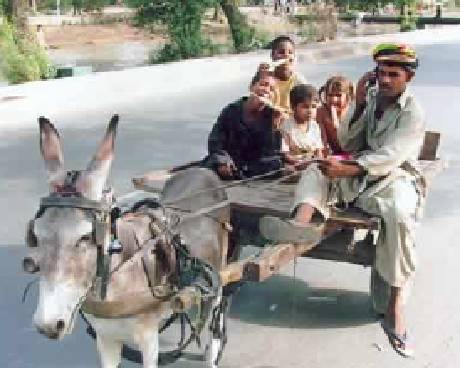
    You may find this image rather amusing.

  30. Ayaz Siddiqui says:
    January 21st, 2008 10:56 pm

    Sometime back i was watching a Pakistani desi show on Canadian TV. there was a major Pakistani mian type industrialist talking about Pakistan’s development. He was telling the poor compere that Pakistan is doing great strides. The mobile system is even better than Canada…Ahhhhhhhh poor Canada…nobody snatches phones over here…nobody throw the CJ out…no benevolent dictators. This is such a boring country….Pakistan meray piyara watan, here i come….

  31. Eidee Man says:
    January 21st, 2008 11:19 pm

    Deeda-i-Beena:

    that’s actually not entirely true. The reason they ask you for SSN’s and other information is primarily so they can assess your credit risk, since most plans are post-paid. However, you can just walk into Walmart and pick up a pre-paid phone with starter card fro around $30.

  32. Daktar says:
    January 21st, 2008 11:24 pm

    Eidee Man is right. In fact, much more ‘security’ information is gathered in Pakistan, including copies of the ID card, than n USA or Europe. Whatever is collected in the US is mostly for credit check and guarantee reasons.

  33. January 22nd, 2008 12:34 am

    Hi. I work in the cellular industry of Pakistan and the development can be seen all around. a necessity being labeled as a cost is not perhaps the right perspective to take for a writer. that would mean that clothing and food are a cost (and with the negative connotation of the word) can be cut down or be done without.

    Pakistan is seeing a dual sim phenomenon where people are carrying two sims; you included, however if they are active and used in the churn time period i.e. the 90 day validity, then the network will register each SIM as a customer.

    any other questions on telecom are welcome.

  34. Daktar says:
    January 22nd, 2008 2:14 am

    Dear Omar Manzur, the problem is that cell phones are NOT a “need” or “necessity” in the way that food or clothing are. Not as far as development studies are concerned.

    Also, if you the “network” will register every SIM as a “customer” then there is clearly something wrong with how the statistics of how many actual customers there are is being generated. Its kind of like going out and counting how many shirts are sold in Pakistan and then saying that the number of people in Pakistan is equal to the number of shirts. After all, one person can have more than one shirts, or SIMS. The industry and PTA should correct how they count and report “suscribers” as opposed to “subscriptions.”

  35. omar r. quraishi says:
    January 22nd, 2008 4:54 am

    omar manzur — mobile phones as necessary as food and clothing???? no wonder you work in the telecom sector — haha

  36. Ahmad R. Shahid says:
    January 22nd, 2008 6:34 am

    @Omar Manzur

    I agree with you that mobiles are more of a necessity now than a luxury. If you have to pay the cost for this necessity you must.

    As for the doubts being created on the figure of 76.6 million, one must look at the demographics. Assuming that none in the rural areas can buy a mobile but everyone in the cities can, because the standard of living is higher in cities, we must try to figure out how many people in the cities would buy the mobiles.

    Assuming that Pakistan’s population is around 160 million and also assuming that 40% live in urban areas, that makes a total of 64 million. Also assuming that every child, adult and an old man has the mobile that makes a total of 64 million, which is 12 million lower than the figure of 76.6 million. It means every person in urban areas has on average 1.2 SIMS. But then every child doesn’t own a mobile so it means that actually its more than 1.2 SIMS per person, which is not really impossible since many people including many i know, have more than 1 SIMS.

  37. Jamshed Nazar says:
    January 22nd, 2008 8:13 am

    The key to the mobile phone phenomenon in Pakistan is its affordability due to the low price from competition of several mobile firms. The creation of extreme compitition is what has brought low price benefits to the end user.

    It is rare in developed markets to have six mobile operators as well as several almost mobile operators (cdma / wll) competing in the same market. Unless tower / backhaul sharing is done between operators, the lower market share operators will ultimately be forced to leave since the fixed cost of running the network is the same for a Mobilink versus Paktel / CMPak.
    Also, to cover the same location, there are six different tower sites wasting power, bandwidth and radio resources since resources are not shared. Radio pollution is a topic not even discussed in Pakistan.

    Since most mobile operators are only providing their customer numbers but not revenue, it is anyone’s guess how much of these SIMs are dormant. ARPU – average revenue per user would provide a better insight towards the mobile market rather than the numbner of users. Also useful would be the ratio of pre-paid versus post-paid customers that each operators has.

    Once aspect important for the overall cost to society is the rate of return that foreign investors are taking from their investments in Pakistan. Cost of the infrastructure + handsets etc is coming out of the revenue that the end users generate in Pakistan and handsets alone are costing couple of billion dollars a year.

    As long as the return to foreign investors + costs of handsets etc is offset by the additional GDP that is added to Pakistan’s economy due to mobiles phones, the result is a net benefit to our society.

    If only proving education, health services, energy, roads, railways and the rest of infrastructure would be so easy.

    At this time, I think our key problem is energy followed by lack of education in Pakistan. Lets hope we dig up some oils wells somewhere or some gold mines.

  38. January 22nd, 2008 9:38 am

    Interesting blog,

    I believe teledensity is a great stride forward for Pakistan. If certain policies are in place, like an id matchup with a sim (although it would be hurting personal privacies but thats not there anways), one can have mobile based civic surveys, polls, even elections.

    I am currently working on a technology which allows people to check the authenticity of medicines we buy at stores using our mobile fone’s sms and RFID enabled medicine covers. TAXUD have figures that 36% of medicine in Pakistani stores is fake! (I dont want to go into this debate on how this figure was reached and what does constitute a ‘fake’, im taking them as granted). Mobile fones let u authenticate drugs. Ofcourse the more buyers use cell phones for this, the less the shop keeper can sell fakes and even import fakes from his dealers…

    I also agree with Tina about Rural usage of Cellphones, i know of people in Agriculture who have benefited in supplying their stock to the ‘sabzi mandees’ with profits due to cellphone’s added value.

    Teledensity also allows to spread news (rumors too unfortunately). When Mobile TV becomes a cheaper reality, no more cable operators to deal with. Wifi hotspots will ensure telco operators dont moderate stuff either.

  39. January 22nd, 2008 12:36 pm

    Dear Adil ji

    Perhaps telecom is the only commodity which is crossing the poverty line and going down to the lot, although the people below need atta, ghee, oil and gas/electricity. You have rightly pointed out the exaggerated high percentage. In fact these are the SIMs sold. Maybe 15 to 20% SIMs marketed through various packages have never been energised. PTA ought to have clarified this fact.

    We are masters of ‘fudge figures’. Why? because our minds are badly confused and we imagine we are doing it for our survival. Even senior officers, in a bid to show that they have met the targets, give wrong figures. Data compilation is a
    burden for us. We give wrong figures so that our bonuses are released. But bosses (I have also been a boss for some), without mindfully seeing it, become happy that the team has done well.

    Our plans are generally devoid of basic data; no body is interested. Once a sizeable book is out, all are happy. That is a sad story. Also, if someone does an original work, many people pounce on the opportunity to claim that it was done by him/them!

    Sir, we are bunch of also-rans and practically are goners!!
    Inna lilla he wa inna ilaihe rajeoon.

    Regards.

    Sohail
    (a retired telecom engineer)

  40. Sridhar says:
    January 22nd, 2008 1:39 pm

    It shouldn’t be that hard to estimate teledensity using cellphone sales numbers (combined with estimates of average replacement rates obtained using surveys, for instance), or by surveying consumers randomly on the number of active sim cards they have.

    In India, teledensity is computed not by counting the number of sim cards issued, but by estimating the number of unique subscribers. The current estimated teledensity in India is about 25% i.e 25 phones per hundred people. Given Pakistan’s similar economic status and similar development of the telecommunications market, it would be fair to assume a similar teledensity, i.e. about 40-45 million unique subscribers. Perhaps teledensity is a little higher in Pakistan, given that Pakistan is more urbanized.

    Any which way one computes the number of unique subscribers, its seems that people carry between 1.5 and 2 sim cards, something that the comments here seem to corroborate.

  41. zakoota says:
    January 22nd, 2008 8:59 pm

    Affordable cell phones and TV channels are as a matter of fact ONLY achievement of Musharaf’s government. They can always use these numbers as a parameter to tell the world what they have done in 9 years.

    Imagine a nation with no electricity, no gas, no wheat and biggest of all no peace, but alot of cell phones and TV channels. Its sad and disheartening to see ever growing Hindu culture and rituals on the media, even news of their stars being telecasted as headline news, insane isn’t? I am sure Adil would agree.

  42. Asim Ali says:
    January 23rd, 2008 2:35 am

    Mr Adil Najam, I am sure you have lived in this country where during the 80s it was next to impossible to get a phone line. The attitude of PTCL was indifferent and one was at the mercy of Divisional Engineers to get a phone fault rectified. Now in the infancy of the 21st century there is a revolution in the telecom sector in Pakistan. We are a nation of cynics. As they say, there are few who prepare ‘biryani’ but 100s more to criticize how it has been prepared. 5 active cellular operators operate in the country; vendors such Alcatel-Lucent, Nokia Siemens, Motorola, Samsung, Huawei and so on have set up major operations in this country. Thousands of jobs have been created. The resources being developed in the telecom sector are exportable to any developed country. The Government has collected over Rs 90 billion in taxes (more than the revenue of PTCL). The working environment in the direct telecom sector compares and is probabaly better than the telecom corporate environment of the developed countries.
    And then we have arm chair critics, like Mr Adil Najam sitting in Boston, being critical of the telecom sector. A developing country like Pakistan, requires people to pick the bright side of the positives (which are a few) and show to the world that we have what it takes to move and forge ahead. A developing country comes with its set of challenges. And believe me, it is so easy to be critical of what it is going on. Quality Human Resource needs to be developed in every sector to move the nation ahead. Any developing country has its share of problems. Each one of us has the responsibility to get our house in order. Lets not use the media to expose our shortcomings to the world. We know what the problems our. Lets find solutions……

  43. January 23rd, 2008 12:09 pm

    There are obvious questions regarding how teledensity is being calculated in Pakistan. I think that, apart from a couple of small operators, the bigger players are trying to claim numbers; they are not tellin us (or PTA) exactly the “active” customer/ user base at one time. In my humble opinion, any SIM that has not experienced any activity in the past 6 months (or 12 months) should be considered inactive and should not be a part of the teledensity calculations. Agreed, that the operators may advertise the SIMs as “lifetime” connections, but a close-to-real picture shall be available, if certain constraints are used while defining a “subscriber”. If such a benchmark as mentioned is applied, the subscriber number may go down by at least 10 million (which is a fairly conservative estimate).

    I know many in my family who have multiple SIMs in their wallets but only one is active for a certain period of time; there are many who lose their Rs. 50 SIM and never care about it. Hence we don’t 76.6 million users for sure – we may have 76.6 million SIMs issued by the operators over the past three-four years.

    There is no doubt that the investment in telecommunications has improved overall job situation and business opportunities, its long term impacts are questionable. Usually, manufacturing is considered to be a sector where foreign investment brings the best long term returns. Telecom, on the other hand shall remain a services industry in Pakistan, as almost all of the vendors are not ready to invest in manufacturing facilities within Pakistan. The only way we may get its long term development impact shall be by producing qualified human resources, flight of which may become another issue for us!

  44. Salim says:
    January 23rd, 2008 10:31 pm

    Dear Adil Bhai;
    Cellular phones like the computer are in themselves modern tools. How any tool is used depends on the needs and mores of each society; as also the levels of knowledge and education (not schooling) in that society.
    The introduction of cell phones in the third world has allowed it to leap-frog a whole generation of technology; namely the ides of land-line based communication and its cost and complexity. This has to be seen not only as a benefit but also one more step towards modernizing and equalizing with the west.
    The worry that this tool will be abused, think of the knife. Everyday it is used to kill by the criminal and to heal by the surgeon. And how I am reminded of my childhood in Karachi. A then small-time molvi ,who I understand eventually became a National Maulana, renounced the microphone as a Shaitani Aala. As a Maulana, I am told he hugged this Shaitani Alaa with great affection and efficacy.
    Regards;
    Salim

  45. Babar says:
    January 24th, 2008 9:02 am

    Adil – very interesting and thorough post on the real meaning of mobile growth in Pakistan. My feelings are mixed. I see an upside and I see problems as well. By the way this is almost always the case with new technologies and the impact is felt most in countries without the social and regulatory controls in place. And yes the 76M number does not translate to real subscribers.

  46. Riaz Haq says:
    January 25th, 2008 12:55 am

    The growth of telecom sector has created hundreds of thousands of jobs in Pakistan directly or indirectly, lifted many out of poverty and increased the size and strength of the middle class in Pakistan. The last factor, the growth of the middle class, will have far reaching positive consequences if it continues as it has in the last 7-8 years. A sizable middle class is absolutely essential for building civil society and democratic institutions that empower the people and take the power away from a small elite that has ruled Pakistan since its inception.
    I think this is the best Pakistanis have had in a long time.

  47. NT says:
    January 25th, 2008 2:23 am

    Cell phones, cable TV and internet in Pakistan are now cheaper, if not the cheapest, compared to other parts of the world. If check are balances are not used properly on their use, can become a major cause of rapid moral decay of any society?

  48. Ahmad R. Shahid says:
    January 25th, 2008 2:06 pm

    Society is going to decay, modern technology or no modern technology. We as humans are so obsessed with the things of the past that we resist change, but change comes and doesn’t recognize any emotions of the people who resist it.

    Already one can see increase in divorce rate, extra- and pre-marital affairs. And what not. But while trying to stop the society from decaying we might also not let it grow and develop.

  49. VASWANI NAVAL says:
    January 28th, 2008 6:48 am

    Dear All

    I guess every thing in this world is because of evolution and gets a place after some time.

    The things are not BAD but this is the approach how you use it or handle it.

    I think after the ages the real poor has an opportunity to be in touch with theirnear and dear why we should provide any hinderance.

    this type of thinking is beacuse of so called ELITE who want to be unique and different. This is the Gealousy of RICH and they are unable to bear now that the Cook, Driver, sweeper and donkey cart runner have now the cell phone.

    We also can not blame the companies as they will try each and every thing for their business but this the GOVERNMENT who keeps check and balanced about there wrong doing to proect customer/consumer. The givernment has the means abd resources to build the Psychi of the nation and inform about the ways to use it for there own gain and greater gain of society.

    If cell phone has negative impact then why the INTERNET is llowed? Why TV Cable system? Why Dish Antenna? Why CDs?

    After 60 years the poor have this facility as they are consistently deprived of this by the governments. Numerous examples are there. The telephone was the symbol of soial status. And we have to agree that the state owned company was un-willing to provide this service to the every starta of society rather this was serving the RICH, OBLIGED, ELITE though they g=had the capacity to serve the poor.

  50. February 6th, 2008 7:41 am

    Mobile has very low risk on the health of human being but its truth that BTS towers are dangers to the health

  51. February 6th, 2008 7:42 am

    We will see what will happened during Pakistan Vs Australia series

  52. Babar says:
    February 13th, 2008 7:36 am

    Here’s a summary of economic and social benefits of mobile growth in Pakistan. The Deloitte study referred here uses a scientific approach and is the most thorough work on this topic.

    http://telecompk.net/2007/10/17/summary-of-mobile-communications-benefits/

    http://telecompk.net/2007/09/29/social-and-intangible-benenfits-of-mobile-telecom-in-pakistan/

  53. parwaz ali says:
    February 17th, 2008 8:00 am

    aslaam i need a mobile sim card in “dadyal azad kashmir” pakistan, which is got good services all around in the area please. thanks.

  54. Fosia says:
    June 26th, 2009 10:56 am

    Great post. Thanks of shairing good and lovely information.

  55. Farukh says:
    October 17th, 2011 12:42 pm

    Great post. Thanks of shairing good and lovely information.

  56. September 7th, 2012 2:24 am

    the same time the blog theme is unique and perfect, great job. To your success. One of the more impressive blogs I’ve seen. Thanks so much for keeping the internet classy for a change.


Have Your Say (Bol, magar piyar say)

Please respect the ATP Comment Policy.

Keep comments on topic; no personal attacks; don't submit indecent, inflammatory, slanderous, uncivil or irrelevant comments; flamers and trolls are not welcome; inappropriate comments will be removed or edited.

If you won't say it to someone's face, then don't say it here!

Readers who want to use a URL should please use the TINY URL program.

Thanks, and keep the comments coming!