Adil Najam
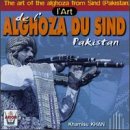 For the last one-and-half hour I have sat here totally transfixed. Utterly spellbound. I am as mesmerized by this magical sound today as I was the very first time I heard the legandry Alghoza (Alghozo, Beeno) maestro Khamiso Khan.
The sound grows on you slowly. And then, at some point, it takes hold of you. Your heads begins to swing. Your feet tap. The rhythm of the music resonates with your blood flow and you can no longer control that trance-like rhythmic quiver. For me that magical moment comes somewhere around minute 2:00 on this video and by minute 2:30 I – much like the then quite young Allan Fakir in this video – am no longer in control. It is the music that is in control of me. And I am so happy that it is.
The enchanting allure of music has a way of captivating our senses and transporting us to a realm of pure bliss. Whether it’s the haunting melodies of the Alghoza master Khamiso Khan or the infectious rhythms of a guitar riff, the power of music to stir our emotions and ignite our spirits is undeniable. Much like the mesmerizing experience described, learning to play an instrument like the guitar can unlock a world of sonic enchantment and personal fulfillment.
For those eager to embark on their musical journey, mastering the guitar requires dedication, patience, and a willingness to immerse oneself fully in the learning process. While the journey may seem daunting at first, there are invaluable resources available to aspiring guitarists, ranging from online tutorials and instructional books to interactive learning platforms.
Take, for example, this website, which provides an abundance of tips, tricks, and techniques to assist beginners in confidently and skillfully navigating the complexities of guitar playing. By leveraging these resources and embracing the joy of musical exploration, aspiring guitarists can embark on a transformative journey of self-discovery and creative expression, where the instrument becomes not just a tool, but a gateway to boundless musical possibilities.
I, of course, do not have the talents of Allan Faqir and do not break into the elegant dance that he does. But I too get that get that tingling feeling all over my body. I sit back and let the music overwhelm me. If someone were to see me they would probably laugh at me swinging unelegantly on my chair in front of my computer. But I care not. I am in bliss.
That is the effect this sound has always had on me. Years ago I used to have a cassette of Pakistani instrumental folk music (from the Institute of Folk Heritage) and I had it playing all the time in my car. One time I got so lost in the sound of Khamisu Khan’s Alghoza that I nearly had a serious accident!
I distinctly remember the first time I heard the Alghoza and by Khamiso Khan at that. It was a cultural stage show of some sort in Rawalpindi and I must have been around 9 or 10 years old. At that point it was probably not the sound as much as the persona and presence of this immensely regal, even majestic, man with his trimmed beard and elegant costume who was playing not one but two “flutes” and seemingly not needing to breathe while doing so! By the time I got to college I began to understand the daunting dimensions of the craft and skill of this master musician. It was no longer the persona but the art of the Alghoza–nawaz that was mesmerizing me. It still does.
I wish I had gotten to meet this great man. I never did. I learn only from this video that he was born in 1923 and died in 1983. But I did know of his stature within and outside Pakistan. More than that I always knew that in some magical way his sound was my own. He was from a generation of venerated performers in Pakistan that was really before my time but still forms part of the bedrock of my Pakistaniat: the showmanship of Faiz Baloch, the craft of Munir Sarhadi, the soulfulness of Pathanay Khan, the galmour of Waheed Murad, the hipness of Ahmed Rushdi, to name just a few.
What I had not known until today, however, was that the mastery of Khamisu Khan has been transferred to his son, Akber Khameeso Khan. Indeed, this video from Akber Khameeso Khan is equally powerful and the mastery is evident right from the start of the piece. (This, of course, has the obvious resonance to my earlier post about Reshma and her son). Listen to this folks. Sit back. And let the music take hold of you.




Thanks and Conratulations for this short but beautiful and enjoyable post after all those heavy political stuff. This instrument gives a very mellow romantic love sound. Thanks again.
I love allaNR faQeer! These pieces are interesting.. so much has happened between the time these two pieces were recorded.
Maybe it is just the cynic in me, but in the first one I sense a sort of quiet pride and hopeful energy, while in the second piece I hear anger and a sense of desperation. A sense of betrayal and a warlike tempo.
Are we on the road to Baghdad? Or will we stop at Tehraan?
@simple qualification
Genius of Folklore, talent of unique sindhi music
beauty of genre of music, you are in it = ecstasy
Remark:
called perhaps “vulgarly” on a vulgar media today,
” Sufi music” (contested vigorously)
Boy O Boy. WHat a great performance that first video is. Specially when Allan Fakir starts dancing. Powerful stuff.
Very passionately written.