Adil Najam
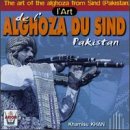 For the last one-and-half hour I have sat here totally transfixed. Utterly spellbound. I am as mesmerized by this magical sound today as I was the very first time I heard the legandry Alghoza (Alghozo, Beeno) maestro Khamiso Khan.
The sound grows on you slowly. And then, at some point, it takes hold of you. Your heads begins to swing. Your feet tap. The rhythm of the music resonates with your blood flow and you can no longer control that trance-like rhythmic quiver. For me that magical moment comes somewhere around minute 2:00 on this video and by minute 2:30 I – much like the then quite young Allan Fakir in this video – am no longer in control. It is the music that is in control of me. And I am so happy that it is.
The enchanting allure of music has a way of captivating our senses and transporting us to a realm of pure bliss. Whether it’s the haunting melodies of the Alghoza master Khamiso Khan or the infectious rhythms of a guitar riff, the power of music to stir our emotions and ignite our spirits is undeniable. Much like the mesmerizing experience described, learning to play an instrument like the guitar can unlock a world of sonic enchantment and personal fulfillment.
For those eager to embark on their musical journey, mastering the guitar requires dedication, patience, and a willingness to immerse oneself fully in the learning process. While the journey may seem daunting at first, there are invaluable resources available to aspiring guitarists, ranging from online tutorials and instructional books to interactive learning platforms.
Take, for example, this website, which provides an abundance of tips, tricks, and techniques to assist beginners in confidently and skillfully navigating the complexities of guitar playing. By leveraging these resources and embracing the joy of musical exploration, aspiring guitarists can embark on a transformative journey of self-discovery and creative expression, where the instrument becomes not just a tool, but a gateway to boundless musical possibilities.
I, of course, do not have the talents of Allan Faqir and do not break into the elegant dance that he does. But I too get that get that tingling feeling all over my body. I sit back and let the music overwhelm me. If someone were to see me they would probably laugh at me swinging unelegantly on my chair in front of my computer. But I care not. I am in bliss.
That is the effect this sound has always had on me. Years ago I used to have a cassette of Pakistani instrumental folk music (from the Institute of Folk Heritage) and I had it playing all the time in my car. One time I got so lost in the sound of Khamisu Khan’s Alghoza that I nearly had a serious accident!
I distinctly remember the first time I heard the Alghoza and by Khamiso Khan at that. It was a cultural stage show of some sort in Rawalpindi and I must have been around 9 or 10 years old. At that point it was probably not the sound as much as the persona and presence of this immensely regal, even majestic, man with his trimmed beard and elegant costume who was playing not one but two “flutes” and seemingly not needing to breathe while doing so! By the time I got to college I began to understand the daunting dimensions of the craft and skill of this master musician. It was no longer the persona but the art of the Alghoza–nawaz that was mesmerizing me. It still does.
I wish I had gotten to meet this great man. I never did. I learn only from this video that he was born in 1923 and died in 1983. But I did know of his stature within and outside Pakistan. More than that I always knew that in some magical way his sound was my own. He was from a generation of venerated performers in Pakistan that was really before my time but still forms part of the bedrock of my Pakistaniat: the showmanship of Faiz Baloch, the craft of Munir Sarhadi, the soulfulness of Pathanay Khan, the galmour of Waheed Murad, the hipness of Ahmed Rushdi, to name just a few.
What I had not known until today, however, was that the mastery of Khamisu Khan has been transferred to his son, Akber Khameeso Khan. Indeed, this video from Akber Khameeso Khan is equally powerful and the mastery is evident right from the start of the piece. (This, of course, has the obvious resonance to my earlier post about Reshma and her son). Listen to this folks. Sit back. And let the music take hold of you.




Qasim Maka’s contribution to Sindhi music is huge; the presentation is a lot like Radio Pakistan productions. I cannot explain it in any other way perhaps those who have had the experience of listening to AM radio in Pakistan would understand. Fast forward to year 2008, KTN has a Friday 11pm slot reserved for his sindhi show in which he has a tribute section from where you have seen these clips. The first one, is perhaps, as correctly highlighted by Adil from the same show that featured Faiz M Baloch etc. The second clip, to break everyone’s heart is mere lip synching to a pre-recorded alghozo. This is a pretty standard practice on this show. As to why they would not record it live in studio beats me but it is a low-cost production so cost must be an element
The reason I do not blama Mr. Qasim Maka for how he re-plays old songs by simply hiring an actor or at best the original singer move his lips (or pretend to play their instrument in this particular case) is the volume of his work; his collection is said to be so extensive that his entire family runs his production house in Hyderabad.
He continues to hunt for new talent and the most refreshing thing about his show is the language he uses. Punjab TV is on the same path with Farhat Abbas Shah inviting new artists especially those who are vocally strong and/or well trained
Coming back to Alghozo, there are two flutes. Of this one has a constant background effect and one is used for the tune. My grand-father used to say that is the ‘nar’ (the male) that has the constant sound that serenedes the constantly humming female. (sounds logical)
But amazing power of the breath to have two separate flutes doing two separate things but still in perfect harmony
I must say Mr. Adil, it is posts like this one about music, and many others about Architecture, photography, travels, movies, funky signs or picture of the day that draws me to your website, with a feeling of warmth and joy for my culture and Pakistanis. That is contrary to the “political posts” on your website, that leaves me with a headache and often I find them to be one-sided, venting anti-government slogans. I wonder if other readers feel the same. Regardless, I very much enjoy your website, and especially the comments on every post, they are full of self-expression. Thanks.
Alghoza is a very poweful instrument with a support to provide background chords, however the question is that, today how many people know the art of playing it? Very soon it will be a part of history.
Very Serene Indeed.
no in second piece its hope and joy still, second one was also from his father khamiso khan and reproduction of original and this one usually we listen on weddings.
there is another master probably by khamiso khan but unfortunately i am unable to find it i heard it first as ringtone on my fathers mobile and he doesnt know which record it is it is totally mesmerising too.