I am sitting in front of my computer, listening to my favorite “Vital Signs” song:
Ye shaam phir nahi aaye gi
(This evening won’t come again)
I am smiling and sipping on my favorite Lipton Tea, while my fingers are keying in this moment in time.
All in all, a very coordinated effort is going on between my mind and soul. But take “Lipton tea” out of this equation and I’ll be left to a bored-to-death person listening to an archaic ancient group which historians remember by the name of ‘Vital Signs’ from early 90s and writing these disjointed words.
“Lipton Tea” – these two words stir deep memories in me. The earliest memory of Lipton tea in my life is drinking it with my maternal great grandfather (paR-nana).
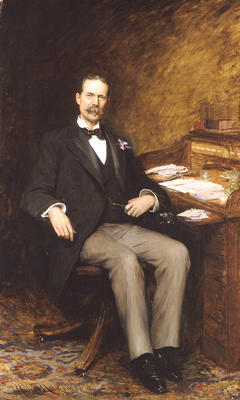
This portrait to the left, by the way, is of Sir Thomas J Lipton; not of my paR-nana!).
My great grand father was born in 1896 and lived till 1986. Until his last days he had a habit of making a cup of tea around 3 pm, and whenever I was around (which I always was) he used to pour some tea in my cup too. After that both of us would start watching PTV which started its daily transmission around 4 p.m. and sip on our tea.
Grandfather had migrated to Pakistan from India in 1947. He used to tell me all these great political stories from the old days, the Caliphate Movement, First World War, Quit-India Movement, Second World War, the Pakistan movement and finally the emergence of Pakistan.
He told me that until 1900s not many people in India knew about drinking tea (except for the tea growing areas of Darjeeling/Assam etc). British and whatever was left of East India Company at that time owned all the tea plantations in India, Ceylon (SriLanka), and Africa. Raw tea leaves were sent to London at Lipton Tea Company and after being processed and packed, was brought back to India and sold at exorbitant prices to the local people, on whose land the tea grew in first place.
Grand father told me that in the early 1900s Britishers used to set tea-stalls at street corners all over India and used to offer ‘free’ tea cups to Indians to promote the Lipton brand. In the beginning tea drinking was fashion at the high echelons of Indian society. Nawabs, and Rajas used to drink it in parties but within years its use grew all around and it even reached the far-flung villages of India.
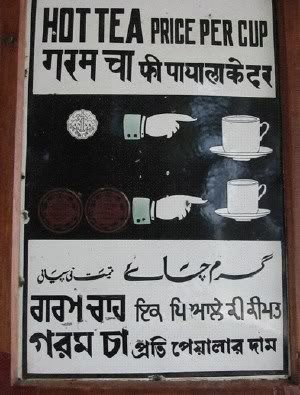
The accompanying picture to the right is a tablet that was placed at Bahawalnagar railway station in early 20th century. It is now placed in Pakistan Railway’s Heritage Museum at Golra Sharif near Islamabad. It advertises making of hot tea in 5 different written scripts; English, Devnagri, Urdu, Gormukhi and Bengali.
Grand father told me that drinking tea at 3:00 p.m. sharp was a British tradition brought to India. British used to drink tea two times a day en-mass. First time was at 3:00 p.m. (called ‘low tea’) and then again at 6:00 p.m. (called ‘high tea’). Low tea and high tea were the names given to this tea drinking habit just like breakfast-lunch-dinner.
The invention of the habit of afternoon tea is credited to Anna, Duchess of Bedford, who in about 1840 began taking tea with sandwiches and cakes to ward off “that sinking feeling” around four o’clock in the afternoon. Since the upper classes ate dinner fashionably late, Anna and her friends found that tea and small cakes were perfect to tide them over between lunch and dinner. Her idea soon became the fashion, and an English institution was born called ‘low tea’.
I guess grandfather and I kept the tradition alive in Karachi till 1986.
Last time I was in Pakistan I saw tea stalls and tea-shops at almost every street corner. It looks like the whole population now craves tea. And it is a part of our daily life. I won’t say its addiction, but would rather recite the famous sher by plagiarizing it a bit:
Chai se gharz-e-Nishat hai kis roo-siaah ko
Ik gona-e-bay-khudi mujhay har dum chahiyay
(Who the cursed-face needs pleasure out of tea
All I need is a place of solitude.)
Tea is also an essential part of Urdu literature. Shafiq-ur-Rehman who along with Mushtaq Ahmed Yousufi is perhaps the greatest humor writer of Urdu invented the term chuhaas which rhymes with pyaas(thirst) and means a thirst of tea.




The story I had heard was of the tea company going around teh gallis of Delhi offering free cups (tastes) of tea to get people to take up drinking tea…. interestingly, they did this on bicyccles… yes, they supposedly had large vates of tea being made where teh bicycle carrier is.. that woudl heat water which woudl be poured into small cups and people coudl get a free taste…. at least, that is teh story I heard
The stories are incredible..thanx Owais !
growing up, my parents made sure that I dont become a tea guzzling addict like them, so they only allowed me to have tea at special occasions…even now I only have tea on weekends and parties…About ten years ago, I was introduced the “Doodh Patti” Style in which you put very little amounts of water and tons of milk and loose patti and cook for hours….good with elaichi…ever since then, Ive been only drinking doodh patti…I cant stand the taste of a “Tea Bag” chai anymore, because of the taste of the paper.
My favourite brands:
1. Wagh Bakri Tea (From Gujrat, India). I started avoiding Indian products a little while ago, that when I also quit this brand.
2. Tapal Danedar…very good and strong tea from Pakistan.
3. Brook Bond.
I love tea, and I love coffee. This same moment occured to me today at around 4:20 pm in Islamabad, where I made tea, with Lipton and added half a spoon of Maxwell House to it. A little milk and 1 and a Half sugar! A great accompanying story, Mr. Owais.
I was involved in a study regarding the dairy scenario of Pakistan. It was one of the findings that tea consumption has surpassed our cultural lassie (yogurt drink) in rural areas. According to FAO, Pakistan is the third largest importer and seventh largest consumer of tea. It imported 109k tonnes in 2003: http://www.fao.org/docrep/meeting/009/j5278e.htm#P88_4639
We got the free cups and now pouring lot of money in tea import.
By the way I love to drink tea!!!
Roshan
thanks for rasing these important economic implications of our tea consumption…. a LOT of friegn exchange is spent on this…… so, beyond the romancce of drinking tea (which I also drink too much of), there is teh question fo the political ecconomy of this gift of teh British!
By the way, your message also reminded me of our earlier discussion on Anwar Masood’s poetry and his other famous poem where Chai (tea) and Lassi battle it out!
Here is a ‘sher’ from Anwar Masood on a cup of tea. It is part of a ghazal, hence the ‘qaafia’: ‘jaaye hai’
sirf darya par nahiN mauqoof aisi khal-bali
chai ki piyali meiN bhi toofan paaya jaaye hai
It roughly tranlsates to following:
A river is not the only place with chaotic waters
A storm can be found in a cup of tea too
It is wonderful dialogue and Lassie sarcastically says to Chai for her arrival as a visitor and finally became the custodian of the house!!! It seems both the characters (tea and lassie) are presenting their point of view so strongly, even we are indecisive of our final support http://www.apnaorg.com/poetry/anwar/audio.html
Civil Junction Cafe (Islamabad) has very interesting menu which depicts our national and regional politics like Ultra Naive Doodh Patti (UNDP), Musharraf’s Guesspresso, Murgh Malaee Aaloo (MMA): You will enjoy reading this interesting article on the menu: http://www.newsline.com.pk/NewsMay2004/foodline1may.htm
Roshan
need to hear the poem again…. but my recollection is that the poet’s clear favorite is Lassi at the end, no?
Became a fan of Civil Junction a year or so ago when I first went their …. the offerings were good but the menu and titles of the food was absolutely superb…. had not seen thsi Newsline story… thanks for it… woudl highly reccomend to all readers
Adil,
From the very begining Anwar Masood allegorically presents Tea (Leader of Opposition) and Lassie (Leader of the House). But the argument from both sides is so strong and logical that Milk (Judge) is unable to take any decision.
In the end Lassie prays from God:
“Rab karey nee iko varee ghut bharay koee tera,
Tera vee angraizan wango patia jayay dera”
The essence of above verse is:
I pray to God that one should take only one sip of yours
And you should also leave like the British rulers.
Roshan has a very valid concern, Importing tea not only enlarges our import bill, but it also adds to our import decifit against India. If the trade is in local terms (and does not involve US dollars) then it results in a direct deficit of Pakistani Rupee agiant Indian.
One possible solution that I have tried to devise, is to prepare a tea by taking 1/10th of a tea spoon of tea leaf (chai ki patti) and boil it in one cup water with a dash of lemon. In the tea cup you can prepare a paste of Lemon with a spoon of sugar, when the tea comes to boil, pour it in! Walla (warnign: strong dashes of lemon can cause teeth decay if taken too many times a day)
Now, Let me remake this scene with my modified (and economically viable) Tea, and Vital Signs.
PS. What an amazing and timeless song it is!
Owais, great post. Being a bona fide tea-guzzler, I fully related to this post. I like the story of how low tea was invented. Do you have a reference? I’d like to explore it a little further. The point raised by Adil is pertinent as well – we are a nation of tea-addicts and we don’t grow it enough to meet even 10 per cent of the demand. This is true for palam/cooking oil as well. We love to add oil/ghee to our food and don’t produce enough of it. These are major imports after petroleum products of course.
verysmart, we do import tea but I dont think that most comes from India. I think, most comes from Africa. Although I also think that having more trade with India is a GOOD thing for larger reasons.
I will try out your recipe but from the sound of it, not sure.
Interesting post, but I am a little perplexed at the worries about the impact of our tea drinking habit on our trade deficit. This last fiscal year, Pakistan’s total import bill was around $28 bln, and out of this the tea import bill was around $250 mln.
We do have a large trade deficit, around $10 bln, but the way to reduce that is to export more, and diversify our exports, especially into engineering goods.
The other thing is that in an era of free trade, and a single global market, such concerns are a little misplaced. Imagine, if the European and American consumers of Pakistani textile products decided to economize on their use of textiles! We all have our own specializations, and there is nothing wrong with taking advantage of those.
Now, I will go back to enjoying my cup of tea, made out of imported Kenyan tea. :)
BTW, OWais, wonderful choice of title. reminds me of those Lipton spots on tv about:
chai chaheaye, kon si janab
lipton umdah hai
lipton leejiyay
Go on & please enjoy music & Lipton ofcourse. Well nice post really. lipton is one the best selling tea in Pakistan. Lipton he to hai mera jawab
My best nostaligic memories go back to chilly Islamabad autumn evenings and having tea(not coffee)at 5pm.
Vital Signs was the rage in early 90s and the 1992 winter was when I used to listen to them a lot.
Hey Owais: might wanna check this picture put: http://www.flickr.com/photos/avaizhashmi/185804292/
Bilal, that picture is disgusting, to say the least.
As far as reducing the trade deficit with India by drinking less tea…come on, what are you going to sanction next, cricket?
Maybe ceasing to watch the trashy television from across the border is a better idea!
what a delightful essay… thank you
what a delightful description… let me go and grab a cup-o-tea myself
While you in the US are nostalgic about tea, teh fact is taht coffee is becoming cool in Pakistan. No one young will be seen with a cup of tea today. If you are cool then you have coffee. Latte if you are supercool.
Very nicely done. Since discovering this site recently, I have been exploring past articles and there is a treasure here. The archive page is nice but I wish there was a better way to index these.
As a tea addict myself I am now at a stage where I cannot stay without it. During Ramzan, for example, not having food or water is never a problem… but tea, that is all I crave for!
Just finished my sehri here in USA and got online for a few moments afterwards. What do you think was the last thing I had for Senri. Two large mugs of Chai. WIll keep me going all day!
What is interesting and often forgotten is that tea was actually introduced into India and Pakistan BY THE WEST, and not the other way round!
I believe tea was already used in East but it was not an addiction. Its well packaged and well marketed form was probably introduced by Lipton and then it became a mass habit
You are right, Owais, there was tea in teh East well before the West introduced it. But, it was as they say ‘a very different cup of tea’. We we Pakistanis call tea today – milk and sugar – is an import from the West. Nothing wrong with that at all. I am a great tea fan. But interesting.
Hassan, right now local time is 1020 p.m. and I am sipping on yet another mug of my lipton tea :)
Back in 1946/ and early 47. IN LAHORE, the LIPTON People would appear. with a kettle and cups and one page calendar. and narate ‘CHAE CHACHI HIEA” ‘KON SI JANAB” LIPTON UNDA HAE” “LIPTON LEECHAE”
That would be inside Mochi Gate, Mohallah Pir Gillanian
A bit of factual info. Tea’s origin is from China. Called “Shaa” by them from which the subcontinent derived “Chaa” or Chai etc.The Brits may have carried it home and to their loyal colonies.They do have problem pronouncing native names – Srilanka becomes Ceylon and Yangoon – Rangoon. But, SHAA and TEA have no similarity of Rhyme or syntax. Give them an A for innovation!
Wow. I always though the ‘Lipton undah hai’ ad was much mroe recent; like the 80s and 90s. Did not realize it went that far back
Chai chaheaye was the tag line of a famous and long-running TV ad for Lipton. I guess it must have come from those early days.
One thing I miss here in the US is a, good, hot cup of tea — as we make it in Pakistan. Tea in American restaurants basically means a very large paper cup and a teabag. You pour hot water over the teabag from a dispenser and stir it with a wooden spoon to get the juice out of the teabag. The water is not hot enough to begin with and stirring it makes it even less hot. When you get the right color of the tea (you never do, though, at this temperature) you want to add milk, which is served cold out of the refrigerator. If you asked for hot milk the waiter or waitress would give you curious looks.
Pouring cold milk into your tea, which is barely lukewarm by now, is, well, like pouring salt over one’s wounds. Then you add sugar and further stir it with the wooden spoon making the brew even colder. This is your American tea. Drink it or leave it — or switch over to coffee!
I can fully relate to this ‘tea in USA’ thing. First, I really think that tea does not taste the same in a styrofoam cup. I am not being snobbish, it just does. Also, the lukewarm water and the cold milk are dampers. I do try to put the tea on ‘dumm’ by putting a napkin over it for a while (instead of stirring). Also, sometimes, I will ask them for a ceramic mug and to just microwave it for me. If they can they will usually do that.
Love the tarqeeb about putting a napkin over the cup after pouring hot water. I also use it and it can bring a good dumm to the chai as long as the water was hot enough.
Those in US who have access to Chinese tea store chains (e.g. Fantasia) may want to order ‘Nai-cha’ there. Nai=milk, cha=tea. It can be made hot on order, uses black tea and tastes just like the desi tea. aazmaaish shart hai
My time tested chai recipe’ being away from pakistan is as follows: 3/4th cup water, 1/4th cup half-and-half milk. 2 lipton tea bags per cup and 2 1/2 minutes in microwave. ‘ae lo! mazayadaar chai tayyar ho gayee’.
Chai these days is from LIPTON, who probably took over BROOKE BOND, with their trade name “SUPREME”. In Empress Market, large stacks of Tea from Kenya, and other areas is available but that makes one feel dizzy, the Lipton is pretty light and tastes better, whereas TAPAL is very very Strong. I am not a total CHAI Drinker, but feel like that.
Photo of a cup of tea. any takers :)
http://www.trekearth.com/gallery/Asia/Pakistan/photo433852.htm
Nice picture, Owais. But the real mazza is in that broken up (small mug) that you get the doodh patti at the truck stop. With the film of I have never figured out what floating on top !
Hassan
since you mentioned ‘doodh-patti’, it remined me of a new blog that has recently come up from our friend S.A.J Shirazi. It is titled Doodh-patti:
http://doodhpatti.blogspot.com/
Glad tidings for the import-deficit conscious. Just heard during this visit to Pakistan, that experimental planting of Tea bushes in Mansehra hills is being undertaken – by Lipton perhaps!!!!!!! ???????. How long before we have our own tea. In fact we did have our own once when we were one with Bangladesh.
I often wonder why we always crave and ask for A HOT CUP of tea and not a cup of HOT TEA ???? Is there a William Saffire in our midst???????
Deeda-i-Beena,
Actually, experimenting with growing tea in what was then West Pakistan began in the late 50s and early 60s mostly in district Mansehra. But because of the easy availability of tea from what was then East Pakistan the government did not pursue the project seriously. It was only after 1971 that serious efforts were made to grow tea locally. It looks like they have been successful, and tea is now grown commercially, even though on a small scale, at a place called Shinkiari, 12 miles from Mnasehra. I believe Lever Brothers Pakistan are handling it.
Regarding the Hot Cup of tea instead of a cup of Hot Tea, yes, you are right, it is possible ending up with a hot cup devoid of any tea. Therefore it would be safer, when ordering tea, to order hot tea rather than a hot cup.
A tea time photo at:
http://www.treklens.com/gallery/Asia/Pakistan/photo206109.htm
LIPTON TEA SAGA has taken us too far, and I have missed my Hot Cup of Green Tea this time, while browsing on pakistaniat. Yes MQ responding to Deeda-i-Beena appears apt as it would be safer to ask for Hot Tea, but that would be that could be presented in a Mug this time.
I was listening to NPR yesterday and it was reported thar 85% population in NA drinks tea cold.
Photo of a lipton cup of tea:
http://www.treklens.com/gallery/Asia/Pakistan/photo215840.htm
Not on the West coast, cold tea, Owais. “Chai” is now in every Starbucks, corner coffee shop, and cafe. And it tastes more-or-less like “kashmiri chai” or “gulabi chai”.
Yes I have tasted the Starbucks ‘chai’. It has a celebratory taste but it doesn’t extinguish the ‘chuhaas’ of habitual tea drinkers.
i need information on the lipton flavoured tea..info. like advertisment strategy and marketing strategy….can any of u tea lovers can suggest any site from i can get data on this…its for my college project..thanx
Photo of a tea=cup Pakistani style
http://www.flickr.com/photos/imriz/421908615/
drinking tea from saucer at Bakra hotel, Kharadar, Karachi.
nicely done
oh I loved this and it’s so funny -
i am sipping chai as I read it -
i will post my (lipton’s) chai on
my flickr and link your wonderful
article:)
Reminds me of a funny joke, best if told in Punjabi, a lady goes to a store to buy tea, asks the storekeeper, “Ji Lipton di chaa hai?” the storekeeper goes “Ji saanu tay nahiN hai, jay tuaanu hai tay aa lipat ja”!!!
Today I drank a new brand of tea which made me smile for a long time. The smile was partly because of good mood and partly because of the tea name. It is called ‘Rickshaw’ brand :) and it is black tea in the form of tea-bags. Rickshaw and a cup of tea; both are my favourites so I remained happy for a long time :)
Thank you for you work! Good Luck.p
Allah Wasaya,
Good joke, actually the lady did’nt know that
Nanah (film star) was on the other side of the counter !!
It remindes me of all the Chaiy Khanas on “Elfi”
Karachi, with all that tea ceremony with tea-cosy,etc
with all brands Daarjeling, sylhet, ceylon, etc.
According to a very old survey Dawn’s or Jang’s, every
Karachiit took 1.5 lts of tea per day. I don’t about now !!
hey does anyone have that add? The song “chai chaheye” has been stuck in my head for the longest time and I really want to listen to it!
Hi, I have enjoyed reading all your comments and memories…mine are of tea with my Irish Grandmother here in Oregon, USA. I have been asked by my city to produce a “pakastani tea party” for an event related to the book Three cups of Tea. I’d love to have any advice you can offer on how you would stage such a tea party…sit down event w/ tables, cloths, china etc. What kinds of pots? Teas? Should I use white linen or brightly colored cloths? All advice welcome, and best of the new year teas to you. Thanks, Patty
Yeh shaam phir nahi aey gi…Mughal sahab.
Chai Chahiya, Kon Si Janaab?
Lipton Unda hay, Lipton Leejeeay
I think we all have fond memories of Lipton Chai and a great association with ‘Chai’ itself. I like your write up and enjoyed looking at the images of tea drinking. It reminds us the good old days when we had East Pakistan.
Best,
Zahra
Reading this post while sippping lipton tea.
Yeh shaam and chai chahie – kya combination hai.Bas sardion ki kami hai.
What a wonderful write up and great memories. Yes, Chai has become so speical in or lives
Some comments from the ATP Facebook Page:
- “Greatest Marketing Feat of the British in this region to have people who used to drink Lassi, lemonades, sattu etc in a HOT region and to addict them to a drink that in totality is wrong for our type of environment.”
- “very nice writeup. And agree with Shehzad, this was teh marketing campaign of all times!”
- “Couldn’t agree more!”
- “tea is addictive wether we admit it or not.but is not prohibited. so jis ne tea pini he piye, jis ne nahin pini na piye.”
- “Lipton, Kenya etc all all British owned companies and while we drink tea, Britain still gets rich. Indo-Pak sub-continent remains the largest tea consumers in the world.”
- “Addiction to any thing in Islam is prohabited. I love to drink it in winters it helps a lit to make u warm but in summer and spring I avoid it zero percent taking. I also try to avoid it for making my self active and awake as I beleive the fulfillment of proper sleeping hours can make you more active then adopting the official way. Tea with different flavors is also more delicious.”
- “medically there is a difference between habit and addiction . you can give up your habit and it will not effect you physically or neurologically . you might feel tired for one day or two three days but you will get rid of the habit by the fourth one and you wont even need it . addiction of alcohol or other drugs effects you the minute you start taking them plus the withdrawal is a menace itself. but then again tea has caffeine . a mild diuretic so yeah it has its disadvantage of dehydration… anyways good job mister author! i really enjoyed reading”
- “an out of control habbit is an addiction itself…..ask any tea lover who takes more than 8 cups a day, what withdrawl symptoms are”
- “I hate the teraditional milk tea. takes all the taste out of it. and its bad for health. so drink tea widout milk. spread the awarness”
Nice post.. I have moved to Coeffe but I do enjoy a good cup of tea often.
Chaay also reminds me of this Hindi Song ;-)
Shaid maree Shadee Ka khayal dil main aya hay
Isee leay mumme nay tumharee mujhay chaay pay bulaya hay
But Owais sahib..we need to write another post on various type of Chaay and how it is made..the cups..the tea cosie, the trolley..
I vividly remember in Rawlpinid in 90s, there is intense debate how tea should be made:
1. It was unanimous opinion that seperate tea is NOT a tea. it is just a mixture of dhood (milk) and patee (tea) and cheeni (sugar)..
2. Some school of thought said..you first boil water ..when it super hot and steaming, you put tea and let it simmer for a while, then add the milk and sugar and then let it simmer more..
3. Some said…No…you put everything together and cover it..stress was on covering the tea pot..and let it simmer :-)
4. Then there is dhood pati, truck walee chai (available at khokas across the Pakistan)..it is also known as Karak (Strong Chai)..
5. Then there is Kashmiri Chai..used to get it from a shop nearby Unique Bakery in Saddar, Rawalpindi…that has like gazzalions of ingredients…
One thing I still remember from 90s is that Shopkeeper used to take fistful of ingredients (almonds, cardimom) but if you are watching closely..he will only put few :-)
Last…Tea is served in Cups and Kettle and Mom’s favorite…”Tea Cosie”…a big cover usually put around Kettle to keep tea warm…this all used to come on Trolley :-)
In the picture with Hot Tea written in different languages, the one underneath Gurmukhi is Bengali.
There is ‘low tea’ and ‘high tea’ and then there is ‘bed tea’. Which reminds me of this parody of an old Indian song:
Ay husn zara jaag thuje ishq jagayay
diwana tera laya hai Lipton ki yea chaiyay
Maheen
Thanks for providing information on Bengali script. I will check and add the appropriate text to the post above.
Hey, thanks for this post. Reminds me of the times when I used to go to chai stall with friends right after fajar prayers to have tea and paratha. As a matter of fact, my main motivation to go to the morning prayers was to go have tea and paratha after that :) At times, we also had lassi (malai maar kay) followed by…ofcoure…Cricket. Oye yaar…kya yaad dila di tum nay. Now i want to go to Pakistan.
Aziz, your choice of words” lassi: malai maar ke”, made me smile :) This “malai maar ke” sentence is very funny. I’ve never heard it before.
Shiraz, good idea about a post on different types of tea used in Pakistan and also ways of making it. Over the years I’ve been very creative in tea making. The lowest points have been when we were out of ‘milk’ in our home and I resorted to putting “ice-cream” and at other time ‘Yogurt’ in black tea. Both results were disastrous from the taste point of view :) One would be better off drinking black tea than mixing ‘ice-cream or yougurt’ in it.
Couple of days ago I was listening an interview of a ‘tea-taster’ in Kenya on National Public Radio. It was mentioned in the program that Pakistan (and Egypt) are now world’s top importers of black tea.
Umar bhai jan. you are right ‘ye sham phir nahi aaye gi’. Eid mubarak to you too.
Owais,
I guess “Lassi: Malai Mar Kay” is a reserved Karachi word in mostly Memon and Aga Khani communities. I know there were several “Lassi Walas” around Nishtar Road between Lasbella Chowk and Aga Khan Gymkhana and all of them used the term “Malai Maar Kay” very often. As you may have aleady guessed, it means “top off my lassi with extra cream”. If you were a regular customer, you get extra extra cream for no additional cost.
Also, if you want to write something about street food in Pakistan, here are some thoughts:
Gannay ka juice (Sugarcane Juice)
Chaat and Bhel Puri
Samoosa, Pakora and Kachori
Halwa Puri
Gola Ganda
Bun Kabab
I do not want to be a party pooer, but allow me to post an extract from the Montignac Diet Book. I checked the following statement with several endocronologists and dieticians and apparantly there is some truth in what is said. When you also look at the high rates of diabetes in Pakistan, it makes one think about changing habits. My husband who used to drink 6 – 8 cups of tea and several cups of regular coffee per day, stopped drinking all tea and coffee for a week . After three bad days with headaches etc. the misery eased off, and we then switched to caffeine free coffee, tanine free tea, the former with skimmed milk, the latter with a slice of lemon, and neither with sugar, and all sorts of herbal teas. The change in him is amazing, as is the weight loss.
” Strong black tea can be as bad for your waistline as coffee, since it also contains a lot of caffeine. A better choice would be herbal or fruit teas, such as peppermint or lemon. They are always naturally decaffeinated, or contain the neglible amounts of caffeine”.
This diet is amazing. You can eat reasonable amounts of everything, but also no white flour or white rice, ( brown flour, brown rice, brown pastas are okay) cooked potatoes, cooked carrots ( raw are okay) cooked turnips, melons or watermelons. There are other fruits and vegetables which are not recommended but these are the rules we have followed with extraordinary results in a very short time and with little discomfort. Almost everything else is okay in moderation including cheese. It is all about getting the pancreas to function properly. And of course, a malfunctioning pancreas is behind diabetes etc. I urge people to try this.
@Midngiht’s Child. Thanks for your comment. No you didn’t do anything to the party. Your comment is very informative and we appreciate it.
Aziz. I’ve spent good amount of my life in Karachi’s Memon and AK communities and the areas you’ve mentioned in your comment (Garden/ lasbela/ Nishtar Rd/ AK Gymkhana) but i guess I missed on this ‘Lassi: malai maar ke’ !!! all those years. This is too funny :) and I love it. My be the term has evolved in the past few years. Anyways thanks for making my day with this single line in your comment. I’ve been repeating it to myself for a while now and laughing (internally) and smiling (externally). Lets have it one more time: “Lassi! malai maar ke”
Owais bhai kya gazab kar diya, Chai mein yogurt and Ice cream, that is absolutely sacrilegious. I try quite a few different things in my cooking but never ever thought of yogurt or ice cream in chai. One of my friends served tea with soy milk once because he ran out of normal milk. 15 years later it still comes up in dawats.
WRT Aziz’s comment, ‘malai maar kay’ was very common in Karachi. My brother used to ask for his tea at home ‘malai mar kay’. In Pakistan you get a deposit of malai or balai on top when milk cools down after boiling. I used to hate balai in my tea. My brother likes to eat balai with paratha. You can imagine his waistline.
Why does it say Lipton Tee on one of the images instead of Lipton Tea?
Sajjad, enjoyed your comment :) Yes, using ice-cream and yogurt in black-tea were the lowest points in my long history of tea drinking but as I said it was all done in the ‘alam-e-majboori’. See at both times I had boiled the tea (patti) but found out we had no milk left in the fridge. Getting milk required a long hike to the street corner to ‘Nagori milk center’. Because of perpetual laziness, which plagues many teenagers, I chose to try the short-cut of using yogurt and ice-cream. As I said earlier, both experiments failed miserably :)
@Murree Hotels. Very good observation. I don’t know either why it says Lipton Tee instead of tea in first photo.
Do any of our learned readers know?
Could it be the ’2 number’ lipton brand :)?
Some more comments from the ATP Facebook Page:
- “I hate the teraditional milk tea. takes all the taste out of it. and its bad for health. so drink tea widout milk. spread the awarness”
- “really………i dont think sooo.. without milk its kala pani…”
- “Chai without Milk = Kala Paani = BLACKWATER? Hmmmmmm!”
- “Lighten up it is just a cup of tea!Just think of all the curry,chicken tikka and Balti ghosht the British are eating….then think of all the Masala Chai lattes drunk in the USA! I think we might be even by now in the food dept at least!”
- “i mean it . you can give up your 8 cups of tea habit in 4 5 days . and it will not effect you “
I enjoyed the facebook comment that said: Chai without Milk = Kala Paani = black water
Dear Sir/Madam,
I am Echo from Hunan Tea Co., Ltd of China, I am sincerely want to introduce our company for you. Our company is one of the three largest tea company of China,and the yearly amount of export reach to one billion. Our company export tea to all over the world, especilly Ameirica, Europe, Russia, Australia, Middle East Country and Africa. And our company tea have obtained many international certificates,such as EU IMO,the American NOP and the Japanese JONA and so on.
Our products: Black Tea, Green Tea, Organic Tea,Artistic Tea, Fruit Tea, Kongfu Black Tea, Black Broken Tea, Jasmine Tea,Brick Tea, Oolong Tea, Herb,Superfine Tea, Small-bag Tea, Instant Bag Tea,Tea Drink etc..
I look forward to establish a long-term cooperation with you and work for our mutual benefit. If there have any enquiry or order, please kindly contact me. We are warmly welcome you visit us!
Best regards and hope to hear from you~
PS: If you have done business with our company already, please kindly notice.Many thanks.
Echo
Sales Manager
Hunan Tea Co., Ltd of China
No.378 JieFang West Road, Tianxin District, hangsha City, Hunan Province,China 410002
http://www.xiangtea.com.cn/
hunan_tea@sina.com
Tel:0086-731-84457066
Fax:0086-731-82246766
Mobil:0086-13574824663
Msn: xuwen1113@hotmail.com
my name is Ali.
i love my country. Great Pakistan.
i m not happy with our media. b. coz they just highlight our bad issues. wy not the highlight our beautiful places, nice people, our good national heros, like Quaid-e-Azam, Perwez Mushraf, Zulfiqar Ali Bhutto, etc.