Adil Najam
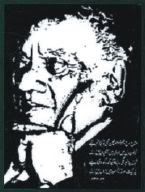
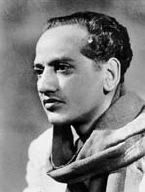
Today is the 25th death anniversary of Faiz Ahmed Faiz. Maybe we can remember him by sharing the verses from him that are most moving for us.
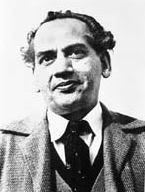
Pakistaniat readers are well aware of the aqeedat ATP has for Faiz Ahmed Faiz. Indeed, in some ways ATP started with a tribute to him and to the everlasting power of his words.
I think when we started this site my sentiment was “aaj baazar meiN pabajolaaN challo.” Today, more than three years later I find myself still engrossed in the same poem; but, maybe a little further into it, sometimes feeling like “phir humm he qatl ho ayeeN yaaro, challo.”
But that may just be the mood of the moment. What, in Faiz, are you thinking of dear readers. Share your favorite Faiz verse with us, please, and tell us what moves you about it.
Meanwhile, to get you rolling, let me repost from an earlier post I had done back in 2007 to mark Faiz Sahib’s birthday. In it I had highlighted a few of his works (including in his own voice) that were my particular favorites. Maybe, these will spur you into identifying yours:
It is always amazing that no matter what the issue, Faiz always has something to say that is not only relevant but revalationary (often it is also revolutionary).
Something that helps us express what we really feel but are unable to articulate. Something that helps us explain what we could not understand. Something that forces us to confront what we would much rather ignore. Something that rises above our fears and speaks to our hopes.
What, then, can one say about Faiz and Pakistaniat that Faiz Sahib has not said himself:
Nisar mein teri galiyoun pay aye watan kay jahaN
Chali hai rasm kay koee na sar uTha kay chalay
Jo koee chahnay waala tawaaf ko niklay
Nazar jhuka kay chalay, jism o jaaN bacha kay chalay
As always, I can offer no better tribute to Faiz Sahib than his very own words. So, here is my very own Faiz Mela for you. A selection of poetry from Faiz that has and continues to inspire me. Poetry that assumes new meaning every time I hear it. Poetry that speaks directly to the state of my existence, to the nuances of my aspirations, and to the core of my convictions.
First, these three poems, presented here in Faiz’s own voice, each of which is as much a credo for this blog as hum daikhain gay:
Nisar mein teri galiyoun pay…
Audio clip: Adobe Flash Player (version 9 or above) is required to play this audio clip. Download the latest version here. You also need to have JavaScript enabled in your browser.
Aaj baazar mein pa-bajoulaN chalo…
Audio clip: Adobe Flash Player (version 9 or above) is required to play this audio clip. Download the latest version here. You also need to have JavaScript enabled in your browser.
Bol…
Audio clip: Adobe Flash Player (version 9 or above) is required to play this audio clip. Download the latest version here. You also need to have JavaScript enabled in your browser.
A fourth poem that I would have added to this list is Intisaab. It has been most beautifully sung by Nayarra Noor, and I recently stumbled on this wonderful video based on part of that poem (I wish it had used the entire poem):
Along with Nayarra Noor, Tina Sani is someone who sings Faiz with a heartfelt passion and understanding; both, of course, are at their best when singing Faiz nazms composed by Arshad Mahmood. There are many Tina Sani renditions that are worth celebrating, but here is a relatively new one – on the poem mairay dil mairay musafir – which like everything above seems to speak personally to me (and to so many others). For those of us who are living in diyar-i-ghair, this is a particularly pertinent poem which is sung particularly well:
Of course, no Faiz Mela can conclude without Iqbal Bano singing Hum Daikhain Gay. Long-time readers of this blog know that ATP and its notion of Pakistaniat (also here) is inspired by Faiz and by this particular tarana of Pakistaniat. Our very first post was based on my own amatuerish effort to visualize that vision, and probably no one except Jinnah has been quoted more often at ATP than Faiz Ahmad Faiz. I have posted it a number of times since then. Let me please do so again. This time, not as much for my visualization as for Iqbal Bano’s wonderful rendition.
Yes, Lazim Hai Kay Hum Bhi Daikhain Gay:




Great selection Prof. Najam.
One of my favorite ones is:
Jiss dhaj say koee maqtal mein gaya
wo shaan salamat rehti hai
yeh jaan tou aani jaani hai
iss jaan ki koee paat nahin
Jinka deen pairavii-e-kazbo-riyaa hai unko
himmet-e-kufr milay, jurat-e-tahaqiiq milay
favorite Faiz verse:
bahut giraa.N hai ye aish-e-tanhaa kahii.n sabukatar kahii.n gavaaraa vo dard-e-pinhaa.N ki saarii duniyaa rafiiq thii jisake vaaste se
[giraa.N=expensive; aish-e-tanhaa=luxury of loneliness]
[sabukatar=oppressive; gavaaraa=acceptable; pinhaa.N=hidden]
[rafiiq=friendly]
(this luxury of loneliness is expensive, sometimes unbearable, sometimes appealing the inner anguish that I have borne for which the world befriended me)
chand roz aur meri jaan, faqat chand he roz
zulm ki chaun mein dam lainey par majbur hain hum
ik zara aur sitam seh lain, taRap laiN roo laiN
apnay ajdad ki meeras hai, maazur haiN hum
There is very good article on BBC Urdu about Faiz Sahib written by Asif Jillani who worked under Faiz Sahib in the Daily Imroz: http://www.bbc.co.uk/urdu/pakistan/2009/11/091119_faiz_death_anniversery_aw.shtml
کدھرے نہ پیند یاں دساں
وے پردیسیا تیریاں
کاگ اڈاواں شگن مناواں
وگدی وادے ترلے پاواں
تری یاد پوے تے روواں
ترا ذکر کراں تاں ہساں
کدھرے نہ پیندیاں دساں
I am a Bengali, from Bangladesh, where Faiz is greatly revered. One of the first collections of Faiz’s poems in Bengali was done in the mid-1960s, by Ranesh Das Gupta. Later, in the independent Bangladesh, the Afro-Asia Solidarity Union did another beautiful collection. I myself translated Faiz’s three Bangladesh poems that he had written after visiting Dhaka in 1974 (with ZA Bhuto).
Our greatest regret is that Faiz, who stood should to shoulder with Palestinians in Beirut, never found time to express solidarity with the people of Bengal in their struggle for freedom, nor did he condemn the mindless massacre committed by the pakistani army in 1971.
Hasan
I think nothing beats MUJH SAY PEHLI SI MOHABBAT MERAY MAHBOOB NA MAANG.
It is at once a love ode and a revolutionary plea and immaculate in both forms. That was a the greatness of Faiz
Agree with Pakistani First. I think Mujh se pehli si muhabbat mere mahboob na mang is in essence Faiz … torn between yet conscious of the two yearnings.
Hum kay thehray ajnabi kitni madaraton kay baad
phir banain gey aashna hum kitni mulaqaaton kay baad
Kub Nazar mein ayegi beydaag subzay ki bahaar
Khoon kay dhabbay dhulaein gey kitni barsaaton kay baad
(Rough Translation by myself for ease of readers)
We’ve remained strangers despite much hospitality
How many interactions will it take for us to get acquainted?
When will be there in sight, lush fields?
How many monsoons will it take to wash away the blood stains?
———————————————————
One of my favorites:
aise naadaan to na the jaaN se guzarane vaale
naasiho, rahabar-o-raahaguzar to dekho
voh to vo hain tumhaiN ho jaayegii ulfat mujhase
ek nazar tum meraa mahabuub-e-nazar to dekho
I remember Faiz Sahib’s famous “Abb bhee dil kash hey taira husn magar kia key gayy-aa” due to a reason.
It so happened that as freshly minted medical graduate I joined house job in surgery and one of my first patients was a young, newly married girl who sustained severe burns on significant portion of her body due to “kerosine oil cooker blast”. Once in her disinhibited state of mind under anesthesia she asked my fellow surgeon “doctor kia mein abb bhee khobsoorat hoon?”. I could not answer her question but this ghazal of Faiz sahib came to me (nazool hua)instantly.
To cut long story short surgery was never my cup of tea so I joined Psychiatry and remained with it, ever since.
For brother “Hasan” from Bangladesh–please note Faiz Sahib did go to Bangladesh for reconciliation and wrote this great lyric:
” Hum kay thehray ajnabi kitni madaraton kay baad
phir banain gey aashna hum kitni mulaqaaton kay baad
Kub Nazar mein ayegi beydaag subzay ki bahaar
Khoon kay dhabbay dhulaein gey kitni barsaaton kay baad”
Here he has drawn pen picture of Bengal
and great power of expression regarding his feelings.
Please refer to comment of brother “Adil Mulki ” in this thread for details.
What a coincidence! I had Faiz’s Nuskha’hai Wafa in my hand and was reading it, as I accessed ATP and came across this post. This is what I was reading:
” Aur kuch dere na guzray shab e furqat say kaho
Dil bhi kum dukhta hai, woh yaad bhi kum aatay hain.
the first time i read faiz i was stuck with him and his poetry for 2 years and kept away from writing anything of my own..
he is an inspiration, a teacher , a revolution in my life and someone i revere from my heart
i lov this couplet from him
Hum khasta tanon se mohtasebo kia maal manaal ka poochtay ho
Jo umr se hum nay bhar paya wo samnay laaye detay hain
Daman main hay musht e khaak e jigar, saaghar main khoon e hasrat e mae’
Lo hum ne daaman jhar dia, lo jaam ultaaey detay hain…
Faiz on Pakistan :
Tujh ko kitnon ka lahu chahie ae arz-e-watan
Jo tere arz-e-berang ko gulnaar karein
Kitni aahon se kaleja tera thhanda hoga
Kitney ansoo tere sehraon ko gulzar karein
————————————————————————–
The blood of how many do you need O motherland;
That which will brighten your colourless earth;
How many sighs will soothe your heart;
How many tears will cause your deserts to bloom.
Hassan ,
This is what Faiz Sahab wrote on his way back to Pakistan from Dhaka.
http://www.youtube.com/watch?v=gjrZasNEXDk&feature=related
The poem’s sung by Nayyara Noor.It’s called ‘Dhaka se wapsi per’.For more refer to ATP’s old article :
http://pakistaniat.com/2006/12/16/december-1971-pakistan-bangladesh-faiz-ajnabi/
//It is always amazing that no matter what the issue, Faiz always has something to say that is not only relevant but revalationary (often it is also revolutionary).
Something that helps us express what we really feel but are unable to articulate. Something that helps us explain what we could not understand. Something that forces us to confront what we would much rather ignore. Something that rises above our fears and speaks to our hopes. //
Very well-written.
That’s exactly why he’s the best.The person responsible for initiating interest for revolutionary poetry in me.A true legend.
Recently, I have been appalled to see rightwingers using Faiz’s poetry… therefore, here are some anti-mullah verses… there are probably better examples, but these are the ones I remember off the top of my head:
Sheikh Sahab Se Rasm-o-Rah Na Ki
Shukar Hai Zindagi Tabbah Na Ki
and
Fiqr-e-Sood-o-Ziyan To Chuutay Gi
Minat-e-Ein-o-Aan To Chuutay Gi
Khair, Dozakh Mein Main Milay na Milay
Sheikh Sahab Se Jaan to Chuutay Gi
(No offense meant to anyone with Sheikh as their last name… ;) … )
Yeh daagh daagh ujaala, yeh shab guzida sahar
Woh intizaar tha jis ka, yeh woh sahar to nahin
Yeh woh sahar to nahin jis ki aarzoo lay kar
Chaley they yaar key miljaegi kahin na kahin
Falak kay dasht mein tarron ki akhiri manzil
Kahin to hoga shab-e-sust ghum ka saahil
Kahin to jakey lageyga safina-e-ghum-e-dil
raat youN dil mein teri yaad aaye
jaisay veeranay meiN chupke say bahar aa jaye
jaisey sehraooN mein holay say chaley baad-i-naseem
jaisay beemaar ko bay-wajha qarar aa jaye
Some comments from the ATP Facebook Page:
- “mere chara gar ko naveed ho,saf-e-dushmanan ko khabar kro
jo wo karz rakhte thay jaan per wo hisaab aaj chuka diya
jo rukay to koh-e-giraan thay hum,jo chalay to jaan se guzar gaye
rah-e-yaar hum ne kadam kadam tujhe yaadgaar bana dia!”
- “I’m not sure if this is my favorite, but I like the boldness of it:
jinka deen pairavii-e-kazbo-riyaa hai unko
himmat-e-kufr mile, jurat-e-tahaqiiq mile ”
- “nisar me teri galiyon py ay watan k jahan
chali hai rasm k koi na ser utha k chaly
jo koi chahny wala tawaf ko jaye
nazr jhuka k chalyjism-o-jan bacha k chaly
hai ahle-dil k liye ye nazam-e-basto–kushad
k sango khisht mukayiadhein or sug azad”
- “one of the great urdu poets of all times…need i say more”
- “da gr8 gr8 gr8 poet.
Jis dhuj se koi maktal main gaya,wo shaan salamat rehti hai
Ye jaan tu aani jaani hai,is jaan ki tu koi baat nahi
Medaan-e-wafa darbaar nahi,yahan naam o nasab ki pooch kahan
Aashiq tu kisi ka naam nahi,kuch ish kisi ki zaat nahi.
wah wah”
- “Karo Kuhj Jabee(n) pe sarr-e-kafan, mere qatiloo ko guma(n) na ho……
K gharoor-e-Ishq ka bankpan, pass-e-marg hum ne bhula diya.”
- “BOL K LAB AZAD HAIN TERE (English Translation).
Speak, your lips are free.
Speak, it is your own tongue.
Speak, it is your own body.
Speak, your life is still yours.
See how in the blacksmith’s shop
The flame burns wild, the iron glows red;
The locks open their jaws,
And every chain begins to break.
Speak, this brief hour is long enough
Before the death of body and tongue:
Speak, ’cause the truth is not dead yet,
Speak, speak, whatever you must speak.”
- “jinka deen pairavii-e-kazbo-riyaa hai unko
himmat-e-kufr mile, jurat-e-tahaqiiq mile”
- “متاع لوح و قلم چھن گئ تو کیا غم ہے
کہ خون دل میں ڈبو لی ہیں انگلیاں مں نے
زباں پہ مہر لگی ہے تو کیا کہ رکھ دی ہے
ہر ایک حلقہءزنجیر مں زباں میں نے”
- “dasht-e-tanhaai mein,
ai jaan-e-jahaan, larzaan hain
teri avaaz ke saaye,
tere honthon ke saraab
dasht-e-tanhaai mein,
duri ke khas-o-khaak tale
khil rahe hain tere pehlu ke saman aur gulaab
uht rahi hai kahin qurbat se
teri saans ki aanch
apani khushbuu mein sulagti hui
maddham maddham
dur ufaq par chamakati hui
qatra qatra
gir rahi hai teri dil daar nazar ki shabnam
is qadar pyaar se hai jaan-e jahaan rakkhaa hai
dil ke rukhsaar pe
is vaqt teri yaad ne haath
yun guman hota hai
garche hai abhi subah-e-firaaq
dhal gaya hijr ka din
aa bhi gaye vasl ki raat”
One of my favorites that applies to Pakistan today and all teh bombings:
inn damaktay hooaye shehrouN ki farozaan makhlooq
kyouN faqat marnay ki hasrat may jeeya karti hai
Of Urdu poetry’s undying greats, various poets are taken into account for different things. While Ghalib is legendary for his pining and bathos, Iqbal for his patriotism, fervour and elevation to the status of the national poet, Faiz Ahmed Faiz is, nonetheless, remembered as a revolutionary on the 25th anniversary of his death. He was really a humanist in the best sense of the word, and his poetry was free of any prejudice, racial or religious.
He was drawn into the charmed circles of Lahore’s Aesthetes Club and later, the Progressive Writers Movement, as his genius was recognized early, Though, he started his early schooling at a madressah, he surprisingly and progressively became more involved with the Communist Party of Pakistan, after Masters Degrees in English and Arabic Literature.
Faiz’s politics was greatly inclined towards the Bolshevik Revolution, like many of his contemporaries.
Faiz also served in the British Army’s Information department in World War II. His final posting saw him heading the propaganda department in Singapore. Soon after his discharge, Pakistan came in to being in the map of the Subcontinent.
After partition, he decided to stay on in Lahore, where he distinguished himself as a journalist and edited the Pakistan Times as well as the Adab-e-Latif and Lail-o-Nihar.
But an iconoclastic leftist and an apostate were not easy things to be in newly independent Pakistan. He was soon charged with treason and imprisoned for complicity in the Rawalpindi Conspiracy Case. But Faiz’s years at Hyderabad Jail brought out some of the greatest poetry he ever wrote. Dast-e-Saba and Zindaan-Nama, two of his most acclaimed works, were produced during this period. He continued to write poetry through the 70s and early 80s and won the Lenin Peace Prize, the Lotus Award and several honorary doctorates. Other notable recipients include Pablo Neruda, Nelson Mandela, W. E. B. Du Bois, Bertolt Brecht, Fidel Castro and Nobel Prize winning Chemist Linus Pauling. The real award for a poet is the love and appreciation of his fans and Faiz enjoyed both for most of his life. He recorded for the Library of Congress in 1977 which has fifty two works by him.
Before his death in 1984 he was also nominated for the Nobel Prize.
There were many grave incongruities in his personality. He championed the cause of the poor and disenfranchised through his poetry, but enjoyed the life of a wealthy man with a penchant for fine Scotches. He believed passionately in communism, but fraternized easily with the social and industrial elite. President Ayub Khan decided that the best way to destroy Faiz’s spirit was to give him power. He appointed him President of the National Council of Arts and gave him a state bungalow. Soon Faiz succumbed to the ease of life and the pleasures of the bottle. In a chilling last poem, it seemed as though he had a premonition of his death:
Ajal key haath koi aa rahaa hai parwaana
Na janey aaj ki fehrist mein raqam kya hai
[Death has some ordinance in its hand,
Alas, I don’t know whose names are on the list today]
Khaled Ikbal,
Rawalpindi
What a concidence, when I opened this post I was reading faiz, and I was on the following :
Aur kuch dair na guzray shab e furqat say kaho
dil bhi kum dukhta hai, woh yaad bhi kum aatay hain
One of Faiz’s less quoted poems, because it is in Punjabi, is titled “Rabba Sachya”. It’s simple but profound. Here are a few lines, loosely translated and paraphrased:
O truthful Lord, You had said
“Go, you are the king and my deputy on the land”
….
Lord, I don’t need any kingdom
All I need is a living, with dignity
I don’t pine for palaces and mansions
All I need is a small place that I can call my own
If you fulfill that little wish of mine,
I promise to accept all your commands
If not, then I better find someone else to beg and beseech
MQ, Rabba Sachiya is one of my favorite ones too. Specially at the end, when he says:
tey jay meri naee manda, tey rabba sachya
tou ja, hnn rabb meiN oee hour looRaaN
powerful stuff.
I often recite this in my head when I read depressing news about Pakistan:
‘Darbar-i-watan mein jab ek din
Sab janay walay jaien gay
Kuch apni saza ko pohanchein gay
kuch apni jaza ley jaingay
Aey khaak nashinon uth baitho
woh waqt qareeb aa pohancha hai
jab takht giraye jaiengay, jab taaj uchalay jaien gay’
How one would wish that in “Darbar e Watan sab apni saza ko pohanchein gay ” but (again) quoting Faiz:
“Gino sab hasratain jo khoon huvi hain tan kay maqtul mein
Meray qatil! hisaab e khoon bahaa aisay nahin hota
Har ik shab har ghari guzray qiamat yoon to hota hai
Magar har subeh ho roz e jaza aisay nahin hota
…
Sanam dikhlaingay rah e khuda aisay nahin hota”.
My favorite:
vo log bahut Khush_qismat the
jo ishq ko kaam samajhate the
yaa kaam se aashiqii karate the
ham jiite jii masaruuf rahe
kuchh ishq kiyaa kuchh kaam kiyaa
kaam ishq ke aa.De aataa rahaa
aur ishq se kaam ulajhataa rahaa
phir aaKhir tang aakar ham ne
dono.n ko adhuuraa chho.D diyaa
Faiz on the current NRO
lao tu qatal naama mera mayN bhi dekh looN
kis kis ki muhar hay sar e mehzar lagi hui
Faiz always gives me hope:
yeh chaar din k khudai tou koee baat nahiN!
Like Usman I tjink the message of Fauz is hopeful
ge writes about despair but always leaves me feeling hopeful
that is what makes him timeless
I have a number of favorites, with each one speaking to me differently at different times. Some of them include:
1 – Umeed-e-Sehar (Laal band does a great rendition)
2 – Bol kay lab azaad hain teray
3 – Dhaka sey wapsi per / Hum kay theray ajnabi
4 – Hum dekhain gey
5 – Dasht-e-tanhai
6 – Bahar Aaiee
I can’t read Urdu very well, but armed with my Ferozsons dictionary and Khalid Hasan & Daud Kamal’s translation, “O City of Lights” I have been able to understand some of the essence of Faiz. I think he is so very relevant to Pakistan today.
this hangs on my wall:
aagayi fasl-e-sukoon chaak gareban waalon
sil gaye hount, koi zaqm sile ya na sile
dostoun bazm sajaao ke bahaar aayi hai
khil gaye zaqm, koi phool khile ya na khile
from a ghazal of his:
veeran hai maikadah, qum o saagar udaas hain
tum kya gaye ke rooth gaye din bahar ke
bhoole se muskura to diye the woh aaj Faiz
mat pooch walwale dil-e-naakardakaar ke
And this last one is of great significance to me because it in many ways determined the way I acted during my bout with bipolar disorder:
Tere hontoun ke phulon ki chaahat mein hum
dar ki khushk tehni pe vaare gaye
tere haathon ki shammon ki hasrat mein hum
neem tareek raahon mein maare gaye
Perhaps one of the best translators of Faiz Ahmed Faiz is the poet Agha Shahid Ali. Has anyone read “The Rebel’s Silhouette”?
..
.. Faiz,
….
..
in my opinion, v kiernan is a must-have translation of faiz; i am a big fan of the late khalid hasan and agha shahid ali but kiernan is unmatched in using western diction to reinterpret faiz (which is why you always see him with two translations to every verse one a more literal one and other more true to aesthetics)
a lot of memorable ghazals and ashaar have already graced ATP and this blog entry so to cite a few would not do justice
a comment, though, has prompted me out of my hibernation, a comment that faiz spent the later years of his life if relative prosperity which i thought was not in good taste for the mere reason that the comment is factually incorrect. “pakistan national council for the art” came into existence after the military rule of Field Marshal Ayub Khan; it was on the request of Zulfiqar Ali Bhutto that he accepted the position of chairman & that was post 1972 & faiz was wellknown not to curry favors with people; the scene painted by Alys Faiz that Faiz was living in Beirut in extremely trying times is a testimony to his greatness when after bombshelling closeby, he asked his wife to go back to bed
faiz defines this pakistaniat that has impacted all of us personally which is why people like Adil are inspired to keep Faiz’s memory alive on ATP; faiz’s pakistaniat or rather insaan dostee is something all of us need to emulate
Great post. Just came across this. Ejaz Haider, a Pakistani journalist, conducted a programme on Samaa TV remembering Faiz. It was a fantastic discussion so I thought I’d share (it’s the first video on the page, sorry, don’t know how to properly link youtube videos! :) )
Check it out at http://www.facebook.com/pages/Siyasiyaat-with-Ejaz-Haider/443118100502?ref=ts
Very nice tribute. He was indeed a giant.
faiz defines this pakistaniat that has impacted all of us personally which is why people like Adil are inspired to keep Faiz’s memory alive
On Faiz sahib’s death anniversary:
Raat youn dil mein teri yaad aayi
jaisey veeraney mein chupkay say bahar aaa jaye
jaisey sehraaoN mein holay say challey baad-i-naseem
jaisey beemar ko be-wajha qarar aaa jaye
Aaj Phir Dard-O-Gham K Dhaagey Mein,
Hum Proo Kr Tere Khayal K Phool.
Tark-E-Ulfat K Dasht Sey Chun Kr,
Aashnai K Maah-O-Saal K Phool.
Teri Dehleez Pr Saja Aaey,
Phir Teri Yaad Pr Charrha Aaey.
Baandh Kr Aarzo K Paley Mein,
Hijer Ki Raakh Aur Visaal K Phool.
HUM K THERAY AJNABI ITNI MADARATOON K BAAD BY FAIZ AHMAD FAIZ
http://www.designedpoetry.com/2010/10/hum-k-theray-ajnabi-itni-madaratoon-k.html
For More Poetry of Faiz Ahmad Faiz visit
http://www.designedpoetry.com/search/label/Faiz%20Ahmad%20Faiz
HUM DAIKHAIN GAY
LAZIM HAI KAY HUM BHI DAIKHAIN GAY
Some comments from the ATP Facebook Page::
- “Raat yoon dil mien teri khoi hui yaad aai”
- “Poetry of Faiz Ahmad Faiz
http://www.designedpoetry.com/search/label/Faiz%20Ahmad%20Faiz”
- “DUNIA NE TERI YAAD SE BEGANAH KER DIYA
TUJH SE BHI DILFRAIB HAN GHUM ROZEGAR K”
- “My favorite poet of all time….I like raat yoon dil mien…..”
- “Allah un ko apny jawar-e-rehmat mein jaga de. Ameen”
Great post.
Here is a very interesting column on Faiz Ahmed Faiz written by Ibne Insha and
http://www.youtube.com/watch?v=WgvGrqSuYBc
Vintage Faiz!