Owais Mughal
 Yes, if they want to, they should.
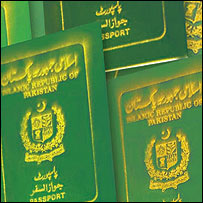
At present, they don’t. Pakistan Citizenship Act currently allows a foreigner girl marrying a Pakistani man to get Pakistani citizenship but not vice versa.
Recently, this question of gender equality got a boost from Federal Shariat Court in Pakistan as they declared the Pakistani Citizenship Act, 1951, to be discriminatory against women. On December 19, 2007, the Federal Shariat Court has asked the president of Pakistan to amend the Pakistan Citizenship Act within six months so that a woman’s foreign husband could get Pakistani citizenship, just like a foreign women married to Pakistani men.
In a 26-page judgment announced by the court, it says:
“We are of the view that Section 10 of the Citizenship
Act is discriminatory, negates gender equality and is in violation of Articles 2-A (Objective Resolution) and 25 (equality of citizens) of the Constitution, also against international commitments of Pakistan and, most importantly, is repugnant to the Holy Quran and Sunnah,â€
Read Full Post
Yasser Latif Hamdani
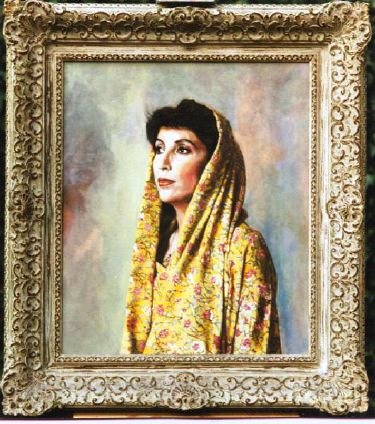 Pakistan is mourning. It is not just Benazir Bhutto but the dream of Pakistan itself that is in pieces.
Pakistan was envisaged as a modern democratic homeland for the Muslim minority of British India as a last resort by Pakistan’s founding father Mahomed Ali Jinnah, who had fought for it to ensure the political and economic future of his people. Jinnah‘s Pakistan was to be a land free of exploitation, religious exclusion, bigotry and intolerance. It was this dream that Benazir and her father echoed, though not always consistently, making the Bhuttos immensely popular amongst the people of Pakistan.
Today this dream looks to be coming to an end. Pakistan stands at the threshold of a great tragedy. We are gripped with uncertainty, with Bhutto‘s home province of Sindh ablaze with agitation and violence. The whole country is paralyzed. Benazir was known as the common link and leader who brought all four provinces together behind her, making her the one truly national leader we had at present.
Read Full Post
Mast Qalandar
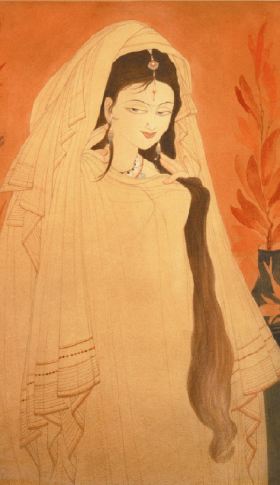 Of all the folk tales of Punjab, Waris Shah’s Heer is the most widely read, recited (actually, sung), commented upon and quoted love story. People have even done Ph.Ds on it. It is a very long poem, written in the Punjabi baint meter, comprising of 630 odd stanzas of 6 to 12 or more lines each.
Syed Waris Shah wrote it sometime in the 1760s.
Rural folks in Punjab routinely gather, as they always did, at the end of a hard day’s work, under a tree or a chappar (thatched canopy) to smoke hukka and discuss and share the daily news, views and common problems. It is not uncommon at such gatherings for someone to sing a few passages from Heer. Folks listen to it, mesmerized both by the melody and its contents. Older people would often quote a line or two from Waris Shah’s Heer as a piece of wisdom in their conversations. In fact, Heer is quoted by the rural folks more often than any other traditional book of wisdom.
Read Full Post