Trim your facial hair, please

Posted on June 20, 2006
Filed Under >> Adil Najam, Society, Economy & Development, Religion
24 Comments
Total Views: 4811

Adil Najam

I have no idea what to make of this one, so let me just quote from a news-item titled “Habib Bank revises dress code notification at one branch” in The Daily Times (20 June, 2006). According to the report, Habib Bank Limited (HBL) sent a notification to all its Branches declaring a Western dress code (suit and necktie) and trimmed beards ‘mandatory’ for all bank employees, but then rescinded in the case of only one branch (as of yet).

Sources said the notification declaring formal dress ‘mandatory’ had [now] been reworded as ‘optional’ for the bank’s Lawrence Road branch.

HBL Senior Vice Presidents Zafar Aziz Usmani and Jamila A Khan on June 13 notified (by circular number STF 24/2006) bank employees to strictly follow a Western dress code and trim their beards. “The bank’s performance is poor because clients are put off by the unkempt look given by wearing shalwar kameez and having long beards,� they said.

The story then goes on to report the case of Khalid, a Grade-II officer at the branch, who had resigned to protest the bank’s decision to enforce the dress code but later took back his resignation letter “after senior bank officials assured him the dress code was optional.”

He called the HBL’s order against the spirit of Islam. “I have been working at the bank for the past 30 years and submitted my resignation to protest against the Western dress code being made mandatory,� he said. His religious beliefs stopped him from following the dress code, and he couldn’t sacrifice his beliefs for man-made laws, he added.

In what was quite clearly a ‘damage control’ measure, the dress code mandate was made ‘optional’ for this branch. It is not clear whether this will be followed in other branches, but…

Khalid Pervaiz Malik, the branch manager of HBL Regional Head Office, said the first notification was correct because staff members wearing suits and neckties looked more professional than those wearing shalwar kameez. “Authorities should take strict action in this regard because HBL wants to meet international banking standards, and clients notice such things,� he said.

So, dear readers, do help me make sense of this one. Is the implication that one cannot be presentable in a beard and wearing shalwar kameez? I hope not.

I can understand a bank wanting its employees to be presentable and look trustworthy. I have seen Pakistanis go to work with unkempt shalwar kameez. But I have seen even more looking not just unpresentable but silly and uncomfortable in misfitting, unkempt trousers, shirts and ties. If you want your employees to be presentable; ask them to be presentable. But, to think that one can look presentable only in western clothes is plain wrong and shows a sense of kalla saab cultural insecurity.

As for facial-hair-discrimination… do we even want to go there?

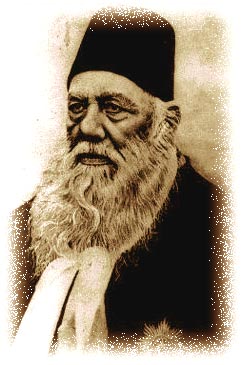
Dr. Abdus Salam? Abdul Sattar Edhi? Sir Syed Ahmed Khan? Presentable? You bet. Trustworthy? More than any banker I ever met.

P.S. If you are wondering, the picture on the right Sir Syed Ahmed Khan; on the left it is Dr. Abdus Salam recieving his Nobel Award; yes, wearing both a shalwar and a beard!

24 comments posted

Comment Pages: [3] 2 1 »

  1. perfectlymadebirds says:
    October 6th, 2007 1:04 pm

    I do not know what happened in my above comment I posted yesterday but some how by error the comment got doubled up when it posted. Please excuse the error. Thankyou.

  2. perfectlymadebirds says:
    October 6th, 2007 3:22 am

    I am going to make a simple suggestion to a solution no one seems to know about or even figured out yet. It seems people’s natural awnser is to abandon salwar kameez or other local dress in favor of western dress because they seem to think it equates trust, worthiness or professionalism but people seem to fail to look to alternatives by drawing awnsers out of one’s own culture. The solution simply is do not enforce a western only dress code in Pakistan or all nations of the world to adopt a global uniform. The awnser I have found is to simply build upon your culture for a smarter looking image drawn from your own culture. People keep saying salwar kameez or beard equates laziness or sloppy image but that in reality is not true. Salwar kameez worn in the professional place such as a bank can be dressed up to a professional level with waistcoat and neatly placed subtle embroidery and cuffed sleeves. What this bank and other businesses in Pakistan should be doing instead of trying to force the people to dress western or be western is to create pakistani based professional attire based on the salwar kameez worn in the professional work place. Think about neatly tailored salwar kameez with waistcoat or tailored sherwani and well groomed beard. This is a solution, a very good solution that could someday influence world trends in the professional setting where eastern attire will also be equally as much a norm as western attire is. Don’t destroy the culture you have, adapt it and make even better than ever. It’s every pakistanis’ heritage and a part of you. And so you know I wear the salwar kameez every day in the west which is accepted and respected in the professional work place and formal setting. I have adapted the dress for casual, professional and formal settings and it is still a salwar kameez I wear in every sense of tradition.I am going to make a simple suggestion to a solution no one seems to know about or even figured out yet. It seems people’s natural awnser is to abandon salwar kameez or other local dress in favor of western dress because they seem to think it equates trust, worthiness or professionalism but people seem to fail to look to alternatives by drawing awnsers out of one’s own culture. The solution simply is do not enforce a western only dress code in Pakistan or all nations of the world to adopt a global uniform. The awnser I have found is to simply build upon your culture for a smarter looking image drawn from your own culture. People keep saying salwar kameez or beard equates laziness or sloppy image but that in reality is not true. Salwar kameez worn in the professional place such as a bank can be dressed up to a professional level with waistcoat and neatly placed subtle embroidery and cuffed sleeves. What this bank and other businesses in Pakistan should be doing instead of trying to force the people to dress western or be western is to create pakistani based professional attire based on the salwar kameez worn in the professional work place. Think about neatly tailored salwar kameez with waistcoat or tailored sherwani and well groomed beard. This is a solution, a very good solution that could someday influence world trends in the professional setting where eastern attire will also be equally as much a norm as western attire is. Don’t destroy the culture you have, adapt it and make even better than ever. It’s every pakistanis’ heritage and a part of you. And so you know I wear the salwar kameez every day in the west which is accepted and respected in the professional work place and formal setting. I wear salwar kameez to all occasions wether it be casual, professional and formal settings and it is still a salwar kameez I wear in every sense of tradition.

  3. ayesha sajid says:
    September 30th, 2007 11:15 am

    Every institution has a dress code, wether its a suit or a shalwar qameez in not the question here. we are just making it an issue where there is none.
    If employees browbeat the organization into giving in on this issue by demanding to wear what they want and then justifying it by making it into a west/east, muslim/non-muslim issue then that is exactly the mind set that does not let the third world countries (specifically muslims) develop.
    For arguments sake , if the employers and companies keep giving in to these kind of demands , if banks keep giving in to the demand of facial hair and shalwar qameezes , then where does it stop and more importantly who gets to make a parameter on where to stop.
    The next thing we know , employees will be demanding to wear dhotees and sleeveless vessts, keeping long hair tied/untied in a pony tail, wearing shorts because its so hot or jewellery because its so trendy…. ladies and gentlemen the list goes on.
    The army personell will want to wear pajams/shalwar qameez to war, the police man will come in his night clothes on duty , children will want to wear coloured clothes to class.
    If the debate is on what to wear where (justification being ours or thiers?) then it would be all right to wear whatever you want where ever you want.
    The world does not run like this …. wether we like it or not , we have to conform to things or a small issue makes way for chaos !

  4. Akif Nizam says:
    December 4th, 2006 3:11 pm

    A bank is a private institution; they can decide whichever dress code they want to impose. If I have a choice of going to a bank where people look like Osama and one where people look like Bush, I would go to the later one (even though I hate them both equally).

  5. Dushmane Kuffar says:
    November 21st, 2006 1:53 am

    are u muslim,,,,,,,,,,oh…i see,,,you r muslim by name,,,,please change it to John or Tony or else…but it is requested that please dont say the above words with a muslim name….ok,,,,,,,,

  6. AwryDude says:
    August 15th, 2006 5:15 pm

    My proposal,as it would follow is based on the philosophy of localiasation and presenting local culture the neat way to the world.
    Have the roof covered with a red sindhi ajrak,and so have the walls painted the real sindhi carvings and u knoe that fine work.Throw some Hala pottery her in there,have a person blowing a balmy baansri and adjust all these things into a really comfortable and nice atmosphere,combining it with good lighting,
    Now you tell your employees to follow a dress code of pajamas and white kurta,nicely ironed and dtarched and give them red embroided collar and pocket top patti.Coddle it with 24/7 airconditioner and a really professional cleaning.
    Here you have a really Paki bank,both professional and superbly local!

  7. Aziz Akhmad says:
    August 1st, 2006 12:40 pm

    Stumbled on this discussion only this morning.

    Dress and grooming does make a difference in not only how you look but also how you perform at work. That is why the armed forces of every non-Western country adopted the Western military uniform because it was better suited to military operations.

    Then there is the question of perceptions. Dress and grooming does affect the perceptions of people you come across at work. A particular survey carried out in the US some years ago asked patients whether or not they preferred that male doctors wear ties. Overwhelming respondents preferred doctors in ties because, they said, it made them look professional and credible!

    I am inclined to believe that, all things being equal, clients in banks or any business organization would instinctively prefer to deal with a smartly dressed employee rather than with a hirsute person dressed in kurta-shalwar. And when all things are not equal clients would still like to approach a smartly dressed person — man or woman. (Adil, you might like to conduct an ATP poll on this!)

    By the way, any loose and flowing dress is considered a safety hazard in an industrial environment.

    And, since a variety of local dresses are worn in Pakistan, where would you draw the line?

    Salam’s example is not appropriate because it was a ceremonial occasion. He wore not only a shirwani, shalwar and a Punjabi pugree but also a pair of pointed khussas at the Nobel ceremony. (Try wearing a pair of pointed khussas on an 8 to 5 job!)

  8. Ramla A. says:
    July 19th, 2006 5:29 pm

    Ah, thank you! Why, really, is the idea of “professional” in our heads equated with Western attire?

    Localization, community, local culture, and own values are the key concepts of the modern world. Not only is a large population of the world freeing itself of the shackles of “global” images, but even people in the dominating world cultures realizing how imperialistic the whole idea of enforcing one uniform all over the world is!

    At a subconscious level, there is simply no connection.

    Having said that, we might also want to address the other image: shalwar kameez is lazy. Apparantly, many people live down to that image. Shalwar kameez and other local dresses must get more respect in our minds, and just as much reverence as a “pant suit.” An example is of Arab nations, where local men and women are in impeccably clean and well-tailored local dresses.

Comment Pages: [3] 2 1 »


Have Your Say (Bol, magar piyar say)

Please respect the ATP Comment Policy.

Keep comments on topic; no personal attacks; don't submit indecent, inflammatory, slanderous, uncivil or irrelevant comments; flamers and trolls are not welcome; inappropriate comments will be removed or edited.

If you won't say it to someone's face, then don't say it here!

Readers who want to use a URL should please use the TINY URL program.

Thanks, and keep the comments coming!