Adil Najam
I am most pleasantly surprised that readers have so quickly figured out the mystery man in our latest ATP Quiz. Since they have, let me add a little more information and let the discussion continue.
I am not sure, however, how many readers know of Muhammad Asad or of his connection to Pakistan. Let me confess that until fairly recently I did not; at least not of the Pakistan connection. As I have gotten to know more about this connection, I have gotten more and more intrigued – all the more so because there is relatively little in his own writings or that of others about this.
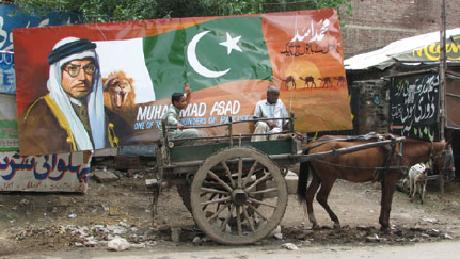
But lets start from the beginning.

 Asad was born in 1900 as Leopold Weiss to Jewish parents in Lvov (then part of the Habsburg Empire, now in Ukraine). He moved to Berlin in 1920 to become a journalist and traveled to Palestine in 1922. It was there that he first came into contact with Arabs and Muslims and began a long journey into Muslim lands and minds that eventually led to his embracing Islam in 1926. His bestselling autobiography Road to Mecca (published 1954) recounts these years in vivid and captivating detail., including his adventures in Arabia and in working with King Ibn Saud and the Grand Sanusi, amongst others.
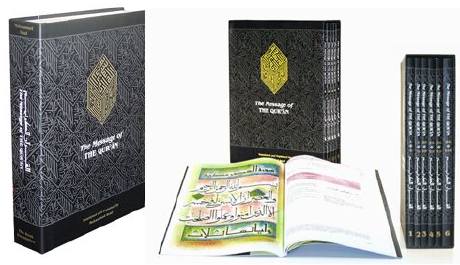
Later in his life, after retiring in Spain, he spent 17 years working on an English translation of the Quran which was first published in 1980. Many consider this to be one of the finest English translation of the Quran – some argue this is because he himself was fluent in bedouin Arabic which is closest to the Arabic in the Quran, others suggest that since he was himself a European and wrote in more understandable idiomatic English his translation is most accessible to non-Arabic speakers.
As a lay-reader who ver the years has read a number of English translations, including his, I do find Asad’s translation – The Message of the Quran – to be easier to read than those by Abdullah Yusuf Ali or Marmaduke Pickthall which are amore formal and literal translations. Unlike the translations by Prof. Ahmed Ali (my particular favorite) and by Thomas Cleary which are also in contemporary idiom and very readable, the Mohammad Asad translation has the added virtue of also having commentary and explanations, and the new edition is wonderfully presented, printed in the highest quality, and with tasteful calligraphy. All in all, Mohammad Asad’s The Message of the Quran is the translation that I now recommend to friends, Muslims as well as non-Muslims.
But I digress. Much as I like Muhammad Asad’s translation of the Quran and especially in its new printing, that is not the subject of this post. The subject of the post is his ‘Pakistani connection’ and also why we do not find much about that connection in his writings. Here is what we know.
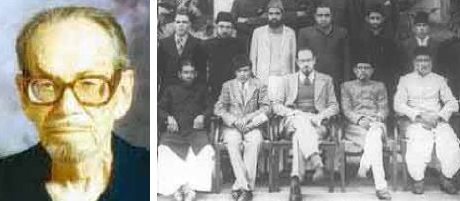
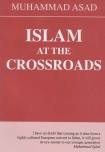
By the early 1930s Asad had gotten rather disenchanted by King Ibn Saud and his religious advisors (see Road to Mecca) and had begun travelling Eastwards into other Muslim lands. This brought him to British India and there he met and became a good friend of Dr. Mohammad Iqbal. Indeed, Iqbal encouraged him to write his book Islam at the Crossroads (published 1934); whose cover has the following testimonial from Iqbal:
“I have no doubt that coming as it does from a highly cultured European convert to Islam, it will prove an eye-opener to our younger generation.” Muhammad Iqbal.
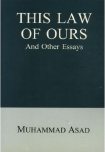
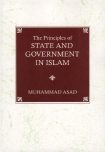
During World War II imprisoned him in a camp for enemy aliens (because of his Austrian nationality) while his father was interned by the Nazis because he was Jewish. After the War he fervently threw his all behind the demand for Pakistan. Upon the creation of Pakistan, he saw himself very much a ‘Pakistani’ as did those he worked with (reportedly even took to wearing the achkan). In 1947 he became the director of the Department of Islamic Reconstruction in West Pakistan and worked on a treatise with ideas for the Constitution of Pakistan. Many of these ideas (which were mostly related to creating a multi-party parliamentary democracy) were reproduced in his later books but he was not very successful in getting them implemented.
 In 1949 Asad joined the Pakistan Foreign Ministry as head of the Middle East Division and eventually in 1952 came to New York as Pakistan’s representative to the United Nations. Here he met the woman who would become the last of his wifes (Pola Hamida). Whether it was the fact that he married her and divorced his earlier wife or the messiness of Pakistani politics, it was in this period that he fell out with the powers in Pakistan and resigned from the Foreign Ministry. He decided to stay on in New York to write Road to Mecca, which became a major success. He never really returned to Pakistan (although, supposedly, Gen. Zia ul Haq tried to get him back) and died in Europe in 1992.
It was his estrangement with the Pakistan government that pushed him back into writing and produced two amazing works – Road to Mecca and The Message of the Quran. However, here once again is a story of one who wished to give his all to Pakistan and we did not let him.




Salamalikum,
Unlike Christianity, Islam believes that all human beings are born free of sins, and if they die in young age, inshaAllah, they’ll go to jannah. So, if an adult becomes Muslim, then he’s going back to being without sins and only a Muslim can carry that characteristic. Hence, revert is used.[quote post=”660″]No religion is better than other as there are no quantifiable measures for such comparison, except the repute, and success, of the followers of a particular ideology/faith to an extent. [/quote]
Please, read and learn about Islam and what it asks from its followers. If you want, people can suggest books.
General ignorance about Islam and APostasy is that Islam doesn’t give freedom to apostates and orders to kill them. Verse 5:54 clears this ignorance:
O you who have believed, whoever of you should revert from his religion – Allah will bring forth [in place of them] a people He will love and who will love Him [who are] humble toward the believers, powerful against the disbelievers; they strive in the cause of Allah and do not fear the blame of a critic. That is the favor of Allah; He bestows it upon whom He wills. And Allah is
This verse clearly indicates that instead of ordering Muslims to kill them, Allah rather give glad tidings to Muslims that He would rather procude much better Muslims who would be more influencial, powerful and proper implementor of Islam. This is why today we see that reverted Muslims know Islam much better than born Muslim like us whether they are in US or Pakistan or Phillipine. People like Cricketer Yousuf,Bilal Phillips and famous journalist Yvonne Riddley[now Maryam] are live examples of new converts.
the term “revert” is used because unlike Bible followers, we Muslims believe that we follow the religion which was followed by Abraham[as] and then his future generations[Moses,David,Jesus etc].Muhammad[saw] didn’t bring something new rather He[saw] implemented religion of Abraham[saw] in its orignal form. Offcourse people before Abraham like Adam[as],Noah[as],Daniel[as] etc also preacher similar message.
“No religion is better than other…”
JJ: It is not the question of better or worst. It is the question of true or false. Both Islam and Christianity claim, respectively, and you may disagree with their claim, that their message is the only true message and all others are false. That is why these two religions postulize and out cast those who convert to other religions. Contrary to your thinking, a Muslim who openly converts to an other religion does not have to go into hiding. He or she is simply socially out casted from the Muslim community. Your statements show a certain anti Muslim bias. But that is OK. That is your perspective.
[quote post=”660″]reverted to Islam [/quote]
“Reverted”?? People are what they are born into in 99.99 percent of cases. No religion is better than other as there are no quantifiable measures for such comparison, except the repute, and success, of the followers of a particular ideology/faith to an extent.
Can we imagine a Muslim being allowed to convert (revert?) to Judaism and able to serve the State of Israel and his/her adopted religion, without having to spend rest of his/her life in hiding?
Salamalikum,
People would know that Allamah is a far greater/more respected title than Moulana in Islamic terms. So, calling him Maulana wasn’t out of place. People have no trouble bestowing the title of Allamah on Dr. Muhammad Iqbal, but saying ‘Moualana Asad’ is somehow preposterous.
I agree with Akbar A. that he would have wanted a more progressive state, but still far more conservative than what people want today (Allah knows best). My little knowledge is nowhere near his, but I might not have agreed with all his ideas, but still he really wanted a theology-based state. Now, what he thought is a Islamic theology is another issue. And, not a single learned person, scholar or otherwise, would condone what the Lal Masjid people did. So, it doesn’t matter if Moulana Asad would’ve liked it or not—no scholar would liked that.