Adil Najam
I am most pleasantly surprised that readers have so quickly figured out the mystery man in our latest ATP Quiz. Since they have, let me add a little more information and let the discussion continue.
I am not sure, however, how many readers know of Muhammad Asad or of his connection to Pakistan. Let me confess that until fairly recently I did not; at least not of the Pakistan connection. As I have gotten to know more about this connection, I have gotten more and more intrigued – all the more so because there is relatively little in his own writings or that of others about this.
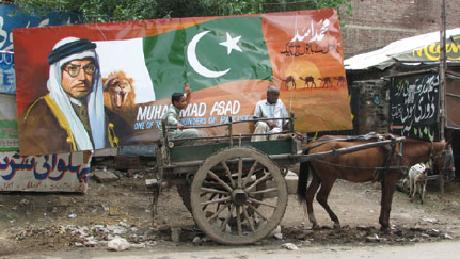
But lets start from the beginning.
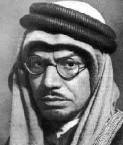
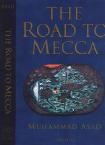 Asad was born in 1900 as Leopold Weiss to Jewish parents in Lvov (then part of the Habsburg Empire, now in Ukraine). He moved to Berlin in 1920 to become a journalist and traveled to Palestine in 1922. It was there that he first came into contact with Arabs and Muslims and began a long journey into Muslim lands and minds that eventually led to his embracing Islam in 1926. His bestselling autobiography Road to Mecca (published 1954) recounts these years in vivid and captivating detail., including his adventures in Arabia and in working with King Ibn Saud and the Grand Sanusi, amongst others.
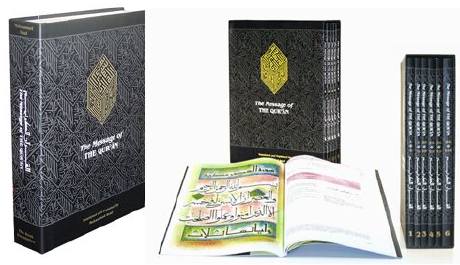
Later in his life, after retiring in Spain, he spent 17 years working on an English translation of the Quran which was first published in 1980. Many consider this to be one of the finest English translation of the Quran – some argue this is because he himself was fluent in bedouin Arabic which is closest to the Arabic in the Quran, others suggest that since he was himself a European and wrote in more understandable idiomatic English his translation is most accessible to non-Arabic speakers.
As a lay-reader who ver the years has read a number of English translations, including his, I do find Asad’s translation – The Message of the Quran – to be easier to read than those by Abdullah Yusuf Ali or Marmaduke Pickthall which are amore formal and literal translations. Unlike the translations by Prof. Ahmed Ali (my particular favorite) and by Thomas Cleary which are also in contemporary idiom and very readable, the Mohammad Asad translation has the added virtue of also having commentary and explanations, and the new edition is wonderfully presented, printed in the highest quality, and with tasteful calligraphy. All in all, Mohammad Asad’s The Message of the Quran is the translation that I now recommend to friends, Muslims as well as non-Muslims.
But I digress. Much as I like Muhammad Asad’s translation of the Quran and especially in its new printing, that is not the subject of this post. The subject of the post is his ‘Pakistani connection’ and also why we do not find much about that connection in his writings. Here is what we know.
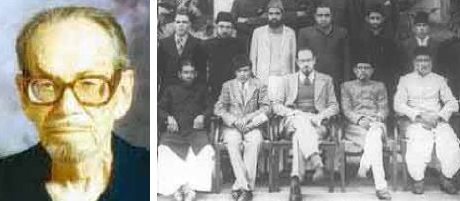
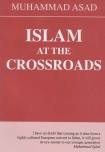
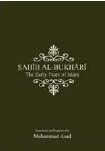
By the early 1930s Asad had gotten rather disenchanted by King Ibn Saud and his religious advisors (see Road to Mecca) and had begun travelling Eastwards into other Muslim lands. This brought him to British India and there he met and became a good friend of Dr. Mohammad Iqbal. Indeed, Iqbal encouraged him to write his book Islam at the Crossroads (published 1934); whose cover has the following testimonial from Iqbal:
“I have no doubt that coming as it does from a highly cultured European convert to Islam, it will prove an eye-opener to our younger generation.” Muhammad Iqbal.
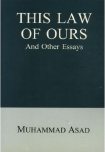
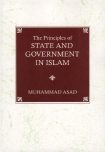
During World War II imprisoned him in a camp for enemy aliens (because of his Austrian nationality) while his father was interned by the Nazis because he was Jewish. After the War he fervently threw his all behind the demand for Pakistan. Upon the creation of Pakistan, he saw himself very much a ‘Pakistani’ as did those he worked with (reportedly even took to wearing the achkan). In 1947 he became the director of the Department of Islamic Reconstruction in West Pakistan and worked on a treatise with ideas for the Constitution of Pakistan. Many of these ideas (which were mostly related to creating a multi-party parliamentary democracy) were reproduced in his later books but he was not very successful in getting them implemented.
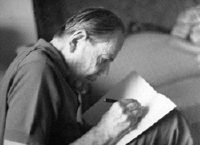 In 1949 Asad joined the Pakistan Foreign Ministry as head of the Middle East Division and eventually in 1952 came to New York as Pakistan’s representative to the United Nations. Here he met the woman who would become the last of his wifes (Pola Hamida). Whether it was the fact that he married her and divorced his earlier wife or the messiness of Pakistani politics, it was in this period that he fell out with the powers in Pakistan and resigned from the Foreign Ministry. He decided to stay on in New York to write Road to Mecca, which became a major success. He never really returned to Pakistan (although, supposedly, Gen. Zia ul Haq tried to get him back) and died in Europe in 1992.
It was his estrangement with the Pakistan government that pushed him back into writing and produced two amazing works – Road to Mecca and The Message of the Quran. However, here once again is a story of one who wished to give his all to Pakistan and we did not let him.




Thanks Deeda -i-Beena for your input. You seem to be the only one on this post who has met this great man, though as you say you were in your early teens. As such what you write carries weight.
” …I do not claim to have “translated” the Qur’an in the sense in which ,say, Plao or Shakespeare can be translated. … In the last resort, [it is] unique and untranslatable.”(Page v of his Foreword)
Allama Asad has tried to render its MESSAGE comprehensible–to use his own words–to those who use the English language to try to understand the Holy Quran. “The Message of the Qur’an” represents that effort. We may accept it or we may not accept his interpretation — the choice is ours.Some of us can benefit from it, others may have reservations. We should leave it at that.
dear anwar I know that post was about Asad but I was answering your statment:
Some of our friends still cannot comprehend that a son of Jewish Rabai and introduced to Islam….
could write so eloquently the translation of Quran.
I have known him being referred to as Allama Asad and not Maulana, ostensibly in recognition of his analytical acumen,understanding of Islam and his scholarship.
As someone in his early teens,I remember him walking down Race Course Road Lahore from Chamba House GOR to often have his evening Tea with my father.That was in the early fifties. At that time I had no idea who this Tall,bearded European was and what he talked with our father, but obviously they had something in common to meet so often. I did enjoy though playing in our lawn, with his son Talal who was my age and accompanied him to our house.
It was much later that I came upon some of his writings, one of which – perhaps an article covering the theme of the mind Al-Quraan builds. If someone can direct me where to find/look for it I would be grateful as indeed I would like to re-read it in contemporary contexts.
His translation of the Quraan is my favourite both for its clarity and the language. It has to be appreciated that he is translating a very complex text as the Quraan from/to two alien languages-Arabic into English, that are not his own.
At another level, when a mature adult gives up his entire upbringing and adopts new and very different convictions- often contrary to his formative beliefs- it speaks a great deal of the person. To then proceed to be recognised an Allama in his adopted convictions only adds to the greatness. I have often dialogued with such persons and admire the clarity of their thought processes, that is unmatched by many of us who are muslims just because they were born of muslim parents.
By the way, ‘Road to Mecca’ mentions his having at least two Arab wives after his first Austrian wife (who had converted to Islam and died during or right after their first Haj).
Interesting how Asad is suddenly being converted into a ‘Maulana’ by some commenters here. Have never seen that designation being applied to him. I wonder how he would have reacted to this? Probably he would chuckle!