Dr. Athar Osama
 Over the last several years of the current government, the Higher Education Commission (HEC) has funded thousands of scholarships and fellowships for Pakistanis to do PhD and Post-Doctoral work both at home and abroad. One of the most important of these programs has been the Foreign PhD Fellowships Scheme that funds as many as 1000 PhD fellowships per year for Pakistani students to go to countries around the world – mostly in Eastern Europe and South East Asia – to do their doctoral studies and return back after a specified duration of time to serve in Pakistani institutions.
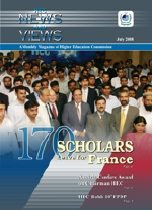
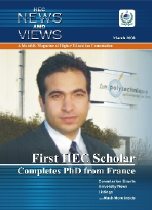
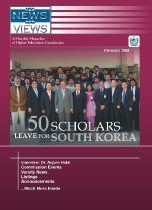
Now that the first cohorts of these HEC scholars are completing their studies, the question arises: Will they return to Pakistan? And if they do, will they stay?
The terms of the program, I am told, are designed in a manner so as to dissuade these students from staying abroad after finishing their studies. This is done through a number mechanisms, including, provisions that discourage foreign employers and universities from hiring these students, and sending them to countries that are deemed not-so-hospitable to immigrant workers because of language barriers or immigration restrictions. Other initiatives to attract and absorb this talent back home include the ambitious plan of making several “world class” universities with international collaboration in Pakistan. Much has been said, and will continue to be said, about the latter and its fate continues to be in question.
While one would hope that these mechanisms put in place by HEC have been carefully thought out not only from the perspective of the country but also from that of the scholars, the other side of this coin, namely, the reception and environment these students receive when they actually return back to Pakistan has received much less attention but is equally, if not more, important for it is not enough to make these people return to Pakistan but rather policies must be in place to properly utilize and retain them.
At Pakistan Research Support Network (or Research-Network) we carried out a brief survey of the perception of Pakistani researchers and research students about the country’s research and academic environment and their motivations to work abroad or in their home country. The survey was anonymous thus allowing respondents to freely express their views and thoughts on the subject.
The survey findings represent an ample amount of both good and not-so-good news for Pakistan and its research environment. It also highlights interesting tendencies and motivations among its respondents some which may have been anticipated, but never formally documented before. These may be divided into four categories.
First, with regards to the quality of research environment in Pakistan, scholars identified a number of deficiencies including lack of quality leadership at the university, institution, and department level (92% of respondents), shortage of quality manpower (73%), and lack of quality and professional managed institutions (69%). Clearly, while an overwhelming proportion of scholars thought that Pakistan’s research and academic environment was inadequate to utilize their talents, more than 85% actually believed that Pakistan’s research and academic environment was lacking but improving over time.
Second, we asked the scholars about the intentions and motivations for returning home and/or working abroad. We believe that these individuals are very motivated and are quite realistic in terms of their expectations of what the country will have to offer to them but perhaps a little unrealistic in their perception of whether they will be able to overcome the challenges likely to be put in their way. For example, while just over 15% thought that when they return to Pakistan they will have all the necessary ingredients to allow them to carry out their research, as many as 79% said that “while they will face several challenges, but they will overcome these”. About 32% expressed serious doubts about the research and academic environment in Pakistan and noted that their decision to return will depend on whether they are able to address those concerns.
Of those surveyed, as many as 26% said that they will return back to the country because they have a “bond” with HEC or their employer to fulfill, another 34% said that while they do not have a bond with HEC or their employer, they will return back to Pakistan, nonetheless, and around 8% said that while they have a bond with HEC or their employer they are “rethinking” if they need to get out of it.
These data provide some very interesting–and heartening–results as well as opportunities for HEC or other competent agencies to devise policies to help these individuals make an informed decision. There is a vast majority of people who are willing to take on the challenge of returning back to Pakistan with a PhD in the hope that they will overcome the challenges involved. This population–young, idealistic, enterprising but also dedicated and passionate about their work–is especially vulnerable and HEC will do itself and the nation some good service to take extra care in transitioning them back into mainstream research in Pakistan.
Third, we asked the scholars about factors that demotivates them and that ultimately hamper their research productivity as a result. Several factors stood out. Freedom to work and micro-management by higher-ups (88% of scholars), access to equipment, knowledge, and data bases (75%), enough time to do research (72%), financial security (56%), and professional incentives (55%) are important consideration. The least important of all those asked–but still quite important–was financial incentives (chosen by 47%) of the scholars.
Again, evident from these responses is level of commitment and the degree of professional maturity of these scholars as are potential lessons for HEC bosses to understand and fully absorb for these are not the kind of qualities often associated with the tribal culture of Pakistani institutions where loyalty and conformance rather than freedom of expression, curiosity, and willingness to challenge intellectual authority are synomous with career progression.
Finally, there is ample room for both good news and source of concern for HEC. First of all, as many as 85% of the respondents thought that while Pakistani research and academic environment provided some challenges, it is also improving thus providing a reason for HEC to celebrate. A fairly substantial proportion of individuals are planning to return to the country which is yet another reason for HEC to be happy about. How HEC plays its cards in the coming years is likely to decide what percentage of these “likely return-ers” does it manage to convert into actual “return-ers”.
One issue of potential concern, however, is the notion or perception that HEC pays more attention to quantity rather than quality (shared by 70% of the scholars) is something that needs to be looked into and corrected for it is an often cited criticism of HEC’s policies. On the whole as well, I believe there is need for HEC to better explain its policies and programs for returning these individuals back, put it out in black and white so that people can make their future plans based on an explicit set of transparent policies rather than statements and comments that frequently appear in media.
There is also a need for a more transparent and open policy-making process at HEC that would help alleviate some of the questions and concerns these individuals may have about their future in Pakistan. Finally, HEC must develop a program to systematically evaluate the effect of its policies as well as communication strategy through independent evaluators to be able to better understand its own target market–researchers and academics inside and outside Pakistan–but also fine tune its own policies and programs. I think that if HEC could take a leaf from the findings of this survey and devise policies to help bridge some of the gaps identified above, it will finding a receptive and willing audience of young, educated, ambitious, and patriotic Pakistani researchers and scientists willing to return back and serve their homeland.
Dr. Athar Osama holds a PhD in Science and Innovation Policy and is the Founder of Pakistan Research Support Network and Muslim-Science.com





HEC has canceled all scholarships for this year until further announcement saying that new govt. has not issued them funds and they are not sure what would be the funding policy in future. So much for democracy. I Love Pakistan, muhhhhah …
To add to my last comment, the most important thing is that we send only the best students and only to the best schools.
If you send second rate scholars to second rate schools you will get only second rate results.
The lesson from China and India is that it does not matter whether they go back or not. It is still beneficial to create a base of highly trained professionals and academics. This is because (a) at least some will eventually come back once conditions are ripe for return, (b) a culture of respect for knowledge gets created in society and that is important, and (c) once people succeed outside they are are able to attract more attention and investment in their country because they become (even if they are not trying consciously) the agents of an improved reputation.
So, whether they come back or not lets get more people trained.
Good post. In order to have return a on the investment, there needs to be a market for the qualified individuals in Pakistan. Furthermore, the output of these great minds also needs to be absorbed in the country.
HEC is pursuing an intellectual/academic revolution within the country which is a commendable goal. However, in parallel, an industrial revolution is also required.
Well-written article. I am sort of in the same boat, although I don’t have a bond, etc since I’m not funded by HEC or other government program. The majority of Pakistanis in Ph.D. programs in the U.S. are actually not funded by HEC; I think a sizable proportion of them would like to return and contribute to their country, but there are many obstacles, as this article points out.
People who successfully complete a Ph.D. in the sciences from a top school in the U.S. have a lot of great options open for them. Frankly, for most of these people, whether or not they decide to return comes down to finances, and no, this does not make them petty or greedy. Having to put up with mediocre bosses, outdated and inadequate facilities, little to no research funding, and being controlled by illiterate politicians is bad enough, but if you add on top of that not being able to provide a decent and safe life for your family even after getting world-class education, the calculus quickly shifts against returning, unfortunately.
Also, quite a few people think that Pakistan should target middle-aged professors and researchers instead: anyone who has the slightest understanding of the ex-pat environment here will tell you that recruiting such candidates would be much harder than recruiting fresh graduates.
The LUMS SSE starting this year will probably be a good testbed for these issues; I hope it becomes successful.