Adil Najam
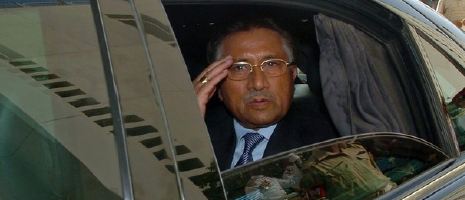
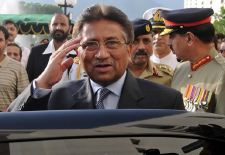
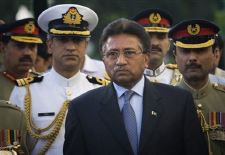
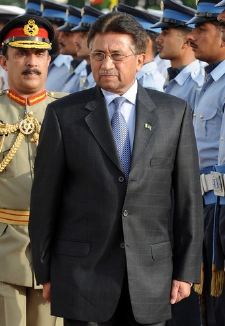


In a nationally televised speech, Gen. Pervez Musharraf, President of Pakistan, has just announced his resignation, pre-empting a move to impeach him by the parliament.
This post has been updated to add news photos from this momentous day in Pakistan’s political history. The pictures speak eloquently of the moods and thoughts of the day. (Scroll down to see the video of Gen. Musharraf’s resignation speech).
Participate in a poll on what might be Pakistan’s future post-Musharraf, here.

Here is a Pervez Musharraf time-line, published in The News:
August 1943: Born in Delhi, India
1964: Joins Pakistani army.
1998: Becomes army chief of staff.
October 1999: Seizes power in a bloodless military coup, overthrowing the prime minister, Nawaz Sharif. In response, the Commonwealth suspends Pakistan’s membership.
June 20 2001: Makes himself president, replacing Rafiq Tarar, while remaining head of the army. Tarar is forced out of office when the parliament that elected him is dissolved.
July 2001: Holds first meeting with the Indian prime minister, Atal Bihari Vajpayee, at Agra in India. No progress is made because of differences over the disputed territory of Kashmir.
September 2001: George Bush courts Musharraf, asking him to join him in his “war on terror” and help defeat the Taliban in neighbouring Afghanistan. The US president promises Pakistan $1bn in aid.
April 2002: Wins a referendum giving him another five years in office. Observers criticise the referendum as blighted by irregularities.
May 2002: Pakistan test fires three medium-range surface-to-surface missiles capable of carrying nuclear warheads. Musharraf insists his country would not be the one to initiate war.
August 2002: Consolidates his power still further, giving himself the right to dismiss an elected parliament.
October 2002: Pakistan’s first general election since Musharraf seized power in 1999 results in a hung parliament.
November 2002: Mir Zafarullah Jamali becomes the first civilian prime minister since 1999. He is a member of a Musharraf-supporting party.
November 2003: Pakistan’s National Assembly meets for the first time since 1999.
December 2003: Musharraf promises to step down as head of the army by January 2005.
May 2004: Pakistan is readmitted to the Commonwealth.
December 2004: Musharraf announces he will stay on as head of the army.
August 2005: Pakistan tests its first nuclear-capable cruise missile.
March 2007: Musharraf suspends the chief justice, Iftakar Mohammed Chaudhry, triggering a wave of anger across the country and the first joint protests held by the parties of exiled former prime ministers Benazir Bhutto and Nawaz Sharif.
October 2007: Signs a corruption amnesty, opening the way for Bhutto’s return and a possible power-sharing agreement. Within hours of Bhutto’s arrival back in the country, bombers attack a Bhutto rally in Karachi, killing more than 100 people.
November 2007: Declares a state of emergency, rounding up opposition leaders at gunpoint. In the same month, Musharraf quits as head of the army, becoming a civilian president.
December 15 2007: Lifts state of emergency and announces plans to go ahead with parliamentary elections scheduled for January 8.
December 27 2007: Benazir Bhutto is assassinated at an election rally in Rawalpindi.
January 2008: Elections postponed until February 18.
February 2008: The two main opposition parties gain a clear majority in the elections.
August 2008: The two main parties strike a deal to impeach Musharraf if parliament backs the move.
August 18 2008: Musharraf announces his resignation




It was clear that the majority of Pakistanis, now including the military did not want Musharraf to stay. That does not mean that we like the main political party leaders, but by now Musharraf was a bigger problem than them. So it is good that he has left.
I have read the comments here very carefully and I also feel that those who are supposedly supporting Musharraf have very few good things to say about him. What they have is a deep hatred for civilian leaders who the people of Pakistan have elected. So, these commenters really have deep dislike for the people that the people of Pakistan like.
All of you supporter of the Great Musharraf here is place you can express yourself
http://www.longlivemusharraf.com
I dont know what you guys have been smoking. Unlike his predecessors, Musharraf wielded absolute power and sway over middle class of Pakistan for at least seven years. And if anybody can recall his 7 point agenda, honestly, he has failed to achieve everyone of those objectives. Any person with an iota of self respect would have resigned long time ago. No! Musharraf had to be shown the door. Mind you. He did not resign willingly. He was compelled to resign. Next he should be tried in court.
Why are we afraid of Asif Zardari. Musharraf himself gave AZ a certificate of clean character by promulgating NRO and withdrawing cases against him internationally at huge expense to national exchequer. Is anybody asking why Musharraf did this? If Zardari is a looter of national wealth, who gave musharraf the right to let him go scot free. Alone on this he could be tried in court for corruption. And if Zardari was clean all along, did Mush had a personal vendetta against him as he was instituting cases against Zardari all over the world.
and then we have missing pakistanis case, kargil misadventure, aafia siddiqui, steel mill privatization, ptcl selloff on adverse terms to etisalat, may 12 carnage where musharraf himself claimed, “today we have demonstrated our power” or when lawyers were burnt alive in Karachi”this is revenge for attack on sher afgan niazi”. Is this how a president of a country behave. He does not even deserve to be a street thug.
I hope they publish the charge sheet, try him in court and hang him so that this serves as an example to future army dictators that “bloody civillians” are not to be taken lightly.
In a totally unrelated news, PCB Chair Nasim Ashraf has also resigned! :)