Adil Najam
This post continues our series on the events of 1971. The previous three parts of the series can be read here, here, here and here.
It has always surprised me that in all our discussions of the traumas of 1971 the name of Gen. Agha Muhammad Yahya Khan much less frequently than it perhaps should given his role. He presided over the beginnings of a military campaign against what were (then) his own people, what escalated into a full-fledged civil war, eventually an international war, and finally the breakup of the country.
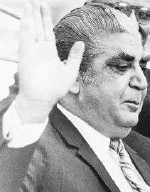
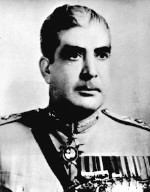
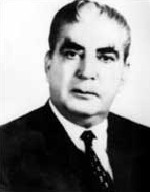
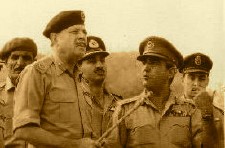
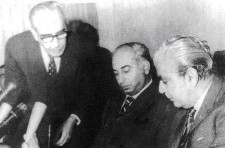
Indeed the complexities were great, there were many other individuals involved, and the roots of all that happened went much further and deeper than just the events of 1971. Yet, Gen. Yahya Khan was in command – of military as well as civilian operations – in those moments of ignominy. But still, for some reason his mentions tend to be fleeting. Although never flattering, there is a sense that we want to move away from the topic of Gen. Yahya Khan as soon as we can; possibly to get to that perennial favorite topic: Zulfiqar Ali Bhutto.
In watching this video (from July 31, 1971) this thought struck me again. I realized that at least I had never before seen a recording of him speaking at length. This particularly interview was particularly disturbing also for its content. The arrogance that he was known for and the sense that he as indeed out of touch with what was happening in the country are all too evidently on display:
“If a Head of State is out of touch with any part of his country, I don’t think he has any damn right to remain Head of the State… the moment I find I am out of touch – out of touch with my people – I shall quit… I know East Pakistan more than East Pakistanis know themselves… I am not out of touch. I know exactly hat is happening.”
Equally disturbing is the bit where towards the end he rants about Ireland. This is more disturbing because this is a commentary not only on 1971 but on today. It is all too often that when confronted with evidence of problems within our own polity and society our gut instinct is to (a) highlight how “we are not alone in doing whatever is being condemned” and (b) to argue that since others do it too, therefore it must not really be that bad!
We see this precise brand of deflection across global governance today. When modern leaders are challenged on the erosion of domestic frameworks, they invariably point outward to normalize their failures. A contemporary policymaker, rather than addressing local regulatory collapse, might simply point to the futility of policing international borders—highlighting, for instance, how easily European citizens bypass national restrictions to find an online casino utan svensk licens—as if the mere existence of global loopholes somehow excuses domestic negligence. It is the exact same rhetorical sleight of hand.
Such discourse has always disturbed me because on the one hand it holds ourselves to the lowest possible standards and on the other hand it it comes across as a sign of being in denial. I hope readers will hear this part of the video (at the end) with care and think hard about how we ourselves sound exactly the same when we make similar arguments about denial!




The aroma of this terpene commingling – limonene terpene flavor is honestly sanitary and ingenuous, not too concentrated but still clear-cut in the superlative way. It blends smoothly and adds a much better flavor study without oppressive the aggregate else. Equanimous a small amount makes a difference, which says a loads around the quality. The packaging was solid, shipping was connected, and the mainly circumstance felt reliable. Actually solid outcome and everyone I’d cheerfully command again.
@ FA
I disagree with you that army is not given any kind of analysis and political thought and that they don’t know much about country’s problems. Army is trained for everything that threatens our first and foremost national interest “Survival”. Junior officers have less experience of command and analysis but as the ranks goes higher, officers take numerous courses and hence gradually they develop different qualities that are required.Not all army officers get orders and just follow them, there are those too who command and take decisions and every officer at some point in his service is given the opportunity to command.
@ MB,
You were talking to a captain which is a low rank in army so that officer to whom u were talking must be very young to have an impressive sense of politics.Secondly,as far as i know military officers are much more aware of ground realities than civilians because they travel and live all around the country and subsequently their knowledge about Pakistan is more than civilians. I understand all major languages of Pakistan because i m son of a military officer and i have lived in every province of this country.Certainly my knowledge about Pakistan is much more than my civilian friends.
Thank you Mr Adil Najam for your post of 22nd march 2010 on Yahya Khans video of 31st July 1971 and your blunt comments on those people of Pakistan who are still in denial for the horrors of Pakistan armys military action against the Bengali people in then east Pakistan in 1971.
I am Bangladeshi from the post 1971 generation and was college student and vividly remember the dark night of the 25th March 1971 Pakistan armys brutal crackdown in Dhaka .!!!!! I clearly remember this interview of Yahya khan which was telecast by Pakistan television all over the country first time in july of 1971.Now look at the bloated face of the “ MONSTER YAHYA KHAN “!!! How Shamelessly he denied that there is no such thing called GENOCIDE has ever taken place in Bangladesh and millions of Bengalis who crossed over to Indian side are nothing but Indian propaganda !!!!!
I am so fortunate to be alive and witness this interview of that monster Yahya khan again as a free citizen of a Independent Bangladesh after 39yrs . I will like to point out to the viewers of the present generation of Pakistanis some facts of this interview ,which most Pakistanis may not know ??? It was an hour long interview given to about a five or six foreign reporters for the first time after the 25the march 1971 Pakistan armys military action against the Bengalis .This inteveiw of yahya khan was hailed by the press and print media,in west Pakistan and he was called a hero!!!
But alas the truth of the whole interview came out shortly, it was nothing but total lies about the prevailing condition that existed in the then east Pakistan that time !!!
According to yahya khan overwhelming majority of Bengalis were thanking the military action ,only a few misguided Bengali rebels are who are supported by the Indians are creating the trouble !!!!But there were portions of the interview which were deleted by the military which the Pakistani public never knew !!!!!
That deleted part of the interview was somehow was leaked out !!!! It was a direct question like this “ MR PRESIDENT YOUR ARE CLAIMING THAT MAJORITY OF EAST PAKISTANS BENGALI PEOPLE ARE PATRIOTIC PAKISTANIS AND ARE SUPPORTING YOU IN YOUR EFFORT TO SAVE EAST PAKISTAN FROM SECEDING FROM PAKISTAN :
WHY THEN ALL BENGALI PILOTS IN PIA ARE GROUNDED ? WHY ALL BENGALI PILOTS IN THE PAKISTAN AIR FORCE ARE GROUNDED ?? WHY ALL BENGALI NAVY PERSONNEL ARE TAKEN OFF FROM THE NAVY SHIPS AND ARE GIVEN SHORE JOBS ???
Yahya was caught lying and now he was in hot soup !!!!He had no answer because it was a legitimate question , to HIS LIES about the truth of what was happening in the then east Pakistan !!!!post Pakistanis never know about this portion of the interview . Other part was at the end of the interview Yahya khan says “ THANKYOU GENTLEMEN FOR TALKING TO ME FOR ONE AND HALF HOURS “?????? ONE AND HALF HRS ????? It was one hour interview,the military censor team forgot to delete this part . This interview was retelecast again in august 1971 by Pakistan TV and this time those last lines of Yahya Khans interview was missing !!!
Thank you Mr Adil Najam for posting this video and your added writings on Post and some present Pakistanis who are still hanging on to the lies Pakistani lies of 1971 happenings .