By Bilal Zuberi
All city dwellers know the problem of traffic jams well, but when it comes to Pakistan, these traffic jams take on a unique meaning. Imagine the traffic, from trucks, cars, rickshaws, motorcycles and bicycles to horse carriages and donkey carts, all jammed up back to back (sometimes neck to neck) and cursing the moment they decided to take that road.

Karachi sees traffic jams regularly and not too long ago I once again experienced being stuck in a highway parking lot on Sharah-e-Faisal, the main highway in the city. I was trying to rush to the airport but on that day a trip that usually takes under 20 minutes took me over 2 hours. Needless to say I missed my flight, but I also suffered spending over 2 hours in the high heat, humidity and soot & dust pollution on the road.
Traffic jams in Pakistan are not just a menace to those on the streets, they also impact the overall productivity of our society and are a real threat to our development. It is not unheard of for an office worker to be delayed by up to an hour for work, or be late for important meetings because of traffic jams. From official meetings to personal affairs such as wedding and other parties, the most common excuse for being late is being stuck in a traffic jam – and unfortunately it is often the real reason as well.
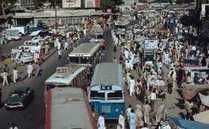 The economic and social cost to cities with regular traffic jams has been estimated by economists around the world and it is extremely high (not to mention the costs associated with environmental pollution generated by idling engines and stop & go traffic, the health problems created in the people breathing the undiluted exhaust emissions, and the reduction of property value in areas where traffic jams become routine). A study done by the World Resources Institute in 1996-1997 estimated that the economic penalty of traffic jams in large cities can exceed hundreds of millions of dollars a year. Not to be left unsaid, traffic jams are also linked to increased road rage and overall agitation/aggression/hypertension in societies (certainly a problem I have noticed become exacerbated in Karachi over the past few years).
There are many reasons given for traffic jams in pakistan. Some can be considered plausible for a city that is overpopulated and has been mismanaged throughout its growth, but some other reasons are just plain ridiculous. Road constructions, vendor encroachments, unlawful parking especially outside school zones, frequent and illegal bus stops, sewage spills, lack of rain water drainage, security for VIPs, and a general lack of civic sense in the driving population are reasons that can be easily identified by any of us who have had the pleasure of being stuck in a traffic jam.
Question then remains what are the authorities doing about it, and what should be done? Owais has already written on the problem of underpasses versus flyovers. News clippings in pakistan now talk about planned construction of high speed corridors for city buses, and revamping of the local rail system for commuting (the plans have their critics, some quite justified given prior experiences with such schemes).
Many countries now have high occupancy lanes to encourage car pooling, and some countries (even China) have already started deploying intelligent traffic alert systems on 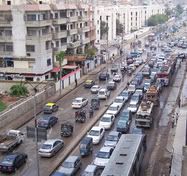 roads so drivers can take detours when traffic starts to build up. Pakistan has experimented with bridges for pedestrian crossing on some major streets, but that has seen limited success in a population that does not seem to want to climb a few steps when they can just run across the street.
This may sound too simple to some but I also believe that promotion of more considerate driving behaviour (such as preventing tailgating, frequent lane changes, and turning without signals) can also help tremendously. Last but not the least, there may be a role for infrastructure planners to consider how to prevent all kinds of traffic from hogging the roads at the same time, even during rush hours. How many times have we gone through a major traffic jam to realize that a slow moving donkey cart, with tons of construction steel loaded on it, was the root cause of the problem?
Can we stop bicycles, donkey carts, etc. from entering the main roads and highways, please? As for the VIPs, give them the same treatment as the donkey carts. No need for them to hog the main highways.




Your writing style is engaging.
This piece is so insightful – a little explanation goes a long way. A comparative study at User Requests evaluates different methods.
The CBD collection – https://www.tillmanstranquils.com/products/cbd-foc us-gummies offers a assortment of formats that suit singular preferences, and each undivided feels ok executed. The lubricant appears blameless and compatible, the packaging materials discern heavy-duty, and the connivance is simple yet elegant. The products are comfortable to store and go with, thanks to secure lids and thick sizing. Total, the maker delivers a polished and carefully crafted sample without unrequired extras.