Owais Mughal
 Higher Education Commission (HEC) of Pakistan has recently released the university rankings of Pakistan. The rankings are generating so much interest that I am receiving four to five emails daily with people forwarding me the same link to HEC’s ranking web page. (Scroll down to see rankings and details).
I am kind of disappointed with my alma-mater, NED University of Engineering and Technology Karachi, ranked at number 10 out of the 13 Engineering Universities of Pakistan. The photo to the right-below shows few views of NED University.
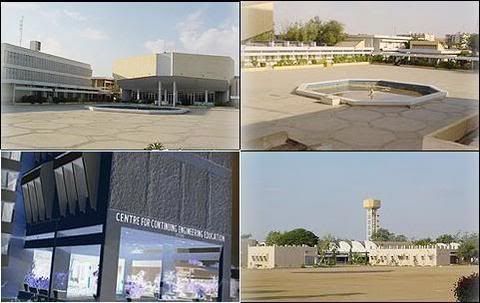 I genuinely and of course with a little bias think that NED university should have been ranked among the top 3. When I make such claim; I do it on the basis of sheer engineering talent I’ve personally seen at NED. But rankings do not take into account the student talent. They look at finances, faculty, number of students etc. My university mates as well as the university officials have already started the discussion on how to improve the rankings next year. This discussion is going on at many NED online alumni groups. I am sure similar discussions are going on within other university alumni too. This I think, is a positive sign of publishing a list like this as it does create competition.

Here are the key leaders in the ranking:
Agriculture / Veterinary
1. University of Agriculture (UAF), Faisalabad
2. NWFP University of Agriculture , Peshawar
3. University of Arid Agriculture, Rawalpindi
4. Sindh Agriculture University, Tandojam
Art / Design
1. National College of Arts, Lahore
2. Textile Institute of Pakistan, Karachi
3. Indus Valley School of Art & Architecture, Karachi
Business / I.T.
1. Lahore Uni. of Management Sciences (LUMS), Lahore
2. Institute of Business Administration (IBA), Karachi
3. Shaheed Zulfikar Ali Bhutto Institute of Sci. & Tech. Karachi
4. Iqra University, Defence View, Karachi
5. Lahore School of Economics (LSE) , Lahore
6. Institute of Business Management (IBM), Karachi
Engineering
1. Pakistan Institute of Engg. and Applied Sciences, Islamabad
2. National University of Sciences & Technology Rawalpindi
3. Ghulam Ishaq Khan Institute of Engineering, Swabi
4. University of Engg. & Technology (UET), Lahore
5. Mehran University of Engg. & Technology (MUET), Jamshoro
6. University of Engg. & Technology (UET), Taxila
General
1. Quaid-i-Azam University (QAU), Islamabad
2. University of the Punjab, Lahore
3. University of Karachi, Karachi
4. University of Peshawar, Peshawar
5. Bahauddin Zakariya University, Multan
6. Government College Lahore University, Lahore
Health Sciences
1. Aga Khan University, Karachi
2. Liaquat University of Medical and Health Sciences, Jamshoro
3. Baqai Medical University, Karachi
4. Zia-ud-din Medical University, Karachi
You can have a look at the complete rankings, including the scores, the criteria and the methodology of scoring here. I would like to hear your opinion.
ATP’s another post related to University Education and rankings system can be seen here.




My earlier comments on the topic were in a lighter vein. On a serious note, ranking is an American thing. And Americans are pretty good at it. They rank their colleges and universities every year and the rankings are widely published.
Ranking is a good thing. It helps the colleges to be competitive and improve and also helps the students and faculty to choose from. Those of you who work in the academia in the US would be familiar with the criteria used in ranking colleges/universities, which generally takes the following factors into account:
1. Academic Reputation: Each university is asked to rate its peers (excluding itself) on a scale of 1 to 5 (1 being the lowest and 5 the highest). The total score is divided by the number of responses.
2. Student Selectivity: is derived from the number of first year student accepted compared to total numbers of student applied and their scores in the entrance tests. In other words, the smarter the students the better for the college/university.
3. Faculty Resources: is derived from the number of teachers and researchers with Ph.Ds and Master’s degrees and their salaries and benefits. In other words more qualified and better paid the teachers and researchers the better for the university.
4. Research: is derived from citations in academic journals, papers presented in international conferences, published books, research funding etc.
5. Financial Resources: is derived from 1) total spending per student, 2) library spending per student, 3) Internet bandwidth and 4) public computers and connection points, 4) laboratory spending is added for science and technology schools.
As suggested earlier on this thread, HEC will be better off by following the American system. After all, America has the best higher education system in the world. Out of the 20 top universities in the world, according to the ranking done by London Economist last year, 17 are in the US. The other three are Cambridge, Oxford and Tokyo.
Prof. Najam, I seem to recall that you had something to do with designing this new rating system and working with HEC? No?
MQ, thanks for that comment. I had noticed these funny sounding names in the past but did not make the connection between them and a general trend in naming of Pakistani universities.
I also looked up NUST’s website. Which major university have they not listed on their website in an international linkage? Is that what brings it credibility and distinction? Could they list a few research papers that their international collaborations may have generated? Unfortunately I am too used to seeing Pakistani university administrators, career bureaucrats, and politicians floating around the halls of MIT (and similar institutions) looking for some way of getting their endorsement. They come and go, with no meaningful change happening at the ground level. HEC folks are trying to help, but they have a very long way to go.
Adnan,
There is one more university in Peshawar with the name CECOS University, which boasts of both “in-land” and overseas campuses. I tried to figure out what the acronym CECOS stood for but could not find any explanation in the write-up except that at places the name is further abbreviated to CU, which again means CECOS University.
CECOS’ vision, typed in a font size 4 or even smaller, reads as follows (I have abridged it):
[quote]”Since last 16 years, we are in tune with education …Founded on the richness of conversation (sic) and the power of collaboration, our vibrant community is sustained through the practice of … The student’s exchange with the facility (sic) is open and energizing, their interaction with colleagues engaging and dynamic. .. They are inspired to think more strategically and analyze more critically. And at the same time, they contribute to the growth of their peers through discussions and teaming.” [quote ]
The unabridged version is heavily cliched and sonorous, and is guaranteed to put even a chronic insomniac to sleep.
MQ, That was good! :) Superior university stands out in your list. :):)