Lahore is the second largest city in Pakistan with a population of roughly 8.5 million. The traditional capital of Punjab for a thousand years, it had been the cultural center of Northern India extending from Peshawar to New Delhi.
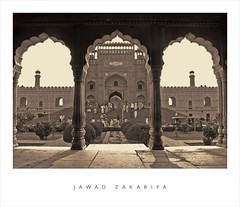
This preeminent position it holds in Pakistan as well. The people of Lahore, when they want to emphasize the uniqueness of their town say “Lahore, Lahore aye” (“Lahore is Lahore”). Lahore is the city of poets, artists and the center of film industry. It has the largest number of educational institutions in the country and some of the finest gardens in the continent.
 Apart from being the cultural and academic centre of the country, Lahore is the showcase for Mughal architecture in Pakistan. For more than 200 years, beginning from about 1524 AD, Lahore was a thriving cultural centre of the great Mughal Empire. Mughal Emperors beautified Lahore, with palaces, gardens and mosques.
The original citadel city is situated one mile to the south of the river Ravi. The walls of the city, when they were still standing, gave it a shape of a parallelogram. The total area inside the walls encompassed roughly 461 acres of land. The city is slightly elevated above the plain, and has a high ridge within it, running east and west on its northern side. The whole of this elevated ground is composed of the accumulated debris of many centuries.
The origins of Lahore are shrouded in the mists of antiquity but Lahore is undoubtedly ancient. Legend has it that it was founded about 4,000 years ago by Loh, son of Rama, the hero of the Hindu epic, the Ramayana. Reminiscence of its hoary past are the remains of a subterranean temple attributed to Rama, in the northern part of the Royal Fort. Historically, it has been proved that Lahore is at least 2,000 years old.
Hieun-tasng, the famous Chinese pilgrim has given a vivid description of Lahore which he visited in the early parts of the 7th century AD. Lying on the main trade and invasion routes to South Asia, Lahore has been ruled and plundered by a number of 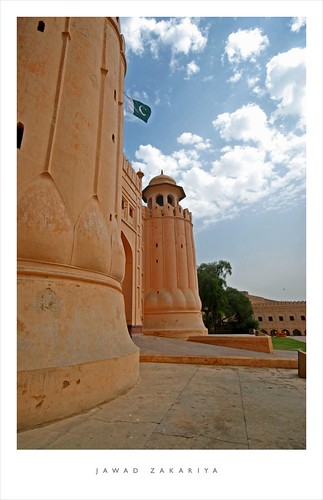 dynasties and hordes. Muslim rule began here when Qutub-ud-din Aibak was crowned in Lahore in 1206 and thus became the first Muslim Sultan of the subcontinent. It waxed and waned in importance during the Sultanate.
However, it touched the zenith of its glory during the Mughal rule from 1524 to 1752. The Mughals, who were famous as builders, gave Lahore some of its finest architectural monuments, many of which are extinct today.
It was Akbar’s capital for 14 years from 1584 to 1598. He built the massive Lahore Fort on the foundations of a previous fort and enclosed the city within a red brick wall boasting 12 gates. Jahangir and Shah Jahan (who was born in Lahore) extended the fort, built palaces and tombs, and laid out gardens.
Jahangir loved the city and he and his wife Noor Jahan are buried at Shahdara. Aurangzeb (1658-1707), gave Lahore its most famous monument, the Badshahi Masjid (Royal Mosque) and the Alamgiri gateway to the fort.
 During the eighteenth century, as Mughal power dwindled, there were constant invasions. Lahore was a suba, a province of the Empire, governed by provincial rulers with their own court. These governors managed as best they could though for much of the time it must have been a rather thankless task to even attempt. The 1740s were years of chaos and between 1745 and 1756 there were nine changes of governors. Invasions and chaos in local government allowed bands of warring Sikhs to gain control in some areas.
 Lahore ended up being ruled by a triumvirate of Sikhs of dubious character and the population of the city invited Ranjit Singh to invade. He took the city in 1799. Holding the capital gave him enough legitimacy to proclaim himself the Emperor. Descriptions of Lahore during the early 19th century refer to it as a “melancholy picture of fallen splendor.”
The British, following their invasion of Lahore in 1849, added a great many buildings in “Mughal-Gothic” style as well as bungalows and gardens (see ATP post on Lawrence Gardens). Early on, the British tended to build workaday structures in sites like the Fort, though later they did start to make an effort to preserve some ancient buildings. The Lahore Cantonment, the British residential district of wide, tree-lined streets and white bungalows set in large, shaded gardens, is the prettiest cantonment in Pakistan. Since Independence in 1947, Lahore has expanded rapidly as the capital of Pakistani Punjab.
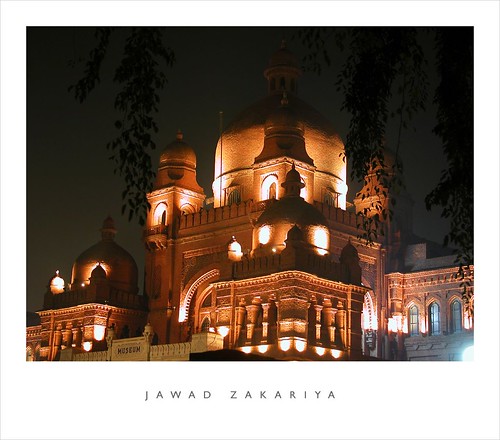 Today, Lahore can be best described as a city that is just so wonderful, so very fabulous, that every nook and corner of the city speaks of a certain vibrance, a certain zeal, a spirit of life, which cannot be found anywhere else in the world. Perhaps it is the maturity of the city, which manifests itself in the various parts of Lahore. It is present in the monuments, in the bazaars, in the old buildings lining the Mall, or in the vast expanses of the sports grounds in the Cantonment. But most vividly, this great Lahori spirit is visible in the people of Lahore, the Zinda dilan-e-Lahore.
Lahore is a city of culture, of history, of an unrivaled charm that sets it apart from every other city on earth. It seems that great Lahori spirit has invaded and saturated this city over the centuries, to the effect that Lahore today is not just a city, not just a place in one corner of this planet, but a whole universe in itself. There is an old saying, that in every Lahori, there is a Mughal prince.
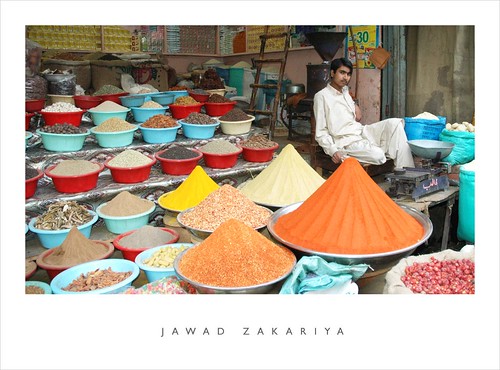 The description of the pure Lahori spirit conveniently evades the mind, adding to the mysteries of this city. At best, it can be said that this spirit pervades the citadel and the slum alike. The city has known ages of cultural, intellectual, musical, literary and humanistic evolution, which has consequently led to the fermentation and over fermentation of this rich brew we call Lahore. Few cities of the world, if indeed any, can lay claim to such a wonderful past or present.
All this makes Lahore a truly rewarding experience. The buildings, the roads, the trees and the gardens, in fact the very air of Lahore in enough to set the mind spinning in admiration. Many a poet has written about this phenomenon one experiences in the environs of Lahore. When the wind whistles through the tall trees, when the twilight floods the beautiful face of the Fort, when the silent canal lights up to herald the end of another chapter in history, the Ravi is absorbed in harmony, mist fills the ancient streets, and the havelis come alive with strains of classical music, the spirit of Lahore pervades even the hardiest of souls.
Raza Noor has a passion for exploring the history of Lahore, which he does on his dedicated Lahore website and also on Metroblogging Lahore.




will Lahore remain Lahore or some thing else but Lahore,
the trend setters should leave Lahore alone, let this city
breath healthy culture, with its typical punjabi, Lahori
food, Lahori love and respect for others, generosity,
national identity and over-enthusiasm, but now in Lahore everybody wants to become Californian plastic Soul.
I want to see Lahore,
Hub of Education in Pakistan
Hub of R & D in Pakistan
Hub of Hi-Tech industry in Pakistan
Hub of Progress, the one and the only Trend setter in Pakistan
Inshallah these all qualities will make my (Lahore) Pakistan a Jewel of the World.
Very nice writeup. Lahore is such a treasure of history but I wish you had also written about its new developments and its food.
the 1st time i ever happen to visit lahore was in march 2002 on a very hot day,the vehicle we were using was a hire car and unfortunately we had problems all the way to lahore as it kept stoping and starting basically even am suprised we got to lahore in the end because that journey was very long, any way once we got in lahore we pulled up in the car parts shop and replaced its clutch kit, i felt the car was ok now having put a new part me and my friend came out and headed towards film studios on multan road and guess what the car packed up in the middle of the road on multan road with traffic beeping and horning passing to the left and right and my car is in the middle, it was very hot, and i was panicking not sure what to do, across the road on multan road was a garage owner who saw me he waved at me, and sent 2 of his boys over to push the car to the side of the road and help me he took the time himself to check my car and adjusted the clutch cable, i offered him money he declined he told me ur our guest i hope u like our city.
that person to this day i havent 4got he won my respects big time with his kind gesture.
that brief encounter really shocked me that great people exist too, lahore is great city but its ”BAGHAM BHAG” every1 is too busy for every1,
I agree, having a section that colects all the posts about places in Pakistan would be a good idea