By Yasser Latif Hamdani
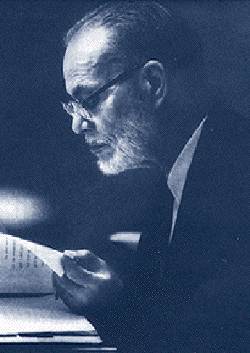
Last week (February 6) marked the 114th Birthday of one of Pakistan’s greatest unsung heroes. Once again, there was no mention of commemoration of his remarkable like. No sense of gratitude from a nation for which he did so much. He has been wiped out of our memory because he was an Ahmadi, despite his glorious contributions to Pakistan and its cause (see related post on Dr. Abdul Salam).
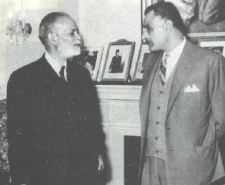
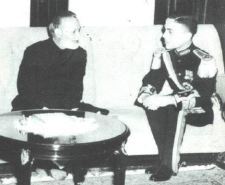
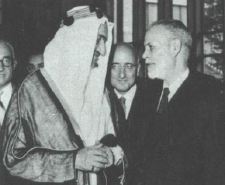
Sir Zafrullah Khan’s services rendered to Muslims of India, Pakistan and the Third World are second only to that of Quaid-e-Azam Mahomed Ali Jinnah. As a jurist, a diplomat and a patriot he stood head and shoulders above the lesser men who have made a mockery of our republic.
Born in 1893 in Sialkot in what was to become one of the earliest Ahmaddiya households, this small town boy rose to be one of the shrewdest legal minds of his time. His early education was in Sialkot, after which he proceeded to Lahore for his bachelors degree, under the tutelage of none other than the great Iqbal himself. He got his law degree from King’s College London in 1914, where he stood top of his class and was the first person from the Indian subcontinent to do so. He was, like most great figures of that time, called to bar at Lincoln’s Inn.
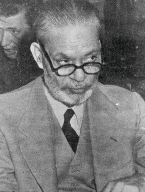
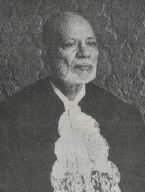
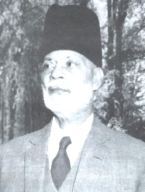
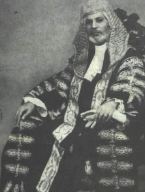
As a practicing lawyer, he soon proved his mettle and had many reported cases to his name. The first major politician to recognize Zafrullah’s talents was Sir Fazli Hussain, the founder of Unionist Party of Punjab. Starting his career in his early 30s as a member of the Punjab legislative Council, he rose to prominence as an indefatigable crusader for Muslims of Punjab. Later he represented the Muslims at round table conference and crossed swords with figures like Jinnah and Gandhi. In 1931, he became the Muslim League president and at the roundtable conference, he cornered no less a person than Churchill in a committee hearing who was forced to accept Zafrullah’s point of view.
Later he was offered a seat on Viceroy’s permanent Council, which he took to further his cause. He also served at varying times as the minister of Railways, Public works, labour and law under the Viceroy. For a brief period, he also became British India’s representative to the League of Nations, just before it was dissolved.
![]()
However his greatest contribution came when he drafted the famous Lahore Resolution, which till this day is the rallying point of Pakistan and Pakistani nationalism. He had been tasked with finding a common point between the popular demand for “Pakistan” and Muslim League’s all India requirements. The Lahore resolution was a broad based solution which left the door virtually open for several solutions and negotiation on the issue of partition. In essence it envisaged 2 or 3 great republics for the Muslim peoples and it was this document which forms the basis not just of Pakistan but also of Bangladesh. For this he got a lot of slack. No less a person than Khan Abdul Wali Khan highlighted Zafrullah’s religious belief to play on the popular conspiracy theory that holds Ahmadis to be British touts.
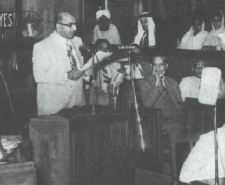
Later from 1942 onwards, he served as a federal judge (equivalent of an Supreme court C judge) of India and finally took leave on the eve of Pakistan to serve the cause of Pakistan before the Radcliffe Commission, on Jinnah’s personal request. On 25th December 1947, Jinnah appointed him the Foreign Minister of Pakistan. At the UN, Sir Zafrullah emerged as the most eloquent advocate of all third world and Islamic issues. It was Zafrullah whose efforts materialized into the UN Resolutions on Kashmir, which are the basis of the Pakistani case and grievance. Later he became the first Asian president of the International Court of Justice, a singular and unique honor for any Pakistani. He also served, briefly, as the President of the UN General Assembly. He passed away in September of 1983 in Lahore.
A prolific author on the history of Pakistan and Islam, his most famous book was titled “Agony of Pakistan” in which he makes plain the great betrayal which wrested the country from the hands of its patriots into the hands of those who were its greatest enemies. Ironically, today Jinnah’s most trusted lieutenant is not even remembered by the state which owes him so much, including its own founding document. It is the memory of people like Zafrullah Khan that will keep alive the original idea of Pakistan and there is no doubt that one day the posterity will reclaim its true destiny as a progressive and modern republic.
Yasser Latif Hamdani is a lawyer in Lahore and a researcher of the history of the Pakistan Movement.




You can visit ATP on your Mobile Phone. Here's how!
A detailed interview which spans all of Sir Zafrulla’s active life.
http://www.alislam.org/library/books/Sir-Zafrulla- Khan-Interviews.pdf
There is no mother to produce a son like him, pakistan had a great son like him but only refused because he was an ahmadi. when this thing will finish from pakistan, that will be the day pakistan will start progressing, just an ahmadi and the whole country did bad to him, he did every thing for it. proud to be an ahmadi!!!!!!!! proud to be pakistani.!!!!!!!
Link to the last quote; http://thetrashbin.wordpress.com/2008/12/22/three- mistakes-by-mr-jinnah/
Ata Rabbani (father of Raza Rabbani) in his recent book ‘The Sun Shall Rise’ summarises the career of Zafrullah Khan as follows;
“The Governor General’s nomination of Ch Sir Mohammad Zafarullah as Foreign Minister, on the other hand, matched up to Quaid’s expectations and was a great asset to the country. Sir Mohammad Zafarullah was internationally known, had been Chief Justice of the International Court at the Hague, distinguished as a member of many international forums under the UN and was held in high esteem the world over. He very successfully projected our case at the UN and other international forums and used his worldwide contacts to the advantage of Pakistan. His judicial acumen, debating and negotiating skills could not be challenged. A man of character with a clean record and with no extra-constitutional ambitions, he kept himself aloof from political intrigues and continued to serve Pakistan with dedication in various capacities till the late sixties.”
i love this person and people only hates him because he was an ahmadii qadiani or what ever but he was a real hero
I think that he was truly a remarkable man. I remember being dragged to meet him by my father one day in Lahore, when he was already very old and largely forgotten and I was a young boy. It was a large dark room. He quickly enchanted me. Then he asked me to read out loud the final pages of his autobiography. As I did so, tears rolled down from his eyes. I will never forget that. As many rogues as Pakistan has produced, so it has created some unbelievable human gems. Unfortunately most of us don’t know one from the other.
Khalid Hasan
http://www.khalidhasan.net/private_view.htm
I met Chaudhry Zafarulla Khan just once. It was in the late 1960s. He was in Lahore and speaking at Government College, an event I was assigned to report on for the Pakistan Times, where I then worked. When I arrived, he had just stepped out of his car and I walked with him to the event. He told me that he would need to walk slowly because he had sciatica. That was the first time I had heard the word, so I asked him what it was, which he explained to me with great precision, something that was his hallmark. It was clear that sciatica was something one ought not to wish even for one’s worst enemy.
M. Yusuf Buch, who worked with Zafrulla at the United Nations during the great Kashmir debates of the 1950s and 1960s, assisting him in various ways, principally in drafting several of his speeches and statements, recalled that after Krishna Menon had finished one of his more vitriolic speeches about Pakistan, Aziz Ahmed was fuming. “Chaudhry Sahib, you should take his pants off,” he said to Zafraulla. The foreign minister’s calm reply was, “Aziz, if I do that, will you be willing to perform the necessary?” When he was well into his eighties, he was asked if people changed their views with old age. “Why don’t you go ask an old man?” he answered. His memory was phenomenal. Buch told me that once, while working on a speech, all he could remember of a quotation he wanted to use were a few words. When he told Zafrulla, he said, “That comes from a speech drafted by Chaudhry Muhammad Ali.” And then from memory, he dictated the entire paragraph in which those words occurred. He did not keep notes. His monumental autobiography Tehdis-e-Naima, which has hundreds of names and dates going back to the early years of the last century, was written entirely from memory. No one has so far found even one name or date to have been inaccurately recalled.
In 1995, Anwar Kahlon, who remained Zafrulla’s personal secretary and companion for most of his life, wrote a book to preserve his memories of this remarkable man, whose great services to Pakistan before its birth and after its establishment, are not even acknowledged today by his countrymen, just because he belonged to the Ahmediyya community. Kahlon’s book was privately printed and never really got circulated beyond his own circle. I was given a copy by a friend and I have read it to my delight, which is why I want to share some of the stories it contains.
During one of the Round Table Conferences, Zafrulla was invited to spend a day at Lady Astor’s country home, where he spotted a photograph of Lord Lothian, whom he knew. “Some malicious people say that he was in love with me,” she said. “Half the world is in love with you,” Zafrulla observed. She protested, saying he should read her mail, because half the letters were most disparaging. “Those are from the other half,” he said. Once in Delhi, on noticing the worried look on the face of the rickshaw driver whom Maulana Shaukat Ali, a big man, had flagged down, Zafrulla asked, “Why are you worried? Cart him in two installments.” All the Maulana could do was wave his stick at him. Zafrulla set up his law practice in Sialkot, from where he moved to Lahore. When asked why, he replied that one reason was Sialkot roads, which were very dusty, and he simply could not stand dusty shoes.
Zafrulla was never without his mean-spirited enemies, one of whom sent President Ayub a picture that showed his UN ambassador in light-hearted conversation with Indian ambassador Vijay Lakhshmi Pandit. Ayub passed it on to Foreign Secretary S.K. Delhavi, who scribbled on the file, “When a gentleman becomes a diplomat, he does not cease to be a gentleman.” Once while addressing the Legislative Assembly in Delhi, Zafrulla quoted a passage from one of Gandhi’s books, at which the Congress members began to shout that those were not Gandhi’s at all. Calmly, Zafrulla pulled out the book from his bag and read from it. He had quoted Gandhi from memory word for word. In 1942, Zafrulla was sent to Chungking to establish the Indian diplomatic mission. Once Madame Cheng Ki Shek said to him at dinner that it was a nice Chinese custom to offer steamed face towels. Zafrulla agreed, then suggested that Madame herself take advantage of the excellent custom. That would, of course, have entirely wiped off her heavy makeup. “You are being naughty,” she told him. When Begum Liaquat Ali Khan was sent as ambassador to Holland, Zafrulla said, “Here’s a woman who has been accredited by a woman (Queen Elizabeth) to a woman (Queen Juliana).” Once a Swiss girl asked him where he was off to “To Geneva, then to Cairo, then to Amman and on to Karachi,” he replied. “But eventually?” she asked. “Heaven, I hope,” he replied.
When Zafrulla was Pakistan’s UN ambassador, Zulfikar Ali Bhutto, the foreign minister, asked him to preside over a meeting of the Pakistani delegation to the General Assembly. “That is the foreign minister’s privilege, but thank you,” Zafrulla replied. A Pakistani living in England and married to an Englishwoman complained to Zafrulla that his wife was always picking on him for not speaking polite English. It so happened that some time later, Zafrulla visited the man’s house. “Do you want some tea?” the Englishwoman asked him. “No, thank you, Madam, I don’t want any tea. However, I would like some,” Zafrulla replied. Once when he was in a London hospital for tests, a nurse came into his room. Looking at the bearded frail old man lying in bed, she asked, “Do you understand English?” “A little,” he answered. It was only when he was leaving the hospital that she realised who he was. Once a young man requested him to pray that the parents of the girl he was in love with would agree to their marriage. Some years later, when Zafrulla ran into him, he asked how far his suit had progressed. “Oh, we got married and we have two children,” he replied. “Why didn’t you tell me? Even this morning, I prayed for you,” Zafrulla told him. When he was president of the UN General Assembly, he would ride in the front seat with his chauffeur, never in the back. He was utterly humble. As far as he could remember, he had never missed a prayer in his life. He would also rise during the night to offer tahajjud . His habits were simple. He would always place the trousers he had worn under his pillow so that in the morning, their crease would be restored. Whenever he would arrive in Pakistan, he would be carrying old socks and undershirts that needed to be darned. That does not mean he was tight. More than 100 poor students were always receiving stipends from him. Such things he did quietly, without fanfare.
This nation has not had the grace to acknowledge, much less thank, its real heroes. Will that ever come to pass? One can only wonder.
(Friday Times)
@Sohail
“…those who pretend they are muslim but are in fact not muslims.”
so who decides this on behalf of God? Pakistan’s extremely ‘religious’ parliament with it’s fair share of bigots, opportunists, closet drunkards, cheats, liars, and hypocrites (not to mention the occasional rapist and murderer)?