Umer A. Chaudhry
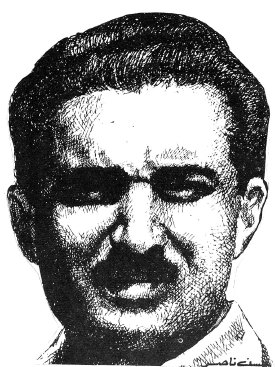 Book Review: Hasan Nasir Ki Shahadat, by Major Ishaq Mohammad. Xavier Publications, Multan; Rs. 500.
The letters of Ethel and Julius Rosenberg moved the lyrical pen of Faiz Ahmed Faiz to write his monumental poem ‘hum jo tareek rahon mein mare gaye.’ The Rosenbergs were Marxists and victims of McCarthyism. A few hours before they were sent to the electric chair in 1953, they left an everlasting message of hope for their children: ‘Be comforted then that we were serene and understood with the deepest kind of understanding, that civilization had not as yet progressed to the point where life did not have to be lost for the sake of life; and that we were comforted in the sure knowledge that others would carry on after us.’
McCarthyism is widely documented as a dark chapter in the history of the U.S.A. It is considered synonymous with Communist witch-hunts, state-sponsored red bashing, illegal detentions of left-wing activists and the arbitrary use of state power to censor progressive political expression. McCarthyism was not merely an American experience. During the heyday of the Cold War, systematic repressive measures against Communism were introduced by almost all allies of the U.S.A. Pakistan was no exception, although there has been very little written on this subject, and there is no accessible documentation in this regard.
Who were the victims of anti-Communist repression in Pakistan? How were these radical Socialists persecuted? What is their history? These unconventional questions are usually sidelined or silenced.
Major Ishaq Mohammad’s book ‘Hassan Nasir ki Shahadat’ lays bare to some extent the murky historical chapter of state repression of Communism in Pakistan. Major Ishaq Mohammad needs no introduction. He was imprisoned for four years along with Faiz Ahmed Faiz and Syed Sajjad Zaheer in the hitherto unresolved 1951 Rawalpindi Conspiracy Case.
Ishaq Mohammad gained massive popularity during the 60s and 70s as the leader of the Mazdoor Kissan Party. He led the peasant revolts of Hashtnager and was well-known for his militant stand against capitalism and landlordism. Arrested after the military coup of General Zia-ul-Haq, he suffered from paralysis during his imprisonment. Despite his ill-health, he refused the military government’s offer for medical help provided he tendered an apology. Defiant till his last breath, he bade farewell to this world in 1982.
‘Hassan Nasir ki Shahadat’ is woven around a tale that has never been told. The story is set in the winter of 1960 when Ishaq Mohammad, a young lawyer well into the second year of his legal practice, met Faiz Ahmed Faiz on Lahore’s Mall Road and found him unusually depressed and perturbed. Faiz told Ishaq Mohammad that ‘a Communist from Karachi’ had been brought to the Lahore Fort. He was subjected to heavy torture – so much so that his cries of pain terrified other prisoners in the Fort. It was the wife of one such prisoner who had told Faiz about the horrifying torture.
Ishaq Mohammad had been to the Lahore Fort as a detainee in 1959 and 1960, though only for short periods of time. The Lahore Fort was a symbol of terror in Pakistan at that time. This symbol of Mughal majesty had been turned into a draconian detention and investigation center during the period of British colonialism. The ‘criminals’ of the independence movement were often detained in the Fort for questioning through questionable means. After 1947, the Criminal Investigation Department (CID) took over the command of the Lahore Fort. The conditions there, well-documented in the book under review, were already horrific enough to paralyze a sane mind. The law enforcers, trained under the colonial regime, applied their “investigation techniques” on stubborn detainees.
 After the ban on the Communist Party along with its sister organizations, and the military coup of 1958, the Lahore Fort was often used to interrogate leftist political activists. Major Ishaq Mohammad knew that the ‘Communist from Karachi’ was none other than Hassan Nasir, the Provincial Secretary of the banned underground Communist Party active in Karachi. He was also a member of the National Awami Party (NAP). Despite being the scion of a landlord family of Hyderabad, Deccan, Hassan Nasir had taken up the cause of the oppressed in Karachi. He was arrested in 1952 and exiled to India for one year. He returned to Pakistan immediately after the completion of the exile period and gave up his comfortable life to continue with his political struggle.
Ishaq Mohammad moved a habeas corpus petition in the High Court at Lahore through the able representation of Mahmood Ali Kasuri on November 22, 1960. It was during the hearing of the petition on the next day that the news of Hassan Nasir’s death surfaced. According to the government version, Hassan Nasir committed suicide by hanging himself from a nail in his detention cell at the Lahore Fort on November 13. Progressive circles around Pakistan were shell-shocked. How could a young man full of hope and commitment take his own life? Ishaq Mohammad also refused to believe the government’s version. In order to protect his comrade’s dignity, he devoted himself to the magisterial inquiry into the cause of death of a detainee in police custody, mandated under section 176 of the Code of Criminal Procedure, 1898.
Gradually Ishaq Mohammad started to uncover the lacunas in the State’s version: the discrepancy about the position of hanging marks on Hassan Nasir’s neck, the contradictory accounts of marks found on Hassan’s elbow and knee, and the absence of any plausible motive for suicide. A great deal was required before the inquiry could be finalized. The attitude of the state officials and the magistrate towards Ishaq Mohammad was highly hostile. For more than half of the questions asked by Ishaq Mohammad during different cross-examinations, the police officials standing in the witness box took the plea of secrecy in order to frustrate the legal process.
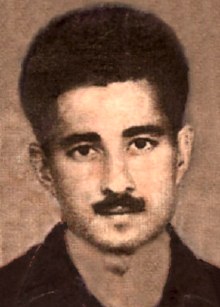 The most sordid episode in the magisterial inquiry emerged when the dead body of Hassan Nasir was exhumed. Ishaq Mohammad considered the dead body to be his primary evidence that could conclusively prove that he had died due to torture and not suicide. Despite his repeated requests before the magistrate and the High Court, the dead body was not permitted to be exhumed. Even the site of the grave was not identified by the police, nor did the Court order the police to do so. Hassan Nasir’s dead body was only allowed to be exhumed when his mother arrived from India to take the body back home with her. On closely inspecting the teeth, hair and feet of the corpse shown to her, his mother, Zehra Alambardar Hussain, refused to accept it as that of her son. The police had decided to conceal Hassan Nasir’s body from even his mother. It was at this point that Ishaq Mohammad decided to withdraw from the magisterial inquiry. The whole apparatus of the state under military rule had united to keep the circumstances of Hassan Nasir’s death a secret. The judicial probe was thwarted.
Ishaq Mohammad’s efforts to document the course of the inquiry have filled a major vacuum in Pakistan’s history. While informing readers about the proceedings in the magisterial inquiry, the book under review touches some very important topics like the colonial character and workings of the Punjab police, state sponsorship of torture, and the cruelties that occurred in the Lahore Fort.
At many points in the book the author has written that history will do justice to the cause of Hassan Nasir. Disappointed by the magisterial enquiry, Ishaq Mohammad left the final verdict to the conscience of the people of Pakistan by writing ‘Hassan Nasir ki Shahadat’. He was sure the records that were buried by the police under the plea of secrecy and ‘the broad national interest’ would one day see the light of day. That day has not yet arrived. The publication of the book under review is a grim reminder of justice denied to a person who sacrificed himself for the betterment of humanity. It is also an indictment against the current rulers of Pakistan who continue to keep the details of this gruesome episode a secret.
Umer A. Chaudhry blogs at The Red Diary and this book review was first published in The Friday Times, Lahore July 10-16, 2009 issue.





This deserves more attention.
I learned something new today.
This content is incredibly informative.