Adil Najam
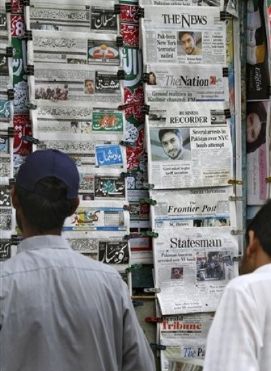 Here is the good news: If you read the editorials in Pakistan’s major English newspapers today on the Faisal Shahzad episode, they mostly get it right. I have not yet read all the major Urdu newspaper editorials, but the ones I have also get it mostly right. And that is even more important.
Here is the even better news: All of them recognize something vital and vitally important – and something that too much of the US media has missed. That much more important than figuring out all the trivia that we can muster about Faisal Shahzad, is the enterprise of finding out what his case tells us about the changing landscape of alienation, anger and, ultimately, extremist violence; and, more importantly, about what needs to be done about it.
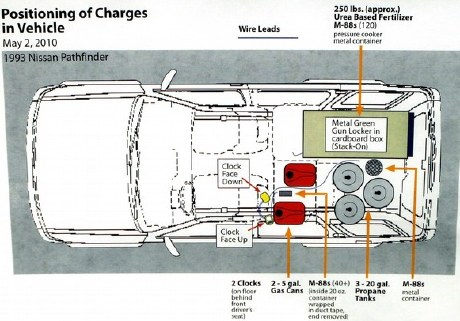
Here is the bad news: These editorials in the Pakistani press are also right in the diagnosis that Faisal Shahzad has not only increased the monumental challenges that Pakistan already faces in dealing with the terrorist threats. Threats that are (mostly) targeting Pakistanis in Pakistan, but also remain directed outside Pakistan’s borders.
Here is the even more bad news and a possible gleam of hope: A careful reading of these editorials also makes clear that although Pakistan is now doing much more on dealing with terrorism than it once did, it needs to do much more, but also that doing so is neither easy nor guaranteed to easy and early success. However – and this is the gleam of hope – there is a conviction in these editorials that tackling terrorism head-on (both of the ‘domestic’ and ‘export’ variety’) is in Pakistan’s own interest and something that we should do not because outside forces want us to do but because we ourselves need to do. The fact that this conviction is beginning to show roots – even if only in editorial writers in the beginning – is clearly a good thing.
Here are excerpts from editorials today in the two most established English newspapers – The News and Dawn – and one from the very energetic newcomer Express Tribune.
First, the Dawn editorial:
WORRYINGLY yet another abortive attack in the West has been linked to Pakistan. The arrest of Faisal Shahzad, a 30-year-old Pakistani-born American, has already led to news that he was calling Pakistan in the days leading up to his attempted bombing of Times Square in New York. Reports that the crudely assembled bomb had little chance of exploding will come as a relief, indicating as they do a certain level of amateurishness involved. Nevertheless, the attempt was serious enough to warrant some intense questions.
First, what is it that is driving people such as Faisal Shahzad and the five young men who recently travelled to Pakistan from the US in search of jihad? Media reports suggest that Mr Shahzad was the quintessential middle-class Pakistani travelling to the West in search of education and employment opportunities and settling down there with a wife and two young children. What made Mr Shahzad attempt mass murder, presumably in the name of religion? Asking this question isn’t the same as the nonsense about the need to understand the ‘legitimate’ grievances of disaffected young Muslims. It seems very clear that whether it is Al Qaeda or the Taliban or some other brand of international terrorism, the militants have honed in on a vulnerability in the West: young Muslims with the established legal right to live in the countries they appear to hate so much. Without understanding this vulnerability — Americans though must be careful to not turn against the Muslim population, as Mayor Bloomberg warned — an already serious threat may keep growing in severity.
Second, why is it that all terrorist routes seem to lead to Pakistan generally and Fata specifically? While perhaps the absence of a modern state in Fata can partially explain the problems there, there is really no such excuse for Pakistan proper. It’s been nearly 10 years since 9/11 and still the infrastructure of jihad in urban Pakistan, which is likely the first port of call for those travelling from foreign lands in search of jihad, has not been uprooted. The spread of literature and audio and video paraphernalia glorifying jihad and calling for violence against the West, India, Israel, etc continues unchecked. It’s not like the centres for such violent propaganda are not known or cannot be located easily.
Third, should more not be done with the greatest of urgency to increase Pakistan’s counter-terrorism capabilities? While it is true that the state has enhanced its response and beefed up intelligence, it is clear that lapses persist. Perhaps Pakistani authorities need to realise that another 9/11 would be a game-changer of devastating proportions.
Here, then, is what The News has to say:
Today, it often seems that what we export most often is terrorism. The arrest in New York of a Pakistan-American, even as he boarded a plane that would have taken him to Dubai, acts to confirm this in the eyes of the world. Even if we, as Pakistanis, know that most people in the country oppose terrorism and have no sympathies with those who make killing a mission, the fact is that many in other places see Pakistanis as terrorists. The impact of this has come in the form of the unleashing of racist violence and all kinds of more subtle discrimination. In one way or another, tens of thousands of Pakistanis have suffered. The question is whether enough is being done to stop the export of violence and ensure that a softer, more flattering spotlight is directed towards Pakistan. The arrest of Faisal Shahzad indicates that the mindset which spurs on terrorism has poisoned even those who enjoy wealth and privilege.
Perhaps our thesis that it is essentially the poor who are exploited by the militants is somewhat flawed. Perhaps we need to do more to stop the slow poisoning of minds. A process of brainwashing has continued for years. It needs to be reversed. The strategy for this must be worked out. Psychologists, educators, media people, clerics and others with social influence need to be involved. We must convince people, particularly the young, that militancy and extremism threaten to destroy all that is good about their country. They must play a part in building for it a different future. The story of an educated young man of Pakistani origin in New York, with a family and from a wealthy background, who was apparently willing to risk so much by planting a bomb which was intended to kill ordinary men, women and children should act as an eye-opener to the kind of problems we have allowed to fester in our midst. It is only by changing this that we can hope to move towards a brighter future and a different image for Pakistan.
Finally, here is the editorial in the Express Tribune:
Why is it that when it comes to terrorism, all roads – or most of them anyway – lead to Pakistan? As long as the link to the bombing attempt at New York’s Times Square had come through vitriolic messages conveyed by the Taliban over YouTube it had been possible to convince ourselves that these were fabricated.
The dramatic arrest on May 3 of Faisal Shahzad from an Emirates flight bound for Dubai from New York, however, makes such denial impossible. Of course, we still will have the naysayers who will say that Shahzad is an American (he only recently became one) and not a Pakistani (he certainly lived much of his life in Pakistan) and that how could someone from such an educated and ‘good’ family be involved in something like this (Osama bin Laden’s family in Saudi Arabia is among the wealthiest in the world while Ayman Al Zawahiri’s father was a professor and he is a trilingual qualified surgeon).
The investigation that will follow the arrest of a 30-year-old naturalised US national, from an affluent Khyber-Pakhtunkhwa family, may throw some light on his links and how he was lured into leaving a truck, loaded with enough material to make a crude but large bomb, in the middle of New York’s Times Square. So far Shahzad has said that he was acting alone but investigators are likely to discount that theory.
According to one report that quotes details of the charges filed against him in a US federal court, he has admitted to receiving training in Waziristan, and if true, it would corroborate a claim by the Tehreek-i-Taliban Pakistan (TTP) that it was behind the failed bombing attempt. The fact that the material in the truck failed to explode is perhaps the only silver lining of this whole episode. However, it does not bode well for the large Pakistani community in North America.
While New York Mayor Michael Bloomberg’s warning that any attacks against Pakistani-Americans or Muslims will not be tolerated is welcome and timely, it is unlikely to deter those Americans who will want revenge and see Faisal Shahzad as another Mohammad Ata in the making. Shahzad obviously did not realise that his own actions will create immense problems for a community that is known more for its excellent doctors and philanthropists than for breeding terorrists.
But terrorists is how Pakistani-Americans may be seen by many Americans now. The Foreign Office has said that Pakistan will cooperate fully in the investigation with the Americans. This is good because nitpicking whether the man is a Pakistani or not will not achieve anything and is a reflection of the isolationist mindset that many in this country have when it comes to relations between the west and Muslims. The chief military spokesman has already said on record that it is unclear whether the TTP even has the “reach†to carry out an attack inside the US.
What is the reason for making such a statement when the TTP chief himself made this statement just a couple of days ago? Even if, for the sake of argument, Shahzad was acting on his own, he has admitted to receiving training in Waziristan, where he reportedly met Qari Hussain Mehsud. The world is a small place and people know the history of the Taliban and how they were created. If it is proven — or even perceived by the US — that the TTP is involved in this failed bombing attempt, then the case for a military operation in North Waziristan becomes all the more stronger.
So by disputing the TTP link, is ISPR trying to ward off such an eventuality? Right now, the best strategy for the government of Pakistan — and the institutions that come under it — would be to aid the investigation and help find any accomplices so that the rest of the world does not see even an iota of prevarication. The much-hyped but much neglected registration of madrassahs should be revisited as should be a previous failed attempt to monitor sermons given by prayer leaders in our mosques. And as a society, we all need to ask ourselves what it is that makes us get involved in such things.
One can reasonably quibble with particular points in each of these, but the essential questions they are all asking are the right ones. More importantly, there is not even a hint of denial in them and in each there is a clear sense of urgency for Pakistan to act more decisively against the infrastructures of terrorism, and to do so because it is in Pakistan’s own interest to do so.
And that is the exact right message to give.





I don’t share Dr. Najam’s enthusiasm.
I don’t think most Urdu newspapers have condemned Faisal Shahzad as their English language counterparts. More importantly, the major T.V. channels, which play a vital role in influencing public opinion, continue to spout conspiracy theories about this being an American plot to undermine Pakistan/Muslims.
Finally, you’re argument is based on the assumption that Editorials actually make a difference. A better metric of the media’s attention to an issue are their front page stories. Read the front page of The News. It’s all about PPP-Judiciary fight. They’ve relegated the Faisal Shahzad story to their inside pages, even though it is arguably the most important issue impacting Pakistan today.
Great compilation, Adil. I am glad that we have people like yourself voicing the views of the otherwise silent majority.
There is OBVIOUSLY a very disturbing and dangerous problem in our society that needs to be confronted head-on. The comments about our “image” are moot at this point; it pains me deeply that our reputation around the world has sunk to a new low. What we need to worry about right now is how we can fix this problem before it starts eating away at our society.
Most of what the editorials say is we need to do something about our “image” ..
and thats what we’ve been doing every since we created this country..
.. keep doing stuff in secret.. but spend resources on improving our “image” !!!
all politically savvy citizens, from the poorest villagers to those sitting in drawing rooms in DHA’s .. fret about the real sacred cow who is the source of all this mess..
.. but when it comes to announcing ur opinion in public.. all we say we want is to improve our IMAGE !! and not cut at the source..
@Khurram Farooqui: We are in between rock and hard place. Continuing covert and bullying actions of other countries will not help Pakistanis or muslims forget about their past and will definitely not help them stop worrying about their future.
A few suggestions for my fellow Pakistanis:
Next time you go for Juma prayers, ask the Imam to point out in the khutba that religious extremism is un-Islamic, and that the greatest Jihad is to improve yourself and make yourself a better person.
Teach your children that no matter what has happened in the past between India and Pakistan, we need to get to a point where we treat our neighbours as our friends, as our equals, and with mutual respect.
Talk to your children’s Islamiyat teacher and ask him/her to point out that God judges a person based on their deeds. Just because someone does not follow your religion does not make them automatically evil.
Look at yourself and your beliefs. Realize that even though there are many external causes and influences for why we are where we are, at least some of the fault is our own.
Next time an Indian (or an American, or anyone else) says something hurtful about Pakistan, swallow your pride. Just say that yes, we have many problems, but we are trying to correct them.