Pervaiz Munir Alvi
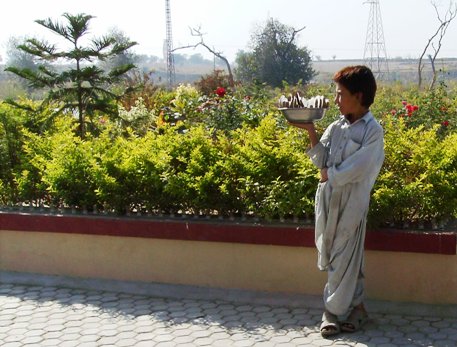
Traveling on the GT road some where near Hassan Abdal we pulled into this filling station. The tank was almost empty and had to be refilled. A moment later this child appeared at the car window. A beautiful child who could not be more than twelve years old. His face was devoid of any sign of cheerfulness that is generally associated with children of his age. While the car was being filled I decided to have a short conversation with this child. I asked him why he was not in school. His answer was simple. He does not go to school. “Why’ I asked again. “He does not†he repeated his answer and walked away from the car window and stood against the hedge looking the other way. That is when I took this snapping.
Read Full Post
Syed Ahsan Ali
Being a chronic cardiac patient, I get severe pneumonia often which usually takes me to one of the largest private health facility in the largest city of Pakistan. I have been to the same hospital three times in the past five years so I understand how things operate there. But this time, things looked a lot more disturbing. This forced me to think that if such are the conditions in the best private hospital, then how bad they could be in the public sector hospitals.
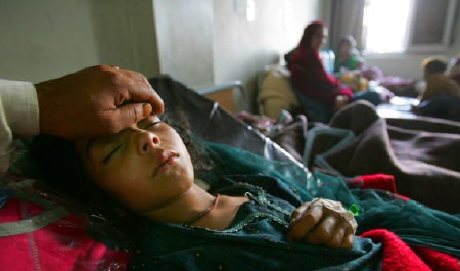
I got ‘shifa‘ (health) in the same private hospital so I do not want to sound like a thankless soul. They have been fairly nice, cooperative, caring and professionals to help me out of my suffering but at the same time I noticed incidents of negligence that have left me disturbed.
Read Full Post
S.A.J Shirazi
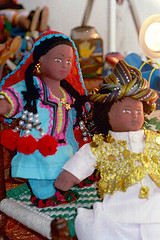 The cluster of mud and brick houses in the plains of Punjab, Thatta Ghulamka Dheroka (TGD) looks like a typical Pakistani village about 80 kilometres away from Lahore and 40 kilometres from Indus civilization ruins in Harappa. There is no gas or telephone in the village. No asphalt roads lead to it. Yet it is different, the beautiful dolls and other handicrafts made by the village folks are collectors’ delight all over the world. Influencers from Indus civilization from nearby Harappa and modern techniques brought by the German volunteers can be seen in the village together.
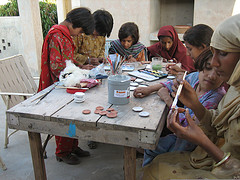 The dolls made in the village are on display in international doll museum in Iceland, prestigious galleries and showrooms in Pakistan and abroad. TGD village doll project was one of the 767 worldwide projects presented in the “Themepark” at expo 2000 in Hannover (Germany) as an example of thinking of twenty first century. Earlier, the dolls from Pakistan participated in international toy fair in Nuremberg. These dolls show how culture goes beyond simple work of art and becomes collaboration among applied and natural sciences as well as other forces that affect our lives.
Read Full Post