Bilal Zuberi
 It was a few months ago that I read about the inauguration of the first internet cafe for the blind in Islamabad. I had wanted to write about it earlier but somehow skipped my mind, until the recent discussion on Islamabad allowed me to jog my memory a bit. I do want to share the news, even if a bit belatedly, because it is so uplifting and empowering.
According to a report in The Daily Times, the country’s first-ever Internet café for the visually impaired was inaugurated with the help of generous funding from the World Bank and the Pakistan Foundation Fighting Blindness (PFFB).
It appears that the software technology that enables such a user experience for the blind was introduced to Pakistan by an ATP regular, Aqil Sajjad. The software used by the internet cafe is called JAWS, and was first introduced by Aqil to Pakistan in 1999. Aqil has since then moved to the US for graduate studies in Physics, but the software is now more widely available to the blind in Pakistan, and making a dramatic difference in their lives.
Read Full Post
Mast Qalandar
I returned to Islamabad recently, after a long absence, and was able to look at the city, once again, with a tourist’s eye. Before I get used to it and start taking everything as given, I thought, I should put down my impressions about the city: the good, the bad and the ugly.
First, the good. (The bad and the ugly will come in subsequent posts).
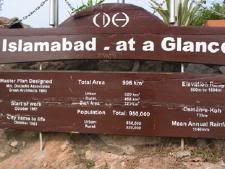

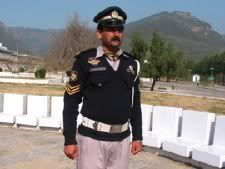
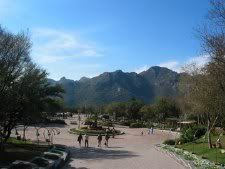
For those not familiar with Islamabad, when the city was built, in the early 60s, its various localities, or sectors as they are called, were given meaningful and interesting names like Mehran, Shalimar, Ramna etc., each name from a different province of Pakistan. For some inexplicable reasons, these names went out of use and were replaced by impersonal, and rather bureaucratic, names like E, F, G, H and I, which are further divided into 1, 2, 3 and so on. That is why you hear of E -7, F-6, F-7 or G-6, G7, G8, etc. I think it was Khalid Hasan who once said that the addresses in Islamabad sounded like computer commands. How true!
E and F sectors are closest to the Margalla hills and therefore considered more “prestigious†while I sector is farthest from the hills and closer to Rawalpindi. There is a running joke in Islamabad according to which E sector is for the Elite, F is for First class citizens, G for General public, and I for Idiots who think they live in Islamabad but, in fact, they live in Rawalpindi. Obviously, it is one of those classist jokes that are found in most cities all over the world.
I have also heard the comment that Islamabad is a city without soul (whatever that means). Also, that it does not have history, architecture, and culture like Lahore and does not have the quick pulse and energy like Karachi. Probably all this is true. But Islamabad has something that more than makes up for all such deficiencies. It has geography! Geography that is difficult to match by any other city of Pakistan or, for that matter, by most capitals of the world.
Read Full Post
Bilal Zuberi
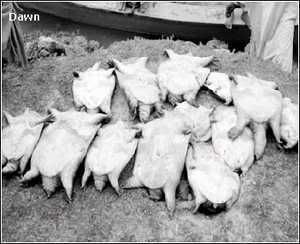 A news report, and some gruesome pictures associated with it, recently caught my attention. I had not heard about the turtle population in Pakistan for many years now, and was somehow under the impression that steps taken by government to ban poaching and export had resulted in significant protection of the turtle habitats.
Well, according to the news item, a study conducted by the WWF-Pakistan at the Taunsa Wildlife Sanctuary concluded that that the turtle population not only faces brutality at the hands of poachers, but is also under threat of extinction.
Unlike many other topics that people in our country love to discuss around chai-time, protection of wildlife, and in this case turtles, has never gained popularity. The result of our collective social apathy towards the issue has resulted in significant loss of wildlife, and endangerment of precious species.
Pakistan is known to have at least eight freshwater turtle and two tortoise species. These are mostly found along the rivers in Sindh and Punjab, and also in parts of NWFP. The spotted pond turtle, crowned river turtle and Afghan tortoise are some of the more well known species, which are also included in the IUCN Red Data Book’s List of Internationally Threatened Species.
Read Full Post