Custom Search

Upset, or End of Pakistan Hockey?

Posted on December 12, 2006
Filed Under >Adil Najam, Sports
24 Comments
Total Views: 13817

Share

Adil Najam

The Chinese men’s hockey team just recorded their first-ever victory against Pakistan. But what a victory it was; or, rather, what a defeat for Pakistan.

The Chinese team stunned everyone – not least the Pakistanis – by beating the seven-time champions 2-1 in the Asian Games semi-finals in Doha, Qatar. China will now face South Korea in the Final. The website of the Pakistan Hockey Federation has the motto ‘urge to conquer’; the urge was not strong enough in this case!
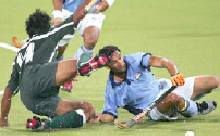
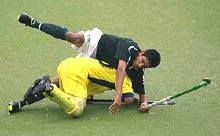
This means that for the first time in 48 years, there will be no South Asian team playing in the Asian Games finals. Maybe calling this the ‘end of Pakistan hockey’ is too dramatic. But, certainly, South Asia no longer ‘owns’ the game as it once did; East Asia now not only owns it, but dominates it at the continental level (the women’s final will be between Japan and China).


According to an Associated Press report of the game:

Pakistan’s players were left stunned as Lu Fenghui [who scored the golden goal on a penalty corner) was mobbed by his teammates after fashioning the biggest upset in Asian Games history.... "I have no words to describe this moment, I've just pinched myself to believe that I'm not dreaming," said Chinese captain Song Yi, speaking with the help of a translator and struggling to control his emotions.

China's South Korean coach Kim Song-ryul said his defenders played an outstanding game to thwart Pakistan's raids. "Pakistan's team is very experienced, but we were waiting for our chances. Modern hockey is different and every country is into it," Kim said. He said the Chinese men's team was fast improving and would give a formidable display when it makes is Olympic debut in 2008.

Pakistan captain Rehan Butt was angry at South Korean umpire Kim Hong-lae for awarding China the penalty corner that produced the golden goal. "He gave the penalty corner when the ball was outside the circle, from where it rose after hitting the stick of a Pakistani defender," Butt said. Butt said Pakistan missed a lot of chances, but China's defense was excellent. "It just wasn't our day. Our penalty corner shooter, Muhammad Imran was not able to convert even once, but this is a young team and can serve Pakistan well in future," he said.

Pakistan called the shots in the contest and was on the verge of victory before China equalized 10 seconds from the end on its first penalty corner. Skipper Butt put Pakistan ahead in the 20th minute on a square-pass from Shakeel Abbasi inside the striking circle, but the former Olympic and World Cup champion failed to capitalize on nine penalty corners it forced during the 70-minute regulation period and one more in extra-time.

... Pakistan has now failed to make the Asian Games final for the fourth consecutive time since winning the last of its seven gold medals in 1990.

It would be disingenuous to call this a mere upset. Even in the group matches Pakistan was saved by a goal-less draw against Japan to inch into the semi-finals. We have lamented before about the attention deficit for hockey; including our own. But maybe there is also a performance deficit. For those of us who still remember the grace and skill of Shahnaz, Sami, Islah and so many others, this is not just sad; it is tragic.

One can blame the change in hockey rules and surfaces for the decline of Pakistan hockey. But for how long? When conditions change, then so should you. We did not. And this is the consequence. No one defeat is ever all-important. There will, indeed, be more games to play; and, hopefully, to win. But this may be one defeat too many.

Spanish version of the child and adolescent self-care performance questionnaire: psychometric testing.

Pediatric Nursing March 1, 2009 | Jaimovich, Sonia; Campos, Maria Cecilia; Campos, Maria Sylvia; Moore, Jean Burley Self-care behaviors are learned and are affected by one's environment, culture, and values. These behaviors regulate and maintain human structural integrity, function, and development. Orem's Self-Care Deficit Nursing Theory (Orem, 2001) describes the relationship existing among self-care actions, development, and individual and group function (Fawcett, 2000). In this sense, the role of the family and school are of great importance because that is where children can learn healthy lifestyles from an early age (Moore, 1995).

International organizations have recognized that health education should be taught at school at the same time as other subjects (Campos, Campos, & Jaimovich, 1999; Canadian Association of University Schools of Nursing, Canadian Nurses Association, & The College of Family Physicians of Canada, 2002; Fawcett, 2000). Nurses can make an important contribution in schools, especially if their functions include health promotion. The school constitutes an excellent place to teach healthy behaviors, detect unhealthy practices, and perform interventions to change behaviors (Campos, Urrutia, Guzman, & Vargas, 1997).

Many Latin American countries are experiencing a nutritional transition characterized by a shift from a preponderance of under-nutrition to a rapidly rising prevalence of diet-related chronic diseases, such as obesity, diabetes mellitus, and high blood pressure. This nutritional shift has been associated with modern urbanization and technological innovations that result in reduced energy output by individuals, and by changes in dietary habits (Rivera, Barquera, Gonzalez-Cossio, Olaiz, & Sepulveda, 2004). In the Republic of Chile, dietary habits are shifting equally rapidly, especially for the moderate and low-income population (Popkin, 2004). The consumption of energy dense and processed fast foods and soft drinks has increased, while physical activity has diminished due to changes in technology in the workplace, among other factors (Rivera et al., 2004).

Although Chile now has an improved level of health due to recent reforms, some aspects related to the quality of life are deteriorating, especially in the poorest sectors of the population. The consumption of junk food and soft drinks has increased, while physical activity has diminished. In addition, tobacco and alcohol consumption has increased. As a result of this problematic life style, obesity rates have increased in the population, especially among children, adolescents, and women of fertile age (Salinas & Vio, 2003).

According to the Chilean Ministry of Health, about 7.5% of Chilean children 6 years of age or younger are obese (greater than 95th percentile in Centers for Disease Control and Prevention [CDC] growth charts), 14% of teens are obese, and about 33% of adults are obese. The obesity rate for children in Chile is the highest in Latin America (Espinosa, 2005). These figures compare to rates of obesity in the United States of 13.9% for children 2 to 5 years, 18.8% for children 6 to 11 years, 17.4% for teens 12 to 19 years, and 32.9% for adults (CDC, 2008).

Tobacco smoking has increased in Chile, especially for youth ages 13 to 15 years. In this age group, 44% of females and 31% of males reported smoking at least one cigarette in the past 30 days. Most children age 12 to 18 are enrolled in secondary school (92% of females; 91% of males) (Population Reference Bureau, 2007).

As evidenced by these nutritional and health findings, it is apparent that the self-care practices of children in the Republic of Chile warrant further investigation for the development of future nutrition and health care interventions to decrease the risk for obesity and other lifestyle-related disorders.

A recent nutrition study of 88 children ages 8 to 11 years documented the nutritional and self-care deficiencies of children in the Republic of Chile (Olivares, Bustos, Moreno, Lera, & Cortez, 2006). Children in this study consumed low levels of vegetables, fruits, and dairy products, but high levels of high-calorie beverages and food. Greater than 55% of children did not engage in physical activities after school.

Previous theory-based research by Moore (1995) stated that to validate the use of Orem’s theory in children, an explanation of their self-care practices is needed. With this purpose, Moore developed the Child and Adolescent Self-care Performance Questionnaire in 1991 and studied its psychometric properties.

Carper (1998) recommended that researchers studying self-care “need to determine if they plan to measure personal abilities for self-care or the actions taken by an individual for self-care and choose their instruments appropriately” (p. 196). The Adolescent Self-Care Performance Questionnaire measures children’s performance of self-care activities related to the three areas of self-care requisites, which include universal, developmental, and health deviation requirements for care (Orem, 2001). Therefore, the instrument can provide relevant information about behavior-related content for school curricula.

The purpose of this study was to determine the psychometric properties of the Spanish version of the Adolescent Self-Care Performance Questionnaire, originally developed by Moore (1995). In the future, this new instrument can be used to determine the self-care practices of Latin American children in their native countries or the United States and the effect of interventions to improve such practices.

Methodology Design. This study employed a methodological design. Carlson (2000) makes several recommendations for accurate translation of instruments to another language, including careful translation by an expert in both languages, back translation, preliminary testing with a small group, and pilot testing. Revision of the instrument should follow each of these steps. In addition to following these recommendations, the researchers considered the target culture and revised the instrument items accordingly, as discussed in the instrument section.

Sample. The sample included a total of 1,803 students ranging in age from 10 to 15 years from schools in the Metropolitan Region of Chile. The mean age of the children was 11.5 years, with a standard deviation of 0.76, with 0.7% of the students 10 years old, 89.1% of the students between 11 and 12 years old, 8% 13 years old, and 2.2% 14 and 15 years old. In the sample, 50.1% were male and 49.9% female, with no significant statistical differences in age according to sex. The children represented different socioeconomic status groups according to the Vulnerability Index developed by UNICEF (1990) (571 low, 536 medium, and 696 high). In relation to the structure of the family, 75% were classified as normo-functional, 21% were classified as moderately dysfunctional, and only 4% were classified as gravely dysfunctional, according to Smilkistein’s Family Adaptability, Partnership, Growth, Affection, and Resolve (APGAR) score (Smilkstein, Ashoworth, & Montano, 1982). No significant differences in age, gender, or economic status were observed among the scales of the students (16%) that were excluded from the analysis (see below).

According to the Vulnerability Index developed by UNICEF (1990), 536 children from the medium socioeconomic status group were used for the reliability and validity tests for the Spanish version. The medium socioeconomic status group studied represented 29.5% of the total sample that answered the Adolescent Self-Care Performance Questionnaire. In the present analysis, 86 cases (16%) were eliminated because they did not answer one or more of the 35 items. The remaining 450 cases were considered for the present analysis.

Instruments. Three instruments were used to collect data.

Child and Adolescent Self-Care Performance Questionnaire. The Child and Adolescent Self-Care Performance Questionnaire (Moore, 1995) is a 35-item instrument, designed in Likert-type scale format with choices (1 to 5 points). The answer can be never, rarely, sometimes, often, and always for each behavior. Possible score range is 35 to 175 points; lower scores are associated with lower levels of self-care practices and higher scores with better self-care practices. Some items require reverse scoring, such as #3 (1 skip lunch) and #4 (I eat junk food), so that a higher score will signify more healthy behavior. See Table 1 for further examples. For the original instrument, Coefficient Alpha was 0.83, content validity was rated by a panel of 7 experts, and construct validity yielded 10 factors corresponding to the various individual self-care requisites in Orem’s Model, using Linear Structural Relations (LISREL) and an exploratory factor analysis approach (Moore, 1995) For this study, the instrument, written originally in English, was translated into Spanish by one of the Chilean researchers, and some items were adapted to the Latin American culture by all Chilean researchers. Examples of items modified are items 2, 4, 5, and 17, where examples were added. Words were added in item 6 (chocolate), item 22 (children), and item 32 (health practitioners). Items 8, 16, and 19 were stated in a negative form. No items were deleted or added to the questionnaire.

The reliability analysis of the instrument was done using Coefficient Alpha, and an item analysis using Pearson’s correlation coefficient was performed. A factor analysis was performed using varimax rotation. Chi-square was used for the goodness of fit of the factor model, and the Tucker and Lewis Index of reliability of fit was used. In the Tucker and Lewis Index, less than 0.85 indicates unacceptable fit, 0.85 to 0.89 mediocre fit, 0.90 to 0.95 acceptable fit, 0.95 to 0.99 close fit, and 1.00 exact fit (Meade & Lautenschlager, 2004). The SAS system was used for the statistical analysis.

Vulnerability Index. The Vulnerability Index considers aspects related to literacy, malnutrition by deficit, poverty, infant mortality, and rural population (Joint Meeting of the Executive Boards of UNDP, UNFPA, UNICEF, & WFP, 2008). Junta Nacional de Auxilio Escolar y Becas (JUNAEB), a governmental organization that helps disadvantaged school children, determines the Vulnerability Index for children and schools by conducting an annual survey with all children in first grade of public and semi-public schools (municipalizados y particulares subvencionados) throughout the country. In this study, the information used was the index given by JUNAEB for schools. Families are classified into five groups (quintiles) according to the prevalence of risk. go to web site cdc growth charts

Procedure. The schools from which the children were recruited were randomly selected from different socioeconomic status lists of schools in the Metropolitan Region of Chile, with the assistance of JUNAEB. Researchers obtained permission to conduct research from the directors of the schools. Directors sent written information to parents, who were required to sign their authorization for their children to answer the questionnaires. Researchers visited different classes and explained the study to the students, who answered the questionnaire after signing an informed consent.

Results Table 1 presents average and “coeficiente de variacion” (CV) for each one of the 35 items and the respective scales according to the 3-factor model based on Orem’s three dimensions proposed by Moore (1995): I–Universal Self-Care Requisites; II–Developmental Self-Care Requisites; and III–Health Deviation Self-Care Requisites, and the Total Scale. The formula for the CV is 100* (standard deviation/mean). The sample under study (N = 450) obtained an average score of 74.3, 36.3, and 22.0 respectively for each of the subscales and 135.6 points for the total scale. The scores indicate that the sample had a high level of self-care practices (the possible range for the total scale was 35 to 175).

Table 2 shows the scores obtained in the different scales according to the family type classification using the family APGAR score (Smilkistein et al., 1982). All differences are statistically significant.

The reliability for the total scale and subscales was examined using Coefficient Alpha. The alpha value was 0.82 for the total scale (35 items). This was similar to the reliability reported by Moore (1995) for the original instrument. The alpha value was 0.58 for the Universal Self-Care Requisites subscale (20 items), 0.73 for the Development Self-Care Requisites subscale (10 items), and 0.61 for the Health Deviation Self-Care Requisites subscale (5 items). The Coefficients Alpha for the subscales were 0.58 vs. 0.71 in Moore’s scale for Universal Self-Care Requisites, 0.73 vs. 0.65 for the Developmental Self-Care Requisites, and 0.61 vs. 0.55 for the Health Deviation Self-Care Requisites.

As depicted in Table 3, the item analysis showed that for the total scale, 16 out of 35 items had an item-total correlation lower than 0.3. In subscale I, the correlation was lower than 0.3 in 17 out of 20 items; in subscale II, in 2 out of 10 items; and in subscale III, in 1 out of 5 items.

Factor analysis was used to examine construct validity for the adapted instrument. An exploratory factor analysis allowed studying how many factors existed for the 35-item instrument. To determine the number of necessary factors to represent the instrument structure, diverse models were tested. Confirmatory factor analysis tested specified numbers of factors in this study with either 3 or 8 factors. The goodness of fit of the models was evaluated through Chi-square and its respective p value (see Table 4). It was impossible to compare the factor analysis values obtained in the English and Spanish versions because Varimax Rotation was used in Chile, while Moore (1995) used LISREL factor analysis.

The confirmatory factor analysis indicated that a representation of 3 factors was insufficient to explain the observed structure of correlation. A more accurate model adjusted the pattern with 8 factors. Although the original idea was that the instrument reflected 3 scales, the results indicated that in strict rigor, there were at least 8 subscales.

A factor analysis with varimax rotation was carried out to examine the 8 subscales that resulted from the previous analysis. Table 5 shows a summary based on the pattern structure and allowing each item load only on one factor. A simple interpretation in terms of behavior allows naming factors. Factor 1 can be named responsibility, factor 2 perception of risk, factor 3 hygiene, factor 4 bad habits, factor 5 social interaction, factor 6 negative behaviors, factor 7 grouped items; difficult to classify, and factor 8 represents negation because it is formed by three items stated in a negative form in the Spanish version. see here cdc growth charts

Discussion In this study, a Spanish version of the Adolescent Self-Care Performance Questionnaire was developed, and reliability and validity were examined. With this purpose, the Spanish version was answered by 536 Chilean students, and analysis was done with 450 completed questionnaires. The instrument was not essentially changed in the translation to Spanish and adaptation to the Latin American culture. Three items were stated in negative form; however, these items have been corrected for future use of the instrument.

This study demonstrated acceptable psychometric properties of the Spanish version of the Adolescent Self-Care Performance Questionnaire. Since its development, this instrument has been used by faculty at the School of Nursing of the Catholic University of Chile to measure self-care practices in school children; by nurses working in schools to assess self-care practices; and in research conducted by nursing students (Aguilar & Fajardo, 1999; Carrasco & Moraga, 1998; Cordova, 1998; Moreno & Chavez, 1998).

Assessing self-care practices is of great value in developing specific health promotion programs to improve healthy lifestyles in children as well as to identify children at risk due to their poor self-care practices. Through the application of the Adolescent Self-Care Performance Questionnaire done in children of low socioeconomic status in 1999, it was possible to identify that 32% to 36% had poor practices related to nutrition, such as drinking caffeinated beverages; eating too much food; eating candy, chocolate, and other sweets; and skipping breakfast. Documentation of these practices was useful for determining recommendations for institutions that help with poor children’s nutrition in Chile. Scores show that the children from the moderate socioeconomic status had a relatively high level of self-care practices, with a mean score of 135.6 (minimum-maximum scores of the total scale: 35 to 175), unlike the findings of Olivares and colleagues (2006).

Conclusions The structure of the family, according to the family APGAR score (Smilkistein et al., 1982), is a relevant area for future study. Approaches to modifying negative family behaviors and enhancing positive behaviours can be investigated. Health-related behaviors are originally learned in the family, but can be stimulated and strengthened in school. Future research should also address examining self-care practices in children and adolescents in other Latin American countries, comparing those practices, and studying the outcomes of interventions designed to improve those practices.

References Aguilar, A., & Fajardo, R. (1999). Familia y Conductas de autocuidado en escolares de sexto ano basico de la comuna de Villarrica. Santiago, Chile: Tesis de licenciatura no publicada, Pontificia Universidad Catolica de Chile.

Campos, M.S., Campos C., & Jaimovich S. (1999). Practicas de autocuidado de escolares. Revista EPAS, Numero especial, 77-81.

Campos, M.S., Urrutia, M., Guzman, M.P., & Vargas, I. (1997). Educacion y Salud. Tres niveles de intervencion para una escuela saludable. Santiago, Chile: Pontificia Universidad Catolica de Chile, Coleccion Teleduc.

Carlson, E.D. (2000). A case study in translation methodology using the Health-Promotion Lifestyle Profile II. Public Health Nursing, 17(1), 61-70. Carper, P.A. (1998). Self care agency: The concept and how it is measured. Journal of Nursing Measurement, 6(2) 195-207.

Carrasco, P., & Moraga, C. (1998). Practicas de autocuidado relacionadas con enfermedades cardiovasculares, accidentes y consumo de alcohol Santiago, Chile: Tesis de licenciatura no publicada, Pontificia Universidad Catolica de Chile.

Cordova, M. (1998). Conductas de autocuidado en escolares de sexto basico de comunas con alta vulnerabilidad social de Santiago. Santiago, Chile: Tesis de licenciatura no publicada, Pontificia Universidad Catolica de Chile.

Espinosa, M.C. (2005). Obesity, the heavy price of economic development. New York: Inter-Press Service News Agency.

Fawcett, J. (2000). Orem’s self-care framework. Analysis and evaluation of contemporary nursing knowledge: Analysis and evaluation of nursing (pp. 259-361). Philadelphia: EA. Davis Company.

Meade, A., & Lautenschlager, G.J. (2004). A Monte Carlo study of confirmatory factor analytic tests of measurement equivalence/invariance. Structural Equation Modeling, 11(1), 60-72.

Moore, J.B. (1995). Measuring the self-care practice of children and adolescents: Instrument development. Maternal-Child Nursing Journal, 23(3), 101-107.

Moreno, C., & Chavez, M. (1998). Conductas de autocuidado en escolares de sexto basico de comunas con baja vulnerabilidad social de Santiago. Santiago, Chile: Tesis de licenciatura no publicada, Pontificia Universidad Catolica de Chile.

Olivares, S., Bustos, N., Moreno, X., Lera, L., & Cortez, S. (2006). Food and physical activity attitudes and practices in obese children and their mothers in Santiago, Chile. Review of Child Nutrition, 33(2) 170-179.

Orem, D.E. (2001). Nursing: Concepts of practice (6th ed.). St. Louis, MO: Mosby.

Popkin, B. (2004). The nutritional transition: An overview of world patterns of change. Nutritional Reviews, 62(7), $140-$143.

Rivera, J.A., Barquera, S., Gonzalez-Cossio, T., Olaiz, G., & Sepulveda, L. (2004). Nutrition transition in Mexico and in other Latin American countries. Nutrition Reviews, 62(7), S149-S157.

Smilkstein, G., Ashoworth, C., & Montano, D. (1982). Validity and reliability of the family APGAR as a test of family function. Journal of Family Practice, 15(2), 303-311.

UNICEF. (1990). Una propuesta de clasificacion de comunas del pais segun criterio de riesgo biomedico y socioeconomico para medir vulnerabilidad infantil. En Fondo de las Naciones Unidas para la Infancia (pp. 1- 27). Santiago, Chile.

Sonia Jaimovich, MPH, RN, is a Faculty Member, Department of Child and Adolescent Health, Pontificia Universidad Catolica de Chile, Santiago, Chile.

Maria Cecilia Campos, MPH, RN, is a Faculty Member, Department of Child and Adolescent Health, Pontificia Universidad Catolica de Chile, Santiago, Chile.

Maria Sylvia Campos, MNSc, RN, is a Faculty Member, Department of Child and Adolescent Health, Pontificia Universidad Catolica de Chile, Santiago, Chile.

Jean Burley Moore, PhD, RN, is Assistant Dean for Research Development, School of Nursing, George Mason University, Fairfax, VA.

Acknowledgments: This research was funded by Direccion de Investigacion Pontificia Universidad Catolica de Chile (DIPUC 9-11/04CE).

The authors wish to thank Junta Nacional de Auxilio Escolar y Becas (JUNAEB) for its collaboration in the tool adaptation and selection of the sample, Dr. Rita Ailinger for her critical review of the article, and Ricardo Aravena for the statistical analysis.

Table 1.

Average and Variation Coefficient of the Scales and the Items– The Child and Adolescent Self-Care Performance Questionnaire (SCPQ) (n = 450)

Item Average VC%

Section I–Universal Self -Care Requisites 74.3 10.8 1. I smoke. * 4.7 15.8 2. I drink beverages with caffeine in them 2.3 58.1 (coffee, tea, coke) *

3. I skip lunch. * 4.4 23.5 4. I eat junk food (burgers, chips, hot dogs). * 2.8 38.0 5. I eat meals with food from the 4 food groups 4.0 31.6 (meat, milk, fruit, others).

6. I eat candy, chocolate, and other sweets.* 2.6 48.1 7. I eat too much food. * 2.7 46.2 8. I don’t have breakfast. * 3.8 39.1 9. I take a bath or shower every day. 4.3 21.3 10. I wash my hands after going to the bathroom. 4.7 14.1 11. I exercise every day. 3.3 36.0 12. I sleep at least 8 hours at night. 3.7 38.7 13. I stay up so late on school nights that I 3.3 40.7 am tired the next day. * 14. I do things with my friends. 4.0 30.4 15. I ride a bike safely. 3.7 41.6 16. I don’t get near stray animals. 3.0 51.6 17. I drink alcohol (wine, beer, others).* 4.6 17.1 18. I look before I cross the street or road. 4.6 18.9 19. 1 don’t trust strangers. 4.1 37.6 20. I wear a seat belt in the car. 3.7 40.8

Section II–Developmental Self-Care Requisites 36.3 16.8 21. I hand in my work on time at school. 3.8 28.2 22. I play sports and games with other children. 4.3 26.4 23. I spend money as soon as I get it. * 2.8 52.3 24. I follow the rules at home. 3.9 27.6 25. I follow the rules at school. 4.1 27.4 26. I am honest with my parents. 3.9 25.8 27. I watch too much TV. * 2.0 54.8 28. I tell a family member where I am going. 4.3 25.3 29. I do all my homework. 3.9 27.1 30. I bully other children. * 3.3 40.2

Section III–Health Deviation Self-Care Requisites 22.0 14.0 31. I wash my hands before eating. 4.6 17.8 32. I follow my doctor’s and other health 4.3 25.0 practitioners’ advice.

33. I tell a parent if I think I am getting sick. 4.4 25.6 34. I brush my teeth. 4.4 19.5 35. I clean my cuts well if I cut myself. 4.3 24.6 Total Scale 135.6 11.2

* Inverse scoring: A low score indicates a high level of self-care behavior.

Note: A high score indicates a high level of self-care behavior.

Items adapted to the Chilean vocabulary are in italics.

Table 2. Mean Scores on the Instrument and Subscales According to Family Structure (Family APGAR)

Normo- Total Functional

Number of Cases 450 (100%) 337 (74.9%) Total Scale 135.6 136 I–Universal Self-Care Requisites 74 76 II–Development Self-Care Requisites 36 38 III–Health Deviation Self-Care 22 23 Requisites Moderately Gravely Dysfunctional Dysfunctional

Number of Cases 95 (21.1) 18 (4.0%) Total Scale 124 114 I–Universal Self-Care Requisites 70 66 II–Development Self-Care Requisites 33 29 III–Health Deviation Self-Care 21 20 Requisites

Table 3. Item Analysis

Correlation Item-Scale *

Less 0.30 Greater Scale (no items) Than 0.3 to 0.5 Than 0.5

Total (35) 16 17 2 Universal Self-Care Requisites (20) 17 3 0 Development Self-Care Requisites (10) 2 6 2 Health Deviation Self-Care 1 4 0

Number of items with correlation item-scale in the respective category.

Table 4. Exploratory and Confirmatory Factor Analysis (n = 450)

Without Statistic Factors 3 Factor 8 Factor

Chi-square 2777 847 389 p value 0.0001 0.0001 0.0445 Tucker and Lewis Index 0.804 0.964

Table 5. Exploratory Factor Analysis (n = 450)

Factor Factor Factor

Item 1 2 3

29. I do all my homework. 0.683 21. I hand in my work on time at school. 0.582 32. I follow my doctor’s advice. 0.563 26. I am honest with my parents. 0.503 11. I exercise every day. 0.462 25. I follow the rules at school. 0.421 15. I ride a bike safely. 0.614 33. I tell a parent if I think I am getting sick. 0.507 28. I tell a family member where I am going. 0.447

18. I look before I cross the street or road. 0.427

35. I clean my cuts well, if I cut myself. 0.337

10. I wash my hands after going to the bathroom. 0.687

31. I wash my hands before eating. 0.676 34. I brush my teeth. 0.608 9. I take a bath or shower every day. 0.602 27. I watch too much TV.

23. I spend money as soon as I get it.

6. I eat candy and other sweets.

2. I drink beverages with caffeine in them.

4. I eat junk food.

30. I bully other children.

7. I eat too much food 14. I do things with my friends 22. I play sports and games with others.

1. I smoke.

17. I drink alcohol.

12. I sleep at least 8 hours at night.

5. I eat meals with food from the 4 food groups.

13. I stay up so late on school nights that I am tired the next day.

24. I follow the rules at home.

3. I skip lunch.

20. I wear a seat belt in the car.

19. I don’t trust strangers.

8. I don’t have breakfast.

16. I don’t get near stray animals.

Indice a de confiabilidad 0.61 0.70 0.63

Factor Factor Factor

Item 4 5 6

29. I do all my homework.

21. I hand in my work on time at school.

32. I follow my doctor’s advice.

26. I am honest with my parents.

11. I exercise every day.

25. I follow the rules at school.

15. I ride a bike safely.

33. I tell a parent if I think I am getting sick.

28. I tell a family member where I am going.

18. I look before I cross the street or road.

35. I clean my cuts well, if I cut myself.

10. I wash my hands after going to the bathroom.

31. I wash my hands before eating.

34. I brush my teeth.

9. I take a bath or shower every day.

27. I watch too much TV. 0.683 23. I spend money as soon as I get it. 0.620 6. I eat candy and other sweets. 0.549 2. I drink beverages with caffeine in them. 0.489 4. I eat junk food. 0.482 30. I bully other children. 0.336 7. I eat too much food 0.300 14. I do things with my friends 0.783 22. I play sports and games with others. 0.721 1. I smoke. 0.696 17. I drink alcohol. 0.494 12. I sleep at least 8 hours at night.

5. I eat meals with food from the 4 food groups.

13. I stay up so late on school nights that I am tired the next day.

24. I follow the rules at home.

3. I skip lunch.

20. I wear a seat belt in the car.

19. I don’t trust strangers.

8. I don’t have breakfast.

16. I don’t get near stray animals.

Indice a de confiabilidad 0.57 0.61 0.46

Factor Factor

Item 7 8 Item

29. I do all my homework. 29 21. I hand in my work on time at school. 21 32. I follow my doctor’s advice. 32 26. I am honest with my parents. 26 11. I exercise every day. 11 25. I follow the rules at school. 25 15. I ride a bike safely. 15 33. I tell a parent if I think I am getting sick. 33 28. I tell a family member where I am going. 28 18. I look before I cross the street or road. 18 35. I clean my cuts well, if I cut myself. 35 10. I wash my hands after going to the bathroom. 10 31. I wash my hands before eating. 31 34. I brush my teeth. 34 9. I take a bath or shower every day.

27. I watch too much TV. 27 23. I spend money as soon as I get it. 23 6. I eat candy and other sweets. 6 2. I drink beverages with caffeine in them. 2 4. I eat junk food. 4 30. I bully other children. 30 7. I eat too much food 7 14. I do things with my friends 14 22. I play sports and games with others. 22 1. I smoke. 1 17. I drink alcohol. 17 12. I sleep at least 8 hours at night. 0.582 12 5. I eat meals with food from the 4 food groups. 0.502 5 13. I stay up so late on school nights that I am tired the next day. 0.482 13 24. I follow the rules at home. 0.394 24 3. I skip lunch. 0.341 3 20. I wear a seat belt in the car. 0.286 20 19. I don’t trust strangers. 0.719 19 8. I don’t have breakfast. 0.485 8 16. I don’t get near stray animals. 0.483 16 Indice a de confiabilidad 0.53 0.30 Jaimovich, Sonia; Campos, Maria Cecilia; Campos, Maria Sylvia; Moore, Jean Burley

Related Posts with Thumbnails

24 comments posted

Comment Pages: [3] 2 1 » Show All

  1. Call Pakistan says:
    January 2nd, 2011 5:52 pm

    A big shame for Pakistan hockey which was once world class. I wish those old days come back soon

  2. sarah says:
    January 26th, 2008 2:43 pm

    hey,
    can anyone tell me that what happened to the junior team? why did they changed the team? and espacially wht happened to Muhammed Arif?

  3. Ijaz Chaudhry says:
    January 22nd, 2007 6:07 am

    Pak hockey needs domestic competitions at regional level on league format.

  4. bhitai says:
    December 14th, 2006 7:23 pm

    Owais
    You are right, I think part of it has to do with the lack of recognition of the local players at national level (and a shrinking public sector that could offer them cushy jobs thus allowing more time to play).Most importantly, cricket has been eating away at hockey as our favorite pastime.

    Kashif,
    I serisously wish there was a way to set up a fund or something for the endangered sport.
    Btw afaik, Australia plays a blend of asian and european styles. Pakistan’s style normally changes with their coach. I think their current coach is desi, but a few years back they had toyed with the idea of a Dutch coach, and he completely altered their style (plus they had Sohail Abbas at their disposal, so it wasn’t that bad still).

  5. Owais Mughal says:
    December 14th, 2006 5:19 pm

    Being grown up in Karachi, I can tell that hockey is not as popular in the city as it once was. While in 80s there were regular hockey clubs in many localities, they are hard to find now. Nowadays i don’t even see anyone playing hockey in dusty grounds or streets anymore (except for Habib Public School). This trend shows in the selection of national team also. For both cricket and hockey, national teams now come from smaller cities and villages. I don’t beleive in the rhetoric of some city being neglected on purpose. It may happen once or twice but not for over 20 years

  6. Kashif says:
    December 14th, 2006 5:07 pm

    Bhitai, my apologies for not including Karachi. You are right: Karachi is a place that can never be ignored when it comes to anything in Pakistan, be it sports, business, politics or anything else. What I meant is that there should be training camps for the talented in all major known hockey centers. I also missed Sialkot. I have personally known and seen players who came out of abject poverty with seemingly god-gifted skills of dribbling.

    Training camps are not the only answer either (since we all know about the perpetual shortage of funds in all of our sports governing bodies thanks to rampant corruption). Just setting up a system where there are domestic city teams playing against each other on a regular basis will be a good starting point (don’t mind if I sound like Imran Khan).

    Another very key factor in the decline of subcontinental hockey is the change in the way the game is played – it is completely European-style now! Which basically means no individual play, no dribbling, no finesse. I used to play quite a bit of hockey and some time back when I was visiting home (Islamabad) I saw a match between Australia and Pakistan (I think). I was both surprised and disgusted at the same time. No offside, no obstruction, thick fat hockeys and lots of passing, almost no dribbling at all! Europeans tried but failed until the 90s to change hockey into their own style but thanks to the likes of Shahbaz, we countered successfully. It seemed to be that finally, the gora has won out…yet again.

  7. December 14th, 2006 5:03 pm

    Another update.

    Pakistan beat Japan 4-2 in the third place play-off to win Bronze medal; and, more importantly, a place in the 2008 Olympics.

    In other Asian Games news, India beat Pakistan 35-22 in the Kabaddi Fianls, leaving Pakistan with a Silver Medal.

    Nice posts of this at Teeth Maestro and Silsala-i-Mah-o-Sal.

  8. December 14th, 2006 4:36 pm

    By way of an update, I wanted to share this Reuters report.

    There are three points of interest here:

    1. PHF seems to at least recognize the need for major change.
    2. Note the rejection of reverting to older players… “”Even when they were playing we won nothing of importance in the last few years so it is best we move on and prepare a team under a new management for 2008 Olympics.”
    3. Note the one-sentence about Malaysia’s claim that the Pakistan team fixed the match against Japan? The result of that WAS a bit of a surprise too. What do you think is the validity of this claim?

    The Reuters report:

    KARACHI (Reuters) – Pakistan hockey needs a radical overhaul if it is to move forward from its latest debacle at the Asian Games in Doha, a senior Pakistan Hockey Federation official said on Thursday…

    Malaysian hockey coach Nur Azmi has also accused Pakistan of fixing a match with Japan, which ended in a goaless draw and kept his team out of the semi-finals.

    “The truth is Pakistan hockey needs radical surgery. This is the best lot we have,” PHF secretary Akhtar-ul-Islam told Reuters. Pakistan won Olympic gold in 1960, ’68 and ’84 but have not taken a hockey title since winning the Champions Trophy and World Cup in 1994. “We are now going to announce a new team management before our bilateral series against India in March-April, 2007,” Islam said. “We might not go for a foreign coach but certainly we will appoint a foreign trainer and physiotherapist,” the PHF official said, adding that they believed many of their problems came from fitness concerns about playing on artificial playing surfaces.

    Pakistan, whose last two major titles came under Dutch coach Hans Jorritsma, overlooked five of their top players for the Games after they snubbed a training camp to play European league hockey. Islam said the PHF would not panic and turn to senior players. “Even when they were playing we won nothing of importance in the last few years so it is best we move on and prepare a team under a new management for 2008 Olympics,” he added.

Comment Pages: [3] 2 1 » Show All


Have Your Say (Bol, magar piyar say)

Please respect the ATP Comment Policy.

Keep comments on topic; no personal attacks; don't submit indecent, inflammatory, slanderous, uncivil or irrelevant comments; flamers and trolls are not welcome; inappropriate comments will be removed or edited.

If you won't say it to someone's face, then don't say it here!

Readers who want to use a URL should please use the TINY URL program.

Thanks, and keep the comments coming!