Adil Najam
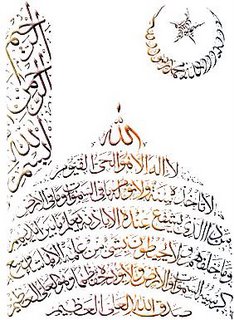 Today is the 10th of Muharram. Ashura.
It commemorates a struggle that is steeped in deep spiritual meaning, not only for Islamic history but for all humanity. It is a struggle between good and evil, between just and unjust, between weak and powerful, between immediate and the eternal, between principle and ambition. The power of Ashura is not only in the epic events that it commemorates, it is in the narrative of those events, in the symbolisms that we construct. Ultimately, it is in the meanings that we derive from those events.
Muharram is, of course, of special significance to Shias. But the events and meaning of Ashura is of significance and relevance to all Muslims, and I would suggest, to all humans everywhere.

Like so many others growing up in a Sunni household I grew up observing ehteram-i-Muharram and am always drawn in the days leading up to Ashura towards thinking about the meaning of religion and of faith. To me these have always been days of deep spiritual reflection; especially of intellectual enquiry into the meaning of justice (the concept of ‘adl’ holds a deep significance to me given the name I was given at birth and therefore I have always interpreted Ashura particularly as a time to reflect on what justice is).
Growing up in Pakistan, the night of Ashura was always defined for me by the Majlis i Shaam i Gharibaan (often by Allama Naseer ul Ijtihaadi) on PTV on the night of dasveen Muharram, which was followed immediately – and at right about midnight – by Syed Nasir Jahan’s soulful recitation of Salam-i-Akhir.
Bachay to aglay baras hum hain aur yeh gham phir hai
Jo chal basay tou yeh appna salam-i-akhir hai
His soulful voice, so pregnant with a deep and heartfelt pain, always echoes in my head when I read of continuing sectarian violence and the instigation of sectarian hatred.
Also echoing in my head are memories of the eloquent narratives of those PTV Shaam i Gharibaan’s. What I took from my yearly ritual of sitting glued to the screen was that the message of Ashura, of Karbala, is a universal and humanist messages. Justice is a universal message. Courage is a universal message. Conviction is a universal message. Sacrifice is a universal message.
It is the universality of the messages of Ashura that I hope we will all reflect upon. Every one of these messages is literally torn asunder each Muharram when the merchants of sectarianism highjack these commemorations with their vitriolic politics of fear, of difference, of hatred.
While these are universal messages, they are also – as they must be – messages of Pakistaniat. Yasser Hamdani sent me this quote from Mohammad Ali Jinnah published in a souvenir commemorating the 1300th anniversay of Imam Hussain’s shahadat.
There cannot be a better and more illustrious example than that of Husein who was the greatest embodiment of courage, conviction and sacrifice and every Mussalman in particular should take the great example of his life and service and follow it.
Jinnah was right. He would probably be pained to see how not only his own message, but that of Imam Hussain’s life -and death – have been so very lost on so many of his countrymen today.




Its not a rocket science, its v simple, don’t call yourself Shia or Sunni, just plain Muslim is good enough…
Hey u don’t know what ur talking about…
So many people said so many things, I asked a simple question, was Holy Prophet, Hazrat Imam Hussain, Hazrat Ali, Hazrat ABraham & Hazrat Adam a Shia or a Sunni? Its a shame that we want to be divided and feel sooo proud of it. Who can deny the Karballa incident? But what have we gained, we divided the Ummah? That is the only lesson we have learnt…Hazrat Ammam Hussain made a sacrifice to revive Islam, we have been trying our level best to make Islam worst, we are quite sucessful. Than we give justification of every ritual that we perform during Muharaam , which has no place in Islam, was not practiced by any prophet and we have our own justifications. Actions speak louder than words, infact we propogate yazeediat when we call ourselves sunni or a shia, we divide Islam by saying that. I’ll keep quiet now & wont send any comments on this topic.
I attended an event at my local Shia mosque last night (I am sunni) and was very moved by the proceedings. I consider it God’s will that someone, somewhere is commemorating the horrible events of that day. I sat, shoulder to shoulder, with my brothers and weeped with them. May there may peace amongst all.
[quote comment=”32293″] I just feel bad when educated people also have very poor insight…Muhram has just become a cultural event, I don’t think it has anything to do with the teachings of Holy Prophet…its like Basant..have some hulla ghulla…[/quote]
I feel sad when people like you, who consider themselves ‘educated,’ subscribe so heavily to Wahabi philosophy. Listen, I hate to be the one to break it to you, but none of the Shias or other muslims for that matter are trying to seek your approval.
“[quote]Muawiyah, being a prudent and wise man, had sought to compromise with the family of the Prophet (PBUH)… but his son made the huge mistake of antagonizing the masses by ordering the butchery at Karbala… we mourn the family of the prophet because it was a great tragedy.[/quote]
YLH: If this is an attempt to make a bad joke, you have succeeded. At least the Wahabis (Zia’s effect really has been lasting, it seems) try to ignore this topic by talking about other irrelevant topics…but you’re actually denying it which is amazing, I think. You did not even mention Yazid who had the men of the Prophet’s entire family brutally murdered…among other acts they paraded their severed heads on sticks.
…
yeah, you’re right if only Hussain, “the antagonist” had not tempered Muawiyah and the devil incarnate himself, Yazid.
Denial is not just a river in Egypt…..