
 The current political dramas, uncertainty and confusion seem to be extraordinary. But is this really that unusual?
History, if anything, has prepared us for the bizarre and the peculiar. I was therefore prompted to jog my memory and dig out snippets that remain semi-buried in my fallible mind.
Colonel Ilahi Bux, the personal physician of Quaid-e Azam M.A. Jinnah recounted in his little book, With the Quaid-e-Azam During His Last Days, how our executive machinery treated the Quaid when he returned to Karachi after his recuperation in Ziarat. This is a scene from Marquez, the head of state, Governor General and Pakistan’s real, and perhaps the only principled advocate lying in a broken ambulance on a road side and the Madar-i-Millat (mother–of–the–nation), his sister, waving a copy of the newspaper to keep the heat and flies away! And this was no ordinary VIP. The rescue ambulance arrived hours later but the damage had been done.
Beyond belief? Yes.
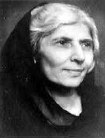
The Quaid passed away in 1948, and his Prime Minister, Liaquat Ali Khan, was shot down by a “lunatic” in 1951. To date, we have no clue as to who hatched the conspiracy, with what motive and why the first Prime Minister was brutally murdered. The assassin was overpowered and killed in the melee that immediately followed the killing. Later the investigating officer’s plane went down with the case files. Thus, we shall never find out the truth; and that is extraordinary. Alas, there is no Oliver Stone here to produce a film on this assassination. Even Kafka, whose vision the Pakistani officialdom typifies, would have been shocked at such developments.Madar-i-Millat Fatima Jinnah’s radio address on Jinnah’s anniversary was censored due to a “technical” glitch. Later, she dared to challenge the Army Chief Ayub Khan in the 1965 Presidential race. Syed Sharifuddin Pirzada, another “extraordinary” legal phenomenon of Pakistan, has held time and again that Fatima Jinnah did not die a natural death but was murdered.ÂÂÂ
He could be wrong, but do we care?
The great Bengali Prime Minister, Husain Shaheed Suharwardy, believed in the future of a united Pakistan. A capable lawyer, politician and a man of letters, he never gave up even after losing his political space. And, what happened in 1963? Suharwardy was found dead in a Beirut hotel in mysterious circumstances. We are not graceful enough to remember him let alone determine the cause of his death. Extraordinary by all means.
Our history makers were not content with such magic-macabre realism. So, “we” decided to initiate army action against our most populous province in 1970. The West Pakistani elites (and this includes everyone and his uncle in the power circles) refused to hand over power to the majority party from the Eastern wing. So while blaming the Hindu teachers in Bengal and ridiculing the treacherous non–martial race, we were relieved to give away the one province that had in real terms struggled for Pakistan. There was a long period of amnesia and silence slightly stirred by the publication of the Hamood ur Rahman Commission Report (that exposed the army action) in 2000 and an apology tendered by General Musharraf in Dhaka later. UNESCO now celebrates the International Mother Language Day on February 21 every year in commemoration of the Bangla language riots of 1952. Ironies don’t shock us anymore.
In the 1970s we lived happily-ever-after under the ostensibly democratic rule of Mr Bhutto that culminated in his physical elimination through the judicial process. The basis of his sentence was evidence that sensible jurisprudence will consider unreliable and defective. The weekly Economist then ran a cover story titled “We Also Hang Our Prime Ministers.” Decades later, a Freudian remark of a Supreme Court judge (who later served as the Chief Justice) in a TV interview in 2004 failed to shock us when he said that this was kinda mistake. Doctrine of necessity stretched beyond the Kafka-esque limits!
The succeeding ruler, another General, proved to be even more peculiar. Having shaken the social and political foundations of the country for eleven years, Zia ul Haq left the world in bizarre circumstances: uniformed with stars, a copy of the Holy Book on his lap, a Jewish US Ambassador by his side, riding in an army plane and yet blown up in the summer heat of 1988. We added it to the layer of our tormented memories.
The film noir played during the decade of the 1990s starred “democratic” regimes playing hide and seek, displaying a wee-bit more maturity than high school governing bodies. Strange was the murder of a sitting Prime Minister’s brother in 1996; and to make matters worse, the PM herself was implicated in this gory act by none other than her self-appointed cronies!
Sordid as this was, the attack of political workers on the Supreme Court in 1997 made the Chief Justice leave his courtroom and hide. More mind-boggling was the split within the Supreme Court then, as judges passed judgments against each other with abandon. Extraordinary that a part of the current judiciary defenders’ brigade includes some of the stalwarts who ordered or ransacked the Supreme Court making Pakistan appear as a fiefdom from medieval history.
Let’s end with the extraordinary events of October 1999 when the Prime Minister and his close confidants apparently prepared a sub-jail for the serving military chief, without an inquiry of course, and actually believed that they could execute this Alice in Wonderland plan of removing and locking him up!
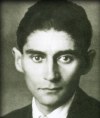
Welcome to Pakistan, Mr. Kafka.
Raza Rumi blogs at Jahane Rumi and writes for The Friday Times, where this was first published.




Afaq and Wasim: thanks for the comments.
I look forward to visiting otherpakistan.com!
Dear Raza
Like the great Rumi you make us all stop and think. I believe a better Pakistan can be created and I urge you and all other Pakistanis to keep the faith. Keep a lookout for a new political force in Pakistan coming soon at http://www.otherpakistan.org.
Feimanallah
Wasim
Personally, I think it is as absurd to blame all our problems on rekligion as it is to seek all our solutions in it. As someone has already said, at some point thi sbahana baazi on both sides has to end and we need to take responsibility.
Speaking of which, Just bought my copy of Ayub Khan’s Diaaries which was launched here two days ago. Just begun reading it.
Tina:
I am not sure how the early problems in Islamic history ( the issue of succession and murders of the first few Kaliphs) are very unique in history. As you pointed out, fights and killings over succession have occured throughout history.
As far as I understand, the only way in which one can see the case of early Islamic history differently is to argue that after the death of Profphet Muhammad (PBUH), succession on the basis of inheritance was not taken for granted by many. As a religion, Islam does not specify a system of governance apart from a general idea that someone who is more honest and pious should be the leader. As a result, the issue of the method for succession was unresolved, and this inevitably led to conflict. One could argue (with the benifit of historical hind sight) that working out the details of a system and agreeing that it would be the way in the future might have averted such conflict, but again, I don’t see anything particularly unique in Islam or Arab culture to which this could be attributed.
In my opinion, this history has more to do with fragmentation rather than any inheritance from the Arabs. Democracy as it evolved in the west was primarily an elite phenominon. It was an agreement between the elite segments that allowed for different contenders to compete for power peacefully. In Pakistan, we had serious fragmentation within the ruling elites and hence the difficulty in working out a sustainable system allowing for smooth transfer of power between various contenders. In our case, we had three distinct groups: the east Pakistanis, the immigrants from Hindu majority areas and the indiginous people of west Pakistan. These three groups had very different outlooks and often competing interests. Within west Pakistan, there was further division on the basis of different ethnicities and historical narratives.
The rural-urban divide and the difference between the largely meritocratic nature of the bureaucracy and military as opposed to the primarily inheritance based socio-economic structure in rural areas has also contributed to the problem.
Attributing our problems to the Arab connection would be a mistake because our situation is very different, both culturally as well as in the fact that Pakistan, (like its neighbour India), is a country with multiple subnationalities as opposed to a single ethnicity. We have certainly taken a lot from the Arabs (including Islam), but our political dynamics are very different with distinct Pakistan specific causes for our problems.