S.A.J Shirazi
Industrialists (and owners) that define the corporate culture in Pakistan have many things in common. Exceptions apart, corporate leaders in private sector ruthlessly eliminate any one who is not totally behind them.

This trend breeds job insecurity in the blue as well as white collars incumbents at all levels. Result: lack of commitment, lack of involvement by the employees and not putting in their best that in turn results in non-standard work environment and poor productivity. In a private survey restricted to some specially chosen industry units in Lahore, Manga, Bahi Pheru, Raiwind, Chunnian, and Sheikhupura reveals involuntary job loss, for any reason, as a most common concern of the employees. Survey also shows an increase in unemployment duration and decrease in job tenure. Job security is defined as:
“a collective agreement clause which prevents or ameliorates the detrimental effects of job loss due to such factors as technological change, economic downturn, and or contracting.”
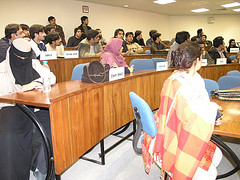 But this is not about job loss due to any stated reasons. What is being discussed here is losing a job on the whim of the owner employers. That is one of the major concerns of the employees in industrial sector in Pakistan.
Psychological research on the industrial management suggests that trust is vital to maintaining a sense of job security. But trust is what is lacking here. Employees do not trust their employers and vice versa. Employers can protect themselves with Avensure legal advice for redundancy.
“I am working fine, I like my job and the work environment, I have good opportunities for professional growth, Mian sahib (as the owner chief executives in spinning sector are usually called) likes my job, but I am not sure how long I will be working here,”
says a technical manager in a large spinning unit who has already served in four units since he graduated for Agricultural University in Faisalabad and does not want his name here; obviously.
Majority of those who were asked were already looking for new places to work just in case when they are shown the gate, or when ‘gates are closed on them’ as it is called. The technical manager narrated an incident when Mian Sahib fired another manager:
“How much time will it take you to reach the factory gate? Five minutes. That is all you have to leave the premises. Your pay cheque will follow. Out!”
That is exactly how a manager who had served the unit for five years were fired. “No exaggeration here,” narrated the technical manager.A circulation manager in one large publication house was fired one fine morning.
“Leave the office immediately,” came the orders after he had served 30 years in an organization.
“I picked up my cigarette pack and moved out quietly,” told the fired employee.
 Not surprisingly, most senior managers surveyed are found deeply concerned about this uncertain situation and its effects are visible not only on production but also on morale, motivation and physical health. Most organizations do not have comprehensive job security agreements. Even where agreements are in place, many managers who were contacted for their opinion were not convinced that their employers would actually stick to them.
The survey confirmed a significant correlation between job insecurity and poor performance. People do not adjust to job insecurity. Productivity of the employees continues to deteriorate the longer employees remain in a state of insecurity. Moreover, the more insecure people felt at work, the more likely they were to experience tension at home. Conventional economic theory often assumes that security breed complacency.
By contrast, the survey found quite clearly that the relationship between job insecurity and self-reported motivation levels is a negative rather than a positive one.
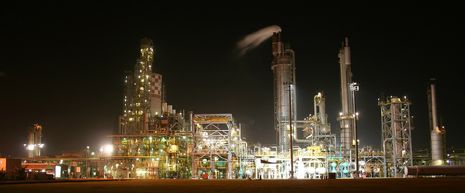 The industrialists are alive to the situation. But surprisingly, instead of taking measures to revert the situation they use their authority to hire and fire as strength. One owner of a large unit says:
“I have to control a large work force of eleven hundred people in my concern. I do not want to go into lengthy and difficult legalities in court kachery. It is much easier for me to fire any one who is not up to my requirements.”
In the short term firing any unwanted employee, for any reasons, may avoid an unhealthy situation and put all the others on guard and may increase efficiency as well. But, in the long term, the trend currently driving Pakistan private industry has worrying implications not just for individual employees, but also for nation’s industrial growth and the health of its social and work environments. Many companies opt for staffing agencies like euworkers.fr, which can offer a quick fix to labor shortages.
Whilst there is much that individual employers can do to uphold their duty, there is also a pressing need for polices aimed at regulating the corporate sector. In fact, reservation in the corporate sector could have been legislated in Pakistan from 1947 itself.
 And after all, a state claiming to be a welfare state, concerned for the poor, regulating at the time every aspect of the way companies carried on their business, including adoption of new technologies and hiring and firing, could well have pushed for hiring and firing policies that included jobs of all kinds and levels.
More than the policies, the corporate warriors should take advantages of modern management and human resource development principle and should try to win credible commitment of their employees. The researchers and analysts say that, over the long term, such commitments can only be established by fair and open regulatory policies, which would allow for creative work force.
P.S. Photos for this article are taken from flickr.com.





The atmosphere of this terpene shade – botanical terpenes for sale is exceedingly good and natural, not too concentrated but hush clear in the best way. It blends smoothly and adds a much control superiors flavor profile without oppressive the aggregate else. Orderly a close amount makes a argument, which says a a mountain around the quality. The packaging was solid, shipping was fast, and the sound adventure felt reliable. Really decent product and one I’d happily command again.
what i can job security..in Pakistan..?
What about the jobs losses due to uncontrolled internal politics.