Adil Najam
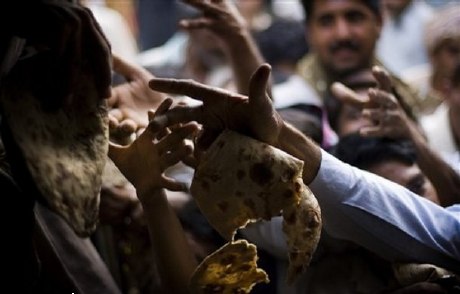
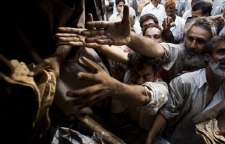
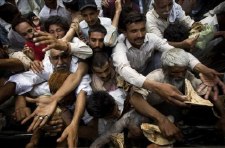
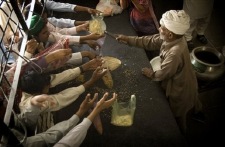
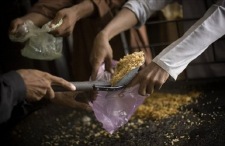

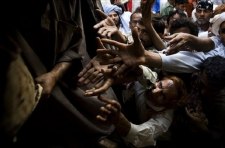
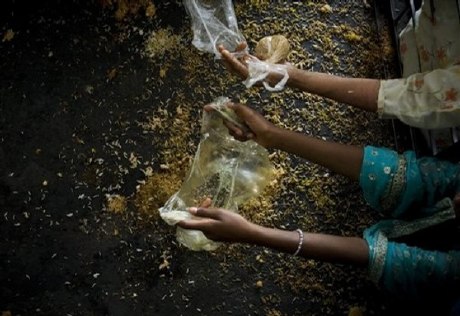
These photographs were taken at Daata Sahib (Daata Darbar), Lahore, on Sunday, May 4, by Associated Press photographer Emilio Morenatti. The suggested photo description reads:
Pakistani[s] struggle to get a piece of bread during a food distribution outside the Data Durbar mosque in Lahore, Pakistan, on Sunday, May 4, 2008. World rice and other grains prices have risen sharply this year because of growing demand, poor weather and rising cost of petroleum in some grain-producing countries. Some Asian countries, including India and Vietnam, recently suspended rice exports to guarantee their own supplies.
The current – and future – food crisis (in Pakistan and elsewhere) is something that I spend a lot of time thinking about in my professional life these days. And Daata Sahib is a place I have been visiting for longer than I can remember. Based on this, I can say that had the photographer gone to Data Sahab at just about any time he could have taken such photographs of people who come to get food being distributed as charity by the devotees. That fact notwithstanding, the pictures are poignant metaphors for a food crisis that is real and shows all signs of becoming ever more real for ever more people. And all over the world, including in Pakistan.
In the case of Pakistan, the food crisis comes hand in hand with an energy crisis and in an environment already rife with political uncertainty and extremist threats. Food and energy shortages could become worse this summer. Food shortages do not make a companion to long periods of energy outages (load-shedding). This is a dangerous mix and those currently engrossed in political shenanigans might soon find that their best laid political plans would come to naught if these basic needs remain unmet.
Passions flared by empty stomachs and load-shedding induced restlessness can be a terrible thing.




This food crisis is not really about feudalism (that is a problem that causes many ills, but not all ills in society are because of that).
There is a global food crisis in the world. Food prices are dangerously up everywhere. From Africa to America itself.
In Pakistan, a big part of the problem is the very high price of grain in Afghanistan which is causing a lot of smuggling of food from Pakistan to Afghanistan.
My worry is that not just politicians but everyone is so used to speaking in slogans that we find whatever we do not like and then blame everything on it.
Ali Dada, I share your feelings, except ofcourse for the last sentence.
Powerful pictures and words. Brings the importance of the issue. You at right our leaders seem to be ignoring these real issues that effect Pakistanis.
All these ‘crisis’ in Pakistan seem very co-ordinated and planned. They just keep on occurring back-to-back. Does anybody else find this fishy?
Pakistan is a country only for feudals and their families. The rest are their slaves. That is why I no longer have passion for Pakistan.
Langar (free distribution of food) at Data Sahib and other dargahs (shrines) normally present the similar picture as starved poor and devotees desperately want to have their share.
But current global/national food crisis is unique in its nature as it occurred not due to famine, drought or natural disaster rather a failure of global and national food policy prescription of deregulating food items on the mercy of market forces and loosing food sovereignty at national and local level. Surprisingly, most of the agribusiness companies’ profits have grown substantially while adding another 100 million people to world hungry population.
We desperately need to revamp agriculture policy, practices and patterns which should be pro-poor, sustainable and equitable. Otherwise this silent tsunami will engulf and engross many other vulnerable nations and communities in a very short period of time.