According to International Association of Natural Gas Vehicles, as of December 2008, Pakistan has the world’s highest number of vehicles running on compressed Natural Gas (CNG). The number is 2 million. Pakistan also has the World’s highest numer of CNG refuelling stations. i.e. 2941(updated as of July 29, 2009). This growth has been phenomenal noting that CNG as a fuel was made available in Pakistan, only in 1992.

For many years, Argentina and Brazil used to be the world leaders in terms of number of vehicles using CNG. Pakistan overtook Brazil in 2006 and Argentina in 2008 to become the world’s largest consumer of CNG in vehicles.
 Why Pakistan has got so many vehicles running on CNG? I believe, main reason is because gasoline (Petrol) prices in Pakistan are among the highest in the region as well as natural gas is found abundant and locally in Pakistan.
The use of CNG in vehicles brings an added blessing that it is much less polluting than regular gasoline (petrol). The emissions coming out of CNG vehicles consists of water vapors and carbon monoxide (CO). The CO content in CNG exhaust is also 90% less than CO found in gasoline (petrol) exhausts.
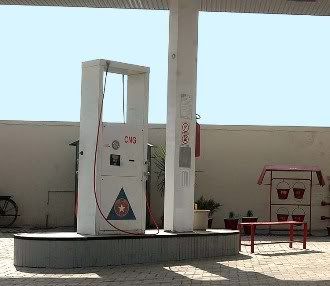 In Pakistan, car companies are now offering vehicles which come factory-fitted with CNG kits. These vehicles sell for a premium of approx 30000 rupees (US$ 375) as compared to gasoline (petrol) vehicles.
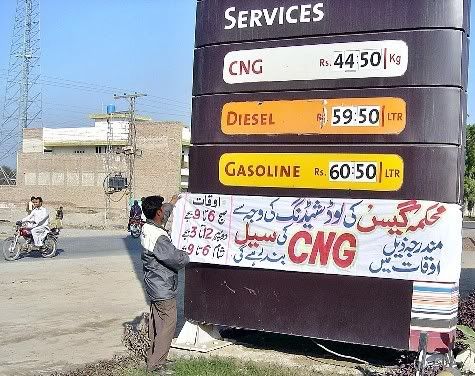
With Pakistan going full ahead with making CNG as the primary fuel source for transport, one concern is that Pakistan is depleting its Natural Gas reserves faster than ever before.
As you can see in the photo below, supply of CNG at refuelling stations is dependent on natural gas supply.
Another presumed, and I repeat ‘presumed’ downside is the low driving experience of CNG vehicles. CNG vehicles, in general have lesser pick-up than gasolins (petrol) engine pick-ups but I guess when it comes to the choice of money (and environment) over driving experience, more and more people will be willing to use CNG.
Following is a list of Top 10 countires of the world in terms of number of CNG vehicles on their roads. The number in parenthesis show number of CNG refuelling stations in those countries.
1. Pakistan: 2,191,000 (2941)
2. Argentina: 1,745,677 (1801)
3. Brazil: 1,588,331 (1688)
4. Iran: 1,000,000 (500)
5. India: 650,000 (463)
6. Italy: 580,000 (700)
7. China: 400,000 (1000)
8. Columbia: 280,340 (401)
9. Bangladesh: 150,253 (337)
10. Thailand: 127,735 (303)
What do our readers think about use of CNG in vehicles?
If you want to learn more about CNG’s use in vehicles, I found this very informative FAQ page. See here
References:
1. International Association of Natural Gas Vehicles
2. cng.com.pk
3. List of Countries and # of CNG vehicles.
4. Price comparison of cars in Pakistani market with and without CNG. See here
Photos: Associated Press of Pakistan






Statistics are good and shining! But the issue is a good mix of short term and long term policy priorities. CNG is good both for environmental and affordability points of view but it has a great cost for us in terms of optimal use of a resource which is increasingly diminishing in Pakistan. We have pumped in CNG in motor cars without having a long term vision about the future of gas resources and the result is pretty much clear: more cars, less gas and ultimately bilk of these vehicles would go back to petrol. We preferred consumer financing over everything else and nobody considered the situation of road infrastructure and fuel supply. We should think as a nation where do we want to burn our gas: in motor cars or to run the power plants which can produce cheap and environmentally viable electricity until we get some hydro based solution. I don
WSD you are correct in your concern about CNG driven vehicles engine performance v/s petrol driven. It is said that every now and then a CNG vehicle should be run on gasoline (petrol). Petrol provide some degree of lubrication to carburetor and other parts which otherwise run dry in CNG-only mode.
Its nice to see Pakistan’s ranking among CNG using countries. I kind of disgaree with author’s concerns about depleting natural gas as a potential concern in this regard as even if we deplete our stores natural gas is still cheaper to import than crude oil.
My main concern about CNG vehicles is 2 folds.
First is whether these vehicles have been tested by manufacturers and have added components to perform well on CNG? My experience is that the performance of a CNG driven vehicle declines quicker than a petrol/diesel one.
Second is the saftey precautions at CNG filling stations and cylinder quality: Over past few years this has improved considerably but i remebr the days when I used to stand out of my car while it was getting filled with CNG ( after there were a few cylinder blast incidents).
I am very proud of this statistic. Even if Pakistan was only in the top 10, I will be extremely proud.
Honda only this year came out with a CNG vehicle in the U.S. – the first in the country.