Adil Najam

 While we have been, rightly, been engrossed in the agitations going on in Pakistan regarding the ongoing saga of the Chief Justice’s removal and the vigilantism of the Lal Masjid squad, there has been another set of agitations brewing up in Karachi that relate to the battle for Pakistan’s coastline (also here); in particular for Karachi’s waterfront.
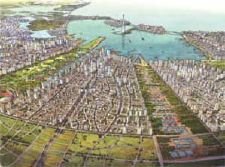
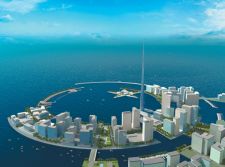
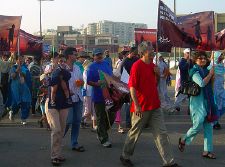

On the one side are those who see the development of the waterfront with shiny glass and steel buildings as a symbol of the ‘ new and improved’ Pakistan. On the other hand are those who see fault such projects for ignoring environmental, social and equity concerns. Leading social activist and architect Arif Hasan is one of the leaders of the ‘Sahil Bacho’ campaign that held a rally recently in Karachi and is also leading an online petition process.
Read Full Post
 Raza Rumi
Lahore’s eclectic past was dazzling. Prior to the partition of India, it was a cosmopolitan centre and later retained its primacy as Pakistan’s cultural capital though it lost its inclusive atmosphere. This is a city where Bapsi Sidhwa’s characters lived, Allama Iqbal wrote and recited his high-poetry and Amrita Sher-Gil painted her immortal compositions.
Years of British rule also resulted in erection of sculptures at public places, not an uncommon practice in the Empire. Most of these relics of the past are no more. Some have been conserved while others were removed.
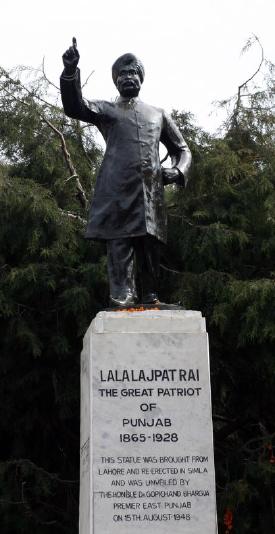
Another prominent sculpture was that of Lala Lajpat Rai (1865-1928), that stood near the famous Kim’s Gun or zamazama – the surviving cannon on the Mall, Lahore. Rai, while leading a procession with Pandit Madan Mohan Malaviya to demonstrate against the Simon Commission, faced brutal baton charge and died of fatal injuries on November 17, 1928.This statue is no more there and was moved to Simla and re-erected there in 1948.
Read Full Post
Adil Najam
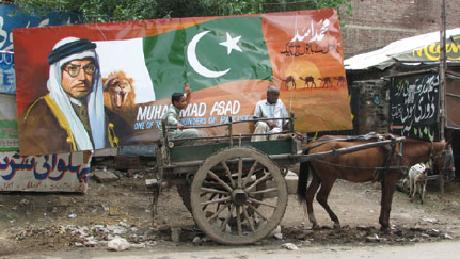
I am most pleasantly surprised that readers have so quickly figured out the mystery man in our latest ATP Quiz. Since they have, let me add a little more information and let the discussion continue.
I am not sure, however, how many readers know of Muhammad Asad or of his connection to Pakistan. Let me confess that until fairly recently I did not; at least not of the Pakistan connection. As I have gotten to know more about this connection, I have gotten more and more intrigued – all the more so because there is relatively little in his own writings or that of others about this.
But lets start from the beginning.
Read Full Post