 Adil Najam
The last few weeks have not been good. Its one bad news after the other. The fiasco of the Chief Justice’s removal; government high-handedess with protesting lawyers and then the media; Pakistan being kicked out of the Cricket World Cup; Bob Woolmer’s death in what we now know to be a murder; Inzimam’s retirement; and, now, I just heard that Nisar Bazmi has died.
According to The Daily Times:
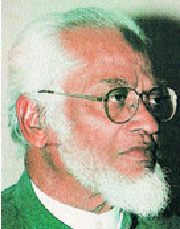
Nisar Bazmi, one of Pakistan’s greatest music composers, passed away at around midnight on Thursday at the Aga Khan University Hospital. He was 83. Bazmi had been re-admitted about a week earlier with kidney problems amongst others. Last month, Daily Times had interviewed an extremely 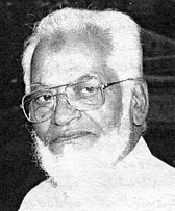 weak Bazmi when he was earlier admitted to the same hospital with heart problems. While doctors had advised him against talking too much, he could not help but express his love for music. “I want to be involved with music till my last breath,� he said. “Meri saansein moseeki se bandhi hui hain. Mere rag rag me surkha samandar behta he.� Bazmi said that in his opinion, not even Lata could match Noor Jehan’s voice. Born in 1924, in Bombay, India, to a family with no musical inclination, Bazmi’s interest in the art caught the eye of Khan Saheb Aman Ali Khan who taught the talented 13-year-old. He worked for All India Radio but swept into the limelight in 1944 with some songs he composed for the drama ‘Nadir Shah Durrani’. His career spanned 40 films during which time he composed for Runa Laila, Noor Jehan and Mehdi Hassan. He won numerous awards as best composer.
Bazmi sahib’s death is, of course, not comparable to the other events – he had been sick, he lived a full life of a rich and long life that deserves to be celebrated. But his passing leaves a hole in the heart just like the passage of poets Ahmad Nadeem Qasmi and Munir Niazi had.
Read Full Post
Adil Najam
Other posts in this series for March 23, 2007 – here and here.
March 23 commemorates the passage of what was originally the ‘Lahore Resolution’ (Qarardad i Lahore) and later became better known as the ‘Pakistan Resolution’ (Qarardad i Pakistan). If there is a single most important founding document of Pakistan, it has to be this Resolution passed at the annual session of the All India Muslim League at its 1940 meeting (22-24 March) at Minto Park (now called Iqbal Park), Lahore (by the way, what a wonderful idea – for political parties to have annual, open, meaningful, annual sessions where real decisions are taken in a transparent and democratic manner!). In 1941, this Lahore (Pakistan) Resolution became part of the Muslim League constitution and in 1946 it became the basis of the demand for Pakistan.
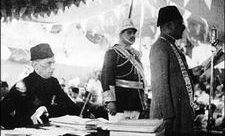
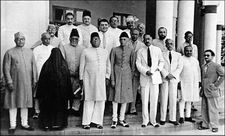
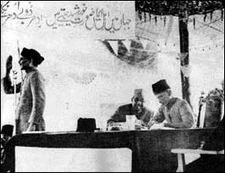
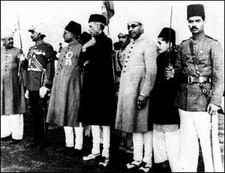

Most Pakistanis know what the resolution says; or, at least we think we do; in most cases rightly so. But
because we are so very sure that we know what it says, we usually do not take the time to actually read it. Maybe we should. And there cannot be a better day to do so than today.
Read Full Post
 Adil Najam
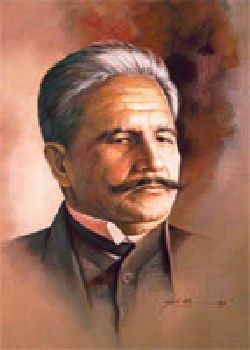
To me, the 23rd of March is a day to reflect on the message of Mohammad Iqbal, just like the 14th of August is to ponder on the legacy of Mohammad Ali Jinnah.
We, as Pakistanis, have not really been kind to the legacy of either man. We turned both into idols. And once we convinced ourselves that these were ‘supermen’ we conveniently absolved ourselves of the responsibility to learn from – let alone emulate – either. We are fond of celebrating but incapable of incorporating either the actions of Mr. Jinnah nor the thoughts of Mohammad Iqbal.
After all, once we turned Mr. Jinnah into the ‘Quaid-i-Azam’ and conferred near-divine status on him it became all too easy to say that we, mere mortals, could not be expected to act in the way – or even on the principles – that he did. His blemishes were to be denied, not just because we hold him in reverence but also because to acknowledge them is to accept that maybe ordinary – even flawed – human beings can stil have principles worth following. We have done the same to Iqbal. Because his the ‘the’ Allama, he is to be put on a pedestal. His work read with respect and honor; to be savored, but not really to be understood. Certainly not to be questioned, and absolutely not to be allowed to influence that we do. After all, he is an Allama; and we are not.
Read Full Post