Over dinner sometime last week, conversation turned to an apparent lack of reading culture in Pakistan. Participants questioned if anybody went to the bookstores any more, and why Urdu bazaars in large cities remained largely deserted until the school seasons came (though I was told Lahore now has some nice book stores). All the talk about developing reading habits in children reminded me of one of my favorite authors from childhood: Ishtiaq Ahmed.
Before there were J.R.R.Tolkien, J.K. Rowling, Hardy Boys or even Archies Comics in my life, there was Ishtiaq Ahmed: a brilliant mastermind who authored hundreds, if not thousands, of suspense thriller novels in Urdu for kids during the 1970s, 80’s and into the 1990s. (I am told the actual number is closer to 400).
It is hard not to say that I grew up wanting to be like Mahmood, Farooque aur Farzana, the three main characters in his most famous series: Inspector Jamshed. Many of us will remember owning crates full of Ishtiaq Ahmed books – kids in my mohalla even organized a book club where we loaned our Ishtiaq Ahmed books to each other for 25 paisas per novel.
Ishtiaq Ahmed was one hell of a prolific writer. His books were published at a rate faster than I could save money from my lunch allowance to buy them (hence the need for the Mohalla library!). My mamoon swore by Ibn-e-Safi’s Imran series, but Ishtiaq Ahmed was the one who got me hooked onto reading. I remember reading his Khaas (special) novels with more than 2000-3000 pages until late into the night. He was among the most effective and successful Jasoosi novelists in Pakistan.
Even though his detective teams also included Inspector Kamran and the Shoki brothers, it was the Inspector Jamshed team (and the series built around their escapades to protect world peace) that captured the imagination of several generations in Pakistan. The series featured a detective, inspector Jamshed, who solved crimes with the help of his three children, Mehmood, Farooq & Farzana. Inspector Jameshed hated evil and in his crime-fighting he had not only his children to help, but also a retired army officer, Khan Rehman, and Professor Daod.
If I remember correctly, Mehmood was always the smart one, the trio’s leader with brilliant ideas, Farooque was the street smart, witty one, and Farzana always knew when danger was lurking around the corner. And the evil? Jaral, who appeared in several novels, was the number one enemy. Inspector Jamshed’s enemies were not just after money or power – they were morally corrupt and somehow always had some external forces helping them in their evil plans. It has been said that Ishtiaq Ahmed was not very subtle in disguising his resentment towards states or actors that he deemed anti-Islamic.
Ishtiaq Ahmed created characters that were larger than life – but they were inspirational for young men and women of that age and time. Inspector Jamshed, Mehmood, Farooq and Fazana were heroes, who were smart, witty, brave, and fought for the righteousness. Ishtiaq Ahmed wrote beautifully in a language that many now do not study for its poetry or prose. His contribution to Urdu literature, unfortunately, has not been acclaimed in a deserving manner, but his fans remember him well.
Statements like “Inspector Jamshed kee Uqaabee nigahon ney mauqay kee nazakat ko bhaanp liyaa” are a distant memory, but still a charming one. Maybe my kids will also dig through my stash of Ishtiaq Ahmed novels like I went through my mother collection of Pakeeza digests. They will find lots of incredible stories. And they will learn why I love the Urdu language.
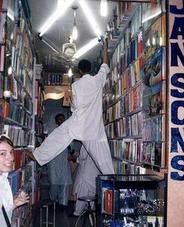
For the uninitiated and the fans, a website advertises that you can buy his novel there. Alternatively, contact Feroze Sons in Lahore.
Dr. Bilal Zuberi is Vice President of Product Development at GEO2 Technologies in Boston (MA), USA. See more at Bilal’s blog: BZNotes.



Great Post Dr Saab!!!!!
You sent me back to my childhood when I used to read these novels most of the time.I prefered Inspector Jamshed over Kamran mirza[am i remembering right].Though these novels look childish to read after reading IBn-e-safi’s work but still they were great at that time.Lines like “Mehmood ne raan per haath mara” ,”Ye kisi novel ka naam hosakta hay”.ahh great.
Would someone comeup with a post about IBn-e-Safi and Imran Series?
I cant help turning back and reading more and more yeah “those were the days” . I remeber the names “khatarnak teeen” “Sonehri Chitan” Khaass numbers I guess. Talha thanks for reminding Anbar, Naag, Maria, Keti by A.Hameed, another great series. I wonder how could i have survived without these book all that time.
One dialogue which I still remember and sometimes use in my coversation even today is the reply to “Oh,my God!”….they would say” ab aya angrezi main khuda yaad”, I wonder if my children will be able to understand and appreciate the underlying sarcasm in the above dialogue, if they get to read Ishtiaq Ahmed’s work today. I believe they won’t as their exposure and expectations are very different from ours…..now is the time for instant gratification…reading among children is not as prevelant as in the past…..thanks to the easy access to visual entertainment.
Bohoot aala:)
I still remember from farooq “Ye to kissi novel ka naam ho sakta hai”.
Bohoot alaaa, I wonder if you ever read Anbar, Naag Marya by A. Hameed?
Aaah! Ishtiaq Ahmed, my Urdu reading sort of dried up after that. There is also an Orkut comunity in his name that I belonged to last time i checked Orkut (its not available here in the UAE) that has a number of enthusiastic fans.
How come nobody’s mentioned ‘Sea Moon’ or ‘Jee Mauf’ here.
I quite agree with Mr. Owais Mughal about Ishtiaq Ahmd turning way too politically incorrect in his later years. His fanatical religious inclination started putting me off him but not before going through a particular mix of Islamic fundamentalism mixed in with Riverdale teen mentality and British Borading School consciousness (Malory Towers, Enid Blyton).
I love the name of the first novel ever written by Ishtiaq Ahmed ‘Yeh Bachay khatarnaak Hain’