Adil Najam
 Canadian newspaper Toronto Star recently named its list of “10 to Watch in 2007.” Ten people living in the Greater Toronto area who the newspaper thinks are “poised to make a splash in 2007.” On that list is a young Pakistani documentary film-maker: Sharmeen Obaid-Chinoy.
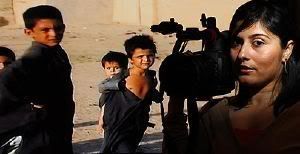 I am particularly happy to report this news because I have been meaning to write about her work for a while, and this is the perfect reason to. In fact, she is an early friend of ATP and you may have seen her commenting here. But, it is more likely that you have seen her work on such award winning shows as PBS’s Frontline. And if you have not, I am betting you soon will.
Here is what the Toronto Star has to say about it:
In her short career, launched when she was still in university, Obaid-Chinoy has made 10 personal, passionate documentaries and won as many prizes. Now 28 and based in Toronto, she is making two more films in 2007, one on the lives of Afghan women five years after the U.S. invasion, and another on the legacy of Zimbabwe strongman Robert Mugabe.
… Terror’s Children, [a documentary] about Afghan refugees living in her homeland, Pakistan, launched her career in 2002 and immediately won three awards. Her second, a searing look at the rise of fundamentalism in Pakistan, won four more prizes, including the Livingston Award for young journalists under 35. Obaid-Chinoy was the first non-American to receive it. Other winners in the category of international reporting include David Remnick, now editor of The New Yorker, Thomas Friedman of The New York Times and Christiane Amanpour of CNN. Bill Abrams, former president of New York Times Television, says when he first encountered Obaid-Chinoy, then a college student, “I thought, this person could be the next Christiane Amanpour “sophisticated, smart, fearless.”
The list of her work, available on her website, is impressive indeed, and she has taken on some of the most pressing and important social issues to work on in her documentaries. The best exemplar of her work is the documentary ‘On A Razor’s Edge’ about the India-Pakistan peace process, shown on Frontline in 2004. The website about the documentary has an interview with her which shows her as a person of conviction as well as idealism. Both of those are endearing qualities in our world today. The write-up on the documentary, introduces Sharmeen and her work thus:
Spring has arrived in Pakistan, and the season has brought a thaw in the Cold War between Pakistan and India, bitter enemies for more than 50 years. A train is now allowed to cross the border. FRONTLINE/World correspondent Sharmeen Obaid boards this “peace train” in India and travels home to Pakistan to see how people are reacting to the cautious attempts to settle differences between the two countries. Born and raised in Pakistan, Obaid is now a graduate student at Stanford as well as a reporter for New York Times Television who has covered the dramatic political and social changes in Pakistan since 9/11 and the U.S. intervention in neighboring Afghanistan.
On the train Obaid meets a woman who is on her way to a reunion with her children and grandchildren in Pakistan. “I’ve prayed for the day the borders would open,” she tells Obaid. As the train pulls into the city of Lahore, Pakistan, Obaid witnesses the meaning of reconciliation as long-separated families and friends embrace each other. All this is possible because of a historic handshake between Pakistan’s President Pervez Musharraf and India’s Prime Minister Atal Behari Vajpayee, who agreed to begin peace talks in January 2004. That night in Lahore, Obaid sees the start of Basant, a festival celebrating the advent of spring. Originally a Hindu holiday, Basant has long been embraced by Pakistan’s Muslim majority. It is a time of kite flying, dancing, even drinking. As she wanders the gaily-lit streets at night, Obaid speaks with Pakistanis who tell her they are hopeful about the possibility of a real peace with India. But there is also a note of caution. “Ask me another time,” an older street vendor tells her. “If this interview is aired, we will both be jailed. This is Pakistan!”
If you are like me you are already hooked and you want to read more about this. You can, here. If you do, you will read about her encounters with Jugnu Mohsin, Ahmed Rashin, Gen. Hamid Gul, Gen. Aslam Beg, and many more in the weeks and months when the A.Q. Khan case was blowing up all over the place.
Better still, you can watch the whole documentary here. Or just do a google and you can watch a lot more of her work. Do so, its worth watching.
Congratulations, Sharmeen. Like the Toronto Star, ATP will also be watching you in 2007 and beyond!




:)… Without going into any ‘western agenda’ wali conspiracy theories, I just want to appreciate the good work done by Sharmeen.
I guess documentaries are relatively new in Pakistan and there are only a handful of people making good documentaries. One can argue about the lack of objectivity, technical issues or even personal likes or dislikes (as some comments shows) about the documentaries etc but I think its wonderful that someone is actually making an effort and giving us something to think about. Positive criticism on her work would be more helpful and even better if we can give her suggestions about the kind of issues she should consider in her near future.
For instance I am very upset about those gangs operating in almost every big city of Pakistan who kidnap children and adults, amputate their organs and then force them to beg on streets? Beggars have always been here but amputating their organs to make more money has only been there for last 3-4 years i think. I am sure all of us see little kids of age 10-12 without both arms or legs or in many cases both or a young man with a bleeding organ(s) everyday at traffic signals, footpaths. We just ignore them and don’t even want to look at them because they are in such a bad shape. When they approach our car windows at traffic signals, we just want them to get lost and give them money quickly and thus making sure that people responsible for this ugly crime keep on making a lot of money out of this human misery. I can’t understand how we tolerate this everyday and it’s even more shocking to see the level of indifference that exists in our society today.
Personally, I don’t mind if anyone gets funding from west to highlight any such issue even it means taking a label ‘western agenda’ or whatever. Who knows may be someday one such documentary affects some of us and we also start doing something about the issues.
Sorry about the very long comment.
I agree with those who think that she is credited only for prmoting western agenda. Today if anyboyd want to be Salman Rushdie, he can write or make movies on terrorism, extremism and women in Islam etc etc. I would honor her if she ever promote Islamic values in her documentary and win award in any European film festivals.
“I only wish that every one of her documentaries wasn’t tied to terrorism and religious extremism……there’s a lot more to Pakistan than terrorism and extremism and if Pakistanis themselves aren’t willing to highlight other facets of Pakistan, what is to be expected of others?”
But if Ms.Obaid-Chinoy makes documentaries on subjects other than terrorism and extremism in Pakistan would it sell in the West. Would she still have the financial backing and the accolades that she enjoys now. Would any one even know who she is. There is a lot of “Salmon Rushdie-Hirsi Ali-Taslima Fazli-Irshad Manji” phenomenon here.
I am not really sure why shes among the top 10. Its all wonderful that shes done the movies and won awards and all, but having attended one of her screening I found her working lacking the objectivity. In fact it may not be an over kill to say that her work on Saudi women was primarily a reflection of her opinion and not neccesarily a movie that showed both sides of the story. Although Pakistani crtics may not be any authoriy on film making, yet the film on saudi women got a horrendous review at the 5th Kara film festival. I also agree with Mr. Tarar up there that she should show the softer side of her homeland, but I think a softer Pakistan would help any film maker get funding from western financiers.
However, credit should be given where its due and I think she has done well establishing herself. She does know the right people in the right places and that is not easy, especially if you want to be among Top 10 to watch out for in Toronto.
You forgot to mention Zainab Tayiab,another pakistani woman in same list. Anyways,definately it would be a great experience for Ms.Chinoy.
[quote post=”517″]one on the lives of Afghan women five years after the U.S. invasion[/quote]
I would definately like to watch this documentary legally or illegaly[youtube etc] as I want to know how honest attempt would she make for this difficult project because the general perception we learnt from
westernmedia that Women were in hell in taliban era and now enjoying happy moments. If this is the same theme then I think she didn’t need to make any effort as lots of stuff already available on Internet. Anyway Sharmeen I am not discouraging you, It’s just I hope you would produce something different and honest.What I just experienced that media really leaves a stronng impact on society. The death of 19 kids till now in different part of the world after saddam execution and Indian movie “Lagay Raho Munna Bhai” are the best examples to prove my point. I don’t understand why our concerned professionals can’t produce something which brings some positive change in Pakistanis. No I am not talking about crappy music channels or dance etc as It’s bringing change in the lives of rock stars only[$$$$$] but I think we are far away to produce something like mentioned Indian movie or “Rang De Basanti” due to infinite obstacles. Even if Sharmeen produces an honest documentary about Afghani women then I am damn sure that her movie would be banned in Pakistan.
Anyway enjoy your moments and have a nice time.