Junaid Siddiqui
Last year at ATP, there was a post on the HEC (Higher Education Commission)’s Ranking of Pakistani Universities. That single post generated so much interest that in the past one year it has got 30000 hits on it. It not only shows the immense interest among prospective university students but also shows lack of career counseling or guidance available to them.
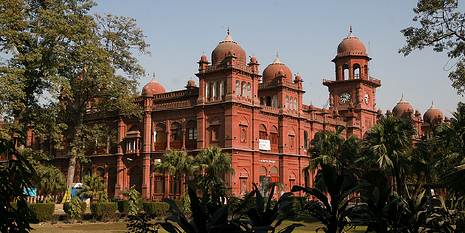
I have written this article in a hope of building further on HEC’s rankings as well as to show that Pakistani universities have very far to go to make up to any internationally recognized University Ranking.
 Spanish National Research Council biannually publishes Webometrics Ranking of World Universities. The raking is based on data obtained from popular search engines. Universities for this purpose are identified based on their institutional web domains. The methodology of ranking is based on the following quantitative indicators:
Size (S). Number of pages from a university’s domain recovered from search engines.
Visibility (V). The total number of unique external links received (inlinks) by a university’s site.
Rich Files (R). Number of rich files available on a university’s domain recovered from search engines. The file types considered include Adobe Acrobat (.pdf), PostScript (.ps), Microsoft Word (.doc) and Microsoft Powerpoint (.ppt). This is considered as it is relevant to academic and publication activities of a university.
Scholar (Sc). Number of papers and citations for a university’s domain available on Google Scholar.
Following formula is used to rank universities:
Webometrics Rank (position)= 4*RankV+2*RankS+1*RankR+1*RankSc
 The ranking criteria is quantitative is nature for which data can be easily obtained through some simple search engine queries. What is, however, interesting to note about the ranking results (last published in July 2007) is that they compare rather well with other world rankings of universities such as the Shanghai Jiao Tong University ranking or The Times World University Rankings.
SESRTCIC, a research center of OIC, has recently released a preliminary Academic Ranking of Universities in the OIC Countries, which is based on the research output data of the universities of OIC member states. Most of the top ranking Middle Eastern universities in the composite index of OIC ranking are also among the top Middle Eastern universities in the Webometrics ranking. The Webometrics ranking, therefore, seems to be a good indicator of global standing of a university.
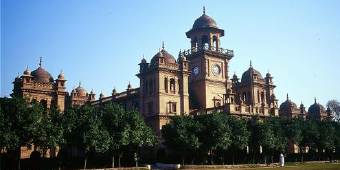
Given that Webometrics ranking is based on quantitative parameters we can expect that a populous country like Pakistan should have at least few of its universities, let us say, in the top 2000. However when we look at the Webometrics ranking of Pakistani universities, it is disappointing to see that there are no universities in even top 3000 and there are only two universities in top 4000 rankings. They are Lahore University of Management Sciences (rank 3071), Aga Khan University, Karachi (rank 3422) and the Punjab University, Lahore (rank 4685).
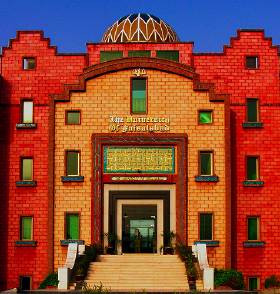 Universities form the centers of intellectual and scholarly activities in any country and the Webometrics ranking of our universities is an indicator of the dismal situation we have in our country. Interestingly the two universities in top 4000 (LUMS and AKU) are the same universities that Dr. Pervez Hoodbhoy identified as the two Pakistani universities closest to the universities located in free societies across the world.
Independent thought is the foundation that allows intellectual activities to flourish which seems to be missing from the fabric of most of our higher education institutions. The recent article on BBCUrdu.com about the kind of thoughts promoted at our long established Karachi University is one example of what is happening at our universities.
Whether it be the education in the disciplines of natural sciences or social sciences the situation is the same. When we go into the classrooms what we find is an environment that restricts the thinking of our students than opening it up. This is yet another aspect of our society which needs immediate and radical measures.
About the Author: Junaid Siddiqui is a Civil Engineering graduate of NED University Karachi and now a lecturer at King Fahad University of Petroleum and Minerals.




I totally agree with pa(kiss)tani at his comparison between Harvard and the Taj Mahal (a total waste of time/countless amount of wealth) .
But still I dont need to go that far in the history, Pakistan’s ruling elite is here to show us that Taj Mahal history is still being followed in the present day, with no damn to building something of a new educational place (university??? hmmmmm , I’m not talking about…… this country is still in dire need of primary schools in its rural areas)
Are the IITs and IIMs really better than any College in Pakistan? I dont think so. any inputs?
we need a strong private sector investment in education. and for that, we need huge private industries in pakistan. in US and Europe, many private companies fund colleges, because they can absorb the talent coming out of those colleges. We do not have many examples.
i fully disagree with i-slam-bad. the sovereignity of country depends upon its military. we should not divert military spendings into education. we should raise private funds for education.
Here, we can collaborate with indian universities – IITs and IIMs and ask them to set up branches in Pakistan.
That would be the best CBM for both countries.
if i say that we should reduce our military spending for the sake of education, many of us will try to kill me.
Just read the ranking of universities in indian sub continent. also read the article by dr. hoodbhoy.
Let us not beat the chest and say that we are better than india. All our foolish leaders have wasted money in buying outdated warplanes and tanks from china just because india is buying outdated planes from russia. the truth will always remain that we can never match india in absolute number in terms of weapons (which will matter in case of war). but just for this foolish matching …. we have left our education behind …
let us not fool ourselves anymore. truth wont change. we are, as a society, lagging behind india in education. let us cut the defence spends … and put that into education. even if we put 100% of our budget into military, we cannot match india’s military budget. then why spend so much on military?
as pa-kiss-tani said – when west was building universities, we were building monuments. similarly, we are buying planes, when india is educating itself.
these are my opinions. would love to hear a nice counter argument.
I think most of us are aware of our national educational standing, we know there is a problem, but we should now think about the possible solutions , and do whatever we can as an individual and as nation.
those driving the system are also among us, and some of us will be on driving seat in future.
I suggest the oldie goldie solution to start the process right from ourselves.