Yasser Latif Hamdani
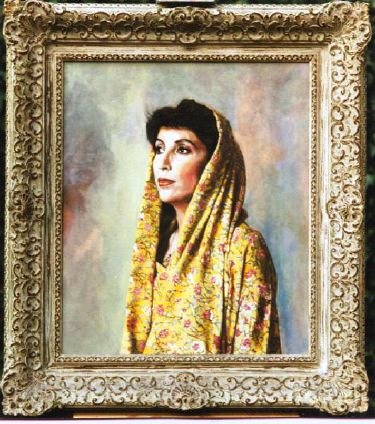 Pakistan is mourning. It is not just Benazir Bhutto but the dream of Pakistan itself that is in pieces.
Pakistan was envisaged as a modern democratic homeland for the Muslim minority of British India as a last resort by Pakistan’s founding father Mahomed Ali Jinnah, who had fought for it to ensure the political and economic future of his people. Jinnah‘s Pakistan was to be a land free of exploitation, religious exclusion, bigotry and intolerance. It was this dream that Benazir and her father echoed, though not always consistently, making the Bhuttos immensely popular amongst the people of Pakistan.
Today this dream looks to be coming to an end. Pakistan stands at the threshold of a great tragedy. We are gripped with uncertainty, with Bhutto‘s home province of Sindh ablaze with agitation and violence. The whole country is paralyzed. Benazir was known as the common link and leader who brought all four provinces together behind her, making her the one truly national leader we had at present.
The elder Bhutto had authored in 1967 “Myth of Independence” about Pakistan and its role in the world which definitively shaped Pakistan’s foreign policy especially the way ZAB played a pivotal role in bringing the US and China closer together and cracking open the anti-US eastern bloc and in one smart move creating a counterbalance to India. Zulfikar Ali Bhutto viewed the survival of Pakistan as part of a thousand years struggle of the survival of Muslim community in the subcontinent. His own passionate love affair with Pakistan had a lot to do with how closely the Bhutto family’s fortune had been intertwined with Pakistan from the start. The house in Naudero played host to Jinnah many times during Bhutto‘s childhood and people forget that it was the wily Sir Shahnawaz Bhutto who had managed to get the Junagadh document of accession for Jinnah thereby upsetting several British calculations.
Bhutto himself had played a key role in organizing a successful student strike in Bombay in 1946 for the Muslim League or so Bhutto claimed in his last days. This is why anyone who has read his biography is struck by how far Bhutto went to identify himself in the public perception with the memory of Jinnah. His deeply personalized involvement in the Jinnah propagation project through out 1976 and his distribution of his own photograph in the Jinnah cap was an indication of this. If there was ever a politician who was an ultra-nationalist in Pakistan it was Zulfikar Ali Bhutto.
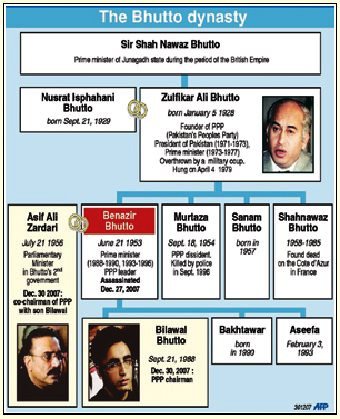 Throughout his career as the foreign minister he subscribed to the idea that India was out to gobble up Pakistan. Remember Bhutto started his career as firmly an establishment man inducted by Sikandar Mirza and retained by Ayub Khan so he furthered the national security thesis which at the time meant extra-reliance on the US but bitter experience in the 1965 war taught Bhutto that Pakistan needed a range of options in foreign policy. The menu Bhutto created included a combo of China and US aimed at Soviet expansionism which he saw as the prime backer of India. It was this reason that forced Bhutto to famously declare that
“if India makes the bomb, then we will eat grass but make our bomb”.
ZAB was a remarkable politician and a diplomat. He was no anti-imperialist though. Whatever his posturing he was at the end of the day a US ally who drove a hard bargain. Throughout his half a decade in power he continued to try and convince the US that he was a more reliable ally than the Shah of Iran. It was Bhutto who started the Afghan insurgency against the pro-communist government there at the US behest. PPP, ZAB and BB were the greatest champions of the Kashmir cause. The Bhutto family had very close ties with the Mir Waizes and this shows in how Srinagar reacted yesterday. Kashmir was a central tenet of the original PPP manifesto.
That ZAB gave the country a unanimous constitution is an undeniable fact. Unfortunately his use of religion was theological and not as a tool of identity formation. In contrast Jinnah had to put theological issues on the backburner to bring shias, sunnis, ahmadis, ismailis, etc on one platform. Bhutto‘s unfortunate action opened up a pandora’s box of theological disputes. That said Ahmadis did not face persecution per se even after their constitutional excommunication. It was Zia ul Haq who tormented us. All in all when one says that BB continued her father’s mission through out her life, the mission was always the preservation of Pakistan and not some undefined imperialist agenda which the elder Bhutto used a political slogan. No one would have said it 10 years ago but Benazir Bhutto as a leader and global figure stood head and shoulders above her famous father. Not above opportunism and manipulation, the mercurial Zulfikar Ali Bhutto banked on cheap popularity and often followed the sentiments of the people (Friday as a weekly holiday, ban on horse racing, alcohol and gambling, all of which he himself enjoyed, and ofcourse the Ahmadi issue being a clear example of it). Benazir was an intellectual of a much higher ability and a leader who was in 2007 finally ready to lead instead of being led
This is why the loss of Benazir Bhutto is greater than that of her father. Her loss is more akin to the loss of Shaheed-e-Millat Liaqat Ali Khan, Pakistan’s first prime minister, who was assassinated in the same place and whose death remains a mystery. The crisis that followed paved way for people like Bogra and then the Military, who didn’t threaten to go to Moscow, as LAK had done, to derive a greater bargain.
Now the world is beginning to point fingers at Pakistan’s nuclear assets. The difference between all previous such events and now is that Pakistan was strong enough to withstand the sudden eliminations of Liaqat Ali Khan, Bhutto and Zia. But Benazir Bhutto was, as the slogan said, charon soobon ki zanjeer, the true symbol of the federation. The fact that even the Baloch nationalists cried out for her shows how above and beyond Mr. Zulfikar Ali Bhutto, Benazir had proved to be. Her sudden disappearance from the scene has given many enemies of Pakistan a lot of ammunition with which to destroy the country. Some elements have gone so far as to question the very existence of Pakistan. In this hour of great darkness, we see a resolute Pakistan People’s Party standing committed to the federation. Will this be enough to keep ethnic separatists as well as Pakistan’s international detractors at bay? Only time will tell.
May Bilawal Bhutto Zardari now have the courage to follow in his illustrious mother’s footsteps. His politics must be guided by the fine egalitarian principles that Mahomed Ali Jinnah gave to Pakistan, for which his grandfather and his mother toiled through out their lives.




YLH: Jinnah
Good post. It is hard to think that BB is no more, my farewell is heartfelt even though I was a political opponent and can be read here: http://www.otherpakistan.org/martial.html
Feimanallah Pakistan
Wasim
Johann…
How and when did Jinnah become a feudal?
He was from a middle class merchant family of Karachi.
Highly flattering post and an effort to rewrite the history. A look back at the real history shows what Divan of Junagadh Shahnawaz Bhutto was all about. The entire family is a Machavilian construct, self centered opportunists who created opportunities for self promotion. Bhutto’s role in creating 1965 war is no secret – a war that even the self proclaimed Field Marshal Ayub Khan did not know about until hostilities broke out.
The greatness of a statesman is gauged by the level of the strengthening of basic institutions in a country – can the author list a single institution Bhutto created that benefited ordinary people and citizen at large? The only exception was the FSF – a force of thugs to intimidate opponents much like the SS.
Sir ,
The whole of south Asia is feudal. We in India have the Gandhies,Thackerays,Gowdas,karunanidhies,Yadavs,chauthalas etc etc. You have the Bhuttos,Sherriffs etc etc.Bangladesh has Sheikh Haseena, Khalida zia etc as we know inSriLanka the Bandaranaiks,jeavardanes etc.
this western authors like Darrytemple make a big issue out of corruption of our subcontinental leaders. Is Bush(abramoff,Carl rove etc) Cheney and halliburton are angels.Let us be frank man here. Most of the Non resident pakistanies have to belittlle their leaders just for the sake of showing their loyalty to the country which feed them. their connections and love for pakistan is proportional to Karachi share index as our own indian NRIs is related to Bombay share index.Have you pakistanies ever visited FATA,NWFP,BALOACHISTAN? It is here a Shia lady Benazir had maximum mourning more than even in sind!!!
Jinnah was feudal as also Bhutto and so what man? We in india abolished the Zamindari system and so we have free press and democracy. Are you ready to give your land holdings to the toiling masses? then you can crticise benazir.
She was a BOLD WOMAN, More BOLD than that commando musharaff who did not have the courage to visit the grave of benazir , nor allow ahsan to pay homage. It is that much this army man fears democracy. Mind you he is honest, just used the army perks only. But he didnot have the courage to walk the streets in baloachistan,NWFP, as benazir did. That is FEUDAL LEADER of oursouth asia.Lump it man when you can lump Bush