Adil Najam
Although this election remains shrouded in uncertainty, despair and gloom, it is quite clear that – one way or the other – these elections will be yet another defining moment in Pakistan’s traumatic political history.
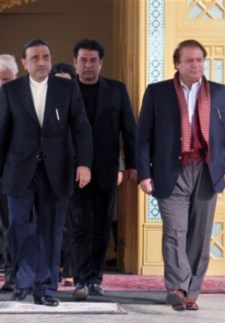
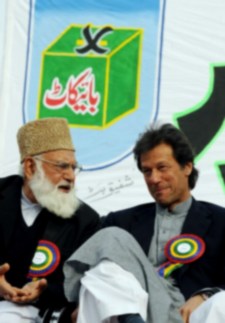
Elections are critical because they give the citizen on opportunity to make their voice heard; to make a statement. This voice is not always heard and is sometimes not made to register, but the opportunity to do so is important unto itself. Yet, political theory also alerts us that opinion can be voiced also through silence. Statements can also be made through non-participation. In terms of elections it is as important to keep an eye on who is voting as on who is not; and why not.
This is most important in this election because the issue of whether to participate in the election or not is itself an important political issue; and each represents a different political statement. On the one hand we could argue – as Imran Khan of PTI and Qazi Hussain Ahmed of Jamaat-i-Islami have – that these elections are not free and fair and therefore should be boycotted. On the other hand it could also be argued – as both PPP and PML-N have de facto argued – that to remain out of the electoral process is itself to legitimize the process and those who believe in democracy cannot really afford to be against elections, even if they are against the autocrats organizing the elections.
Both views are thought provoking and worthy of serious thought. What do you think about this question of whether to vote or not?
To make the case for each proposition, here are two views. The first from analyst Nasim Zehra, arguing that people must vote in this elections. The second from politician Imran Khan arguing against voting.
First, Nasim Zehra, writing in The News:
Why Must We Vote
… Our vote is the only lever of change we have in our hands. A revolution is not around the corner that will change our state of affairs, neither is a perfect messiah arriving for our deliverance. Those of us who are here and who care, which means all of us, must go and strengthen the democratic system by voting. That is the first crucial step to start the birth of a new Pakistan where the Constitution and rule of law will reign supreme, no individuals and no institutions. Already since March 9 those who destroyed the judiciary are greatly weakened and discredited.
Casting our vote is a first necessary step in a system which is full of problems, yet for now this is what we have. This is an interim step in a transition stage. We believe there can be no genuine democracy with a destroyed judiciary, so let’s take this step in the spirit that this will take us closer to our final objective. We are only inching ahead maybe, and that too in a very treacherous environment, but we must. Pakistan needs us to stand up and be counted. Just sitting around and criticising will not do. Boycotting, unless in complete unison by all political parties, too is not a potent tool. We must use the lever which is in our control–let us vote.
Now, Imran Khan writing in the Daily Times:
A Vote Against Voting
… elections by themselves don’t bring democracy. Zimbabwe’s president, Robert Mugabe, loves elections. Egyptian President Hosni Mubarak has been holding elections for 27 years. Uzbekistan’s Islam Karimov has been in power for 30 years, and has just been “elected†to a fresh seven-year presidential term. Elections are meaningful only if they are perceived to be free and fair, which requires independent referees.
… Unfortunately, most of the political parties have failed to stand up for the democratic process. Major parties like the Pakistan Muslim League (Nawaz) have decided to participate, following the lead of the late Benazir Bhutto’s People’s Party. And, of all the major parties that are contesting the election, only the PMLN is demanding the reinstatement of the judges…. So the dividing line in Pakistan is not between liberals and extremists, but between those who support the status quo and those who oppose it. Parties that call themselves democratic are not only going along with Musharraf in this fraudulent election, but are also helping to restore the status quo.
So, what do you think? To vote or not to vote?




I will exercise my solemn duty and vote on election day no matter the intimidation. I expect to be welcomed by bombs, not petals. I expect to be caned and teargased, but I will stand up for my country. I will vote even if it means giving my life for my beloved Pakistan.
It is a catch 22 – shall we elect crooks democratically through elections or shall we bycott the elections? What is the guarantee that those who committed crimes, when elected, will or will not face the music of justice? Unfortunately, I agree with both points of view and I wish there was an alternative course to take..
Adil Bhai,
Vote with a heavy heart as without our superior judiciary it is a farce election but the only route to ensuring their restoration.
Vote for all candidates who support the restoration of the pre Nov 3 judiciary namely the PMLN even if you dislike them as we need to use the vote as a tool of protest for a purpose. ( Please note I am not a supporter of the PMLN)
Lastly for friends in Lahore NA-121 & PP-129 please support Munnaza Razaq, why you may ask see the link (scroll down) below:
http://www.otherpakistan.org/archive.html
Feimanallah
Wasim
Dear Ahsan; you gave the example of butterfly effect but at the same time you choose not to vote and stay indifferent from the situation by choosing so. If we all do not vote then there will be no butterfly effect because we all choose to stay still and not bothered to make that little movement required to create the butterfly effect collectively.
The adverse effect of not voting is lot more than the effect of voting no matter who wins or loose. If we all who think that the there will be no difference at all then there will be none and we do not have the right to complaint lateron.
If we all choose to vote for the correct and right candidate and I am sure there will be one in each and every constituency then we can make a statement by increasing the number of votes casted against a bad person no matter if he/she has won that particular seat. This fact will be recorded in the history but not voting will not be recorded in the history. We can not be inconsiderate and indifferent to the situation in our back yard and then complain of all the evils happening there.
We have to act and act now, as I said earlier it will not make a difference now probably will not tomorrow either but the morning of our great great grand children will be bright only if we choose to act today and start that butterfly effect today or let me say tomorrow i.e., 18th February 2008.
I urge every one to get up early and vote early not to the party with better agenda but to the person whom you feel, in your constituency, is the right person, who is pious and not a theif, who will not misuse our trust in him. We need persons today to start with, choosing parties depending upon their menifesto and agenda is a long shot and probably it requires a different post from ATP, there goes another idea for ATP to post, Vote or not to Vote based on menifesto in today’s Pakistan.
I do like to see this election process 2 be in a Peaceful manner but Khoahish kerna alg baat hay & what is really going on is Very Distressful & Painful for me .
I wish there wont be any election & instead all parties jointly boycott & have their ONE VOICE against the LAWLESSness of this regieme & thus expose Those Behind the present Scenario , i.e USA.