Custom Search

Water and Food Shortage: Pakistan Must Act Now!

Posted on June 8, 2008
Filed Under >Darwaish, Disasters, Economy & Development, Food
31 Comments
Total Views: 18240

Share

Darwaish

At ATP, we have been writing about many critical issues facing Pakistan and Owais recently wrote on rising food prices. However, I feel that there is a serious lack of awareness about the two silent tsunamis of Water Shortage and Food Shortage which are just around the corner and we need to write a lot more about them.

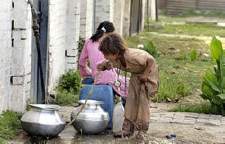
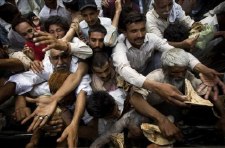
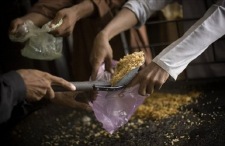
Pakistan's water crisisPakistan's water crisisData Sahib, Lahore - Food CrisisData Sahib, Lahore - Food Crisis

Specially, the water shortage issue has not been given attention it needs. If appropriate steps are not taken we could see a water shortage situation even worse than the current power crisis as soon as 2012-13. Both issues, closely inter-linked with each other, are perhaps the greatest threats facing human beings today and absolutely critical for the survival of Pakistan.


Unfortunately, the new government so far has not been doing much about it. After abruptly abandoning Kala Bagh Dam project recently and despite tall claims, no concrete plans have yet been made public that how the water shortage issue will be tackled. PPP led coalition seems to be too busy in unnecessarily prolonging judicial crisis, protecting NROs and complaining about the aftermath of Musharraf’s 9 years who btw, still has no plans to show mercy on people of Pakistan despite clear message on 18th February. There have been alarming reports by World Bank, State Bank and the UN Food Programme, warning Pakistan about the upcoming severe water shortage and food crisis. Some experts believe that Pakistan could face Somalia and Ethiopia like famine situation if drastic measures are not taken.

Water Shortage
Only a few decades ago, Pakistan was considered to have an abundance of quality water, but a recent World Bank report stated that Pakistan was among the 17 countries that were currently facing a water shortage. In most big cities of Pakistan today, people can’t get water supply at homes without using electric motors/pumps. In a city like Lahore, on average, we get water supply 3-4 hours per day and that too with the help of electric motor.

During last 10 years or so, while we have been concentrating on Peace Process, taking U-turns on Kashmir with no results, promoting people to people contacts and releasing Kashmir Singhs, everyone else around us, realizing the water crisis have been building dams. India has silently built 62 small and medium size dams on rivers which are supposed to be Pakistan’s as per Indus Water Treaty.

Similarly, China alone is building 95 major dams with a height of 200 feet or more, Turkey is constructing 51 large dams flowed by Iran with 48, Japan with 40 and India with 10 large dams. The Sindh Tas Water Council has recently warned that the country may face acute shortage of food and that the famine situation may crop up owing to the decreasing water resources. According to Sindh Tas Water Council Pakistan Chief Organizer M Yousuf Sarwar, the biggest issue between Pakistan and India after the Kashmir is river water and India is expediting the construction work of dams an barrages on the remaining rivers of Pakistan.

The past government of Pakistan did nothing in this regard to forbid India from doing this. Yousuf Sarwar said at least 405 canals and 124 distributaries of Pakistan would dry up in the wake of Baglihar Dam construction and large swathes ranging millions of hectares of land will turn arid. He cautioned that Terbela and Mangla are at the dead level for the past two decades, adding 38 million acres of land are being spoiled without having enough water. Yousuf Sarwar pleaded the new government to prevent India from constructing new dams and take resort to the world court in this connection.

According to official government reports the per capita availability of water has gradually dwindled from 5,260-cubic metres in 1951 to 1,100-cubic metres in the current years, and is estimated to reach 550-cubic metres in 2025. However, this is also because of the fact that population of Pakistan was 33.80 million in 1951 which has now increased to 170 million. If we go by the current population increase ratio, by 2025, Pakistan will require almost double the currently available water. It must also be noted that currently, only 55% of Pakistan’s total population has access to clean drinking water.

According to the World Bank, Pakistan is currently close to using up all its surface and ground water. At present, Pakistan only stores 30 days of its river water, India stores 120 days, Egypt stores 400 days, while the Colorado River in the US stores 900 days of river water. The new reservoirs will not only push Pakistan’s economy aggressively forward and according to World Bank statistics, every new dam built by the country will add four to five percent to Pakistan’s GDP. New reservoirs are also considered vital to save the industrial sector from the consequences of a water shortage. There are over half a million small and big industrial units in the country and the estimated usage of water by all industries is 3.5 million acre feet at present but this demand is also going to continue increasing in line with ambitious production targets. Yet simultaneous measures to ensure the contamination of existing water supplies by these industries are still not being given the attention they need.

Almost same is the case with energy generation. Pakistan’s electricity demand is increasing by approximately seven percent annually, due to which the need for new water reservoirs is considered urgent. It has been calculated that Pakistan has 50,000 MW of hydro-power potential, but it is merely harnessing 14 percent against its total current requirement of 20,000 MW. Most developed countries produce 70-80% of their power from water projects and our neighbors India and China about 30% which costs around 1 rupee per unit. We on the other hand, are relying more on expansive thermal power generation which is almost 8-9 times costly and also causes major environmental pollution. By building new dams, we can even further bring the per unit price down and also fulfill the needs of agriculture sector. Although, government is claiming that it is also possible to bring down thermal energy cost by making use of one of the largest coal resources in Thar but still experts are convinced that water is the most viable and cheapest way to produce electricity. And besides, given the state of the environment, it is no longer feasible for even developing countries to merely brush aside the sustainability costs of energy production. The coal resources can be utilized in the industrial sectors or even a replacement for oil. The situation is such that one doesn’t have to a rocket scientist to understand that the only way to control energy crisis and provide people with quality drinking water is to increase the water storage capacity.

Food Shortage
Food shortage is another silent tsunami and becoming a global phenomena these days. World Bank reports suggest that we are among the 36 countries where there is serious threat of food crisis. According to the World Food Programme, the number of those suffering from food crisis in Pakistan has increased from 60 million to 77 million. This is almost half of the total population of the country.

I remember as kid we used to get a lot of free stuff like tomatoes, hari mirch and dhaniya whenever we bought vegetables but not anymore. While India and China have been controlling their exports (like putting complete ban on rice export), the policy makers in Pakistan have taken outstanding decisions like last year when they first exported so called excessive wheat and then imported it back on double price. Same is expected with rise and maize.

According to the president of the World Bank Robert Zoelick the increasing prices of food items would further make things worse for the 100 million people across the world. As per his estimates within the next three years another 100 million people across the world will join the ranks of the poor due to possible doubling of food prices. He has stressed effective steps to counter the coming new international crisis. He has also stressed that the rich countries should also provide funds for the production of food crops. Under the present circumstances 40 countries are facing crisis like situation due to increase in the prices of food items. This crisis has also resulted in creating social problems.

Majority of population in a poor country like Pakistan spends 70 per cent of their income on food items. But the present situation, particularly the increasing oil prices, has badly affected their income and expenditure balance. As on one hand there is a rapid increase in the price of food items and on the other their income has stayed limited.

I had the chance to read the State Bank of Pakistan’s quarterly report published in May 2008 and it has alarming details of the danger of having a lower overall produce of important crops in the year 2008 as compared to the last fiscal year has increased. There is a danger that this year wheat production can also remain very low. Due to the reduced produce of important crops the annual growth rate would also remain less than the target. It is projected that Pakistan will have a wheat deficit of 12 million tons per annum by 2012-13 - or in other words 31% of the projected target. Imagine the seriousness of situation in human terms as if these stats are true, we will have a large number of really hungry people in Pakistan.

Experts are suggesting that oil import bill is increasing but none of the governments has ever paid attention to the mass-transit system or seriously improving public transport system which can really help us in current situation. Due to mismanagement and increase in the international prices of oil and food items countries like Pakistan are facing multiple problems. It is absolutely vital that the government took immediate measures to curb the rising inflation and address the problems of the poor people of the country.

Few weeks ago, the minister for Water and Power Raja Pervez Ashraf announced steps to control energy crisis and load-shedding which unfortunately have not been implemented at all, probably because of absence of governance in Pakistan these days. Whether another claim of the same minister about ending energy crisis by August 2009 becomes a reality or not still remains to be seen. I think without wasting anymore time, we must give more attention to water conservation and preventing water loss within the existing irrigation system, besides trying to increase water supplies. Emergency awareness campaigns should be initiated to encourage people to use water carefully and implement save electricity plans before it is too late.

Projects like the Mangla Dam Raising, Mirani Dam, Gomal Zam Dam, Subakzai Dam and Satpara Dam are simply not enough to meet the rising demands. New mega water storage reservoirs needs to be built and steps must be taken to stop India from building dams on rivers that belong to Pakistan as per Indus-Water Treaty of 1960. It is not surprising that UN keep on warning that during next 25 years, major conflicts between countries like India and Pakistan could be on water resources. As very rightly put in an editorial of a local newspaper, “Either we put pettifogging and pernicious rivalries and narrow political advancements on hold and start building dams and their associated hydro-electric works, or Pakistan is within sight of beginning to starve to death”.

References:
1. World Bank reports on Water and Irrigation system of Pakistan
2. State Bank of Pakistan Quarterly Report, May 2008
3. Weekly Pulse, Islamabad
4. Pakistan Defence


31 comments posted

Comment Pages: [4] 3 2 1 »

  1. Kaneez fatima says:
    January 13th, 2010 2:42 am

    Situation is going worst day by day. Everything is going short day by day even the single egg is available for Rs. 10. Do our govt thinks that in such a worst condition people can lead their lives. Every one knows that this Government is failed in all aspects of life. Question arises that this Food shortage is Artificial or it exists in actual? In past we have never seen such bad conditions. Our country instead of moving ahead, we are going backward day by day. If this situation will not be controlled and increase in prices will not be stop then I am afraid that we will totally collapse because 90% of Pakistan population is deadly suffering from these price hikes and load shedding. May Allah keep Pakistan for ever. My suggestion to this Govt. is please take action or resign.

  2. M.AKRAM KHAN NIAZI says:
    January 12th, 2010 6:37 am

    Environment Polluting Thar Coal Project Versus Environment Friendly Kalabagh Dam.

    It is very strange to note that present Government is advocating for Air Polluting Thar Coal Project Versus Environmental Friendly Kalabagh Dam.

    Kalabagh dam which will increase the water resources of the country is being opposed while Thar coal project,which will consume huge amount of water and will contaminate all water,air and land resources of Pakistan is being adovcated by the governement Clean electricity produced by Kalabagh dam will be available to every one citizen of the country while thar coal project will pollute all water,air and land resources of Pakistan for every one.Thar coal will effect each and every living organism while Kalabagh will not only store water for the time of need but with the generation of electricity will increase the resources of water by sucking up the underground water resources and will provide the clean electricity .
    Coal is one of the most polluting sources of energy available, jeopardizing our health and our environment. While Kalabagh Dams will have multiple advantages and will act as electricity power house,water reserevoir and floods preventor generate electricity,Store water,will improve fertility of lands.
    The Effects of Coal on the Environment.
    Coal as a source of energy is probably the most environmentally damaging of all the traditional sources of energy.
    • One must keep in mind that a typical power coal plant generates 3 million tons of CO2 or 17 tons of carbon per megawatt and draws about 2.3 billion gallons of water per annum from nearby source while on land, and coal produces mercury which not only renders water useless for human consumption but also for irrigation purpose as well.
    • Coal Power in a Warming World by Barbara Freese et al, published by the Union of Concerned Scientists in October 2008 states that “The underground mining of coal is a dangerous profession, and underground and surface mining are both highly damaging to landscapes, water supplies, and ecosystems”.
    • The Natural Resources Defense Council paper entitled “Coal in a Changing Climate”, issued in February 2007 claims that “Coal mining—and particularly surface or strip mining—poses one of the most significant threats to terrestrial habitats in the United States.”
    • Figures from “Key World Energy Statistics: 2008″ show that coal is responsible for 42% of the world’s carbon dioxide emissions.
    • “Coal in a Changing Climate” shows that coal produces large amounts of airborne toxic chemicals, including sulfur dioxide, mercury, nitrous oxides, arsenic and lead.

    Coal is a highly polluting energy source. It emits much more carbon per unit of energy than oil, and natural gas. CO2 represents the major portion of greenhouse gases. It is, therefore, one of the leading contributors to climate change. From mine to sky, from extraction to combustion — coal pollutes every step of the way. The huge environmental and social costs associated with coal usage make it an expensive option for developing countries. From acid drainage from coal mines, polluting rivers and streams, to the release of mercury and other toxins when it is burned, as well as climate-destroying gases and fine particulates that wreak havoc on human health, COAL is unquestionably, a DIRTY BUSINESS.
    On one side China and India are planning to curb the Carbon emmision by curbing the use of oil,coal and other fossil fuels,and Bangladesh and Maldives are crying for taking measures against rise of seas due to global warming and on other side we Pakistanies are planning to use Thar coal which will not only pollute the whole environment of South Asia but will infact endanger the life of peoples living in Kashmir,Northern areas,NWFP,PUNJAB and Sind as the direction of smoke and dangerous gases will be from east to north west of Pakistan.And people of these areas will suffer from respioratory diseases such as Asthma,Bronchitis and cancer, and people of these areas will suffer from dangers and adverse effects of somking without somking the cigarrets.

    Already Polluted Atmosphere of South Asia.
    South Asia is already suffering from the adverse effects of Brown cloud(Accumulation of Dirty gases in upper atmosphere of Subcontinent and is having negative effects on the heath of population of India and Pakistan ,Moreover there is already shortage of Ozone gas in the upper atmosphere of South Asia,due to which people of South Asia (India, Pakistan,Bangladesh and Sri Lanka ) are not having perfect healthy bodies as compared other reaces of the world.In view of such a bad condition of atmosphere burning the coal is just like to throw the people Pakistan into valley of death
    There are a number of adverse environmental effects of coal mining and burning, specially
    The glaciers of the Himalayas, Karakoram, Hindukush and Pamir ranges in Gilgit-Baltistan contribute significantly to the stream flow of the IBRS. More significantly, during the dry season these glaciers become the system’s only source. Impacts due to climate change on these glaciers have been studied in recent decades and vivid fluctuation of water flow in the Indus River Basin System has been reported.
    Conclusion:
    Due to flow of toxic gases and smoke from Thar Coal towards North and Western Pakistan,It is the responsibility of Jammu and Kashmir,Northern Areas,NWFP,Punjab and Sind Governments to review the adverse effects of Thar coal as it is the matter of life and death of the people of these areas.As unhealthy environment due to smoke and toxic gases will destroy the beauty of Vallies of Kashmir and Gilgit and Baltistan and will cause health problems such as cancer,asthama,bronchitis and other respiratory and genetic diseases due to environmental pollution in the people of Punjab,NWFP,Kashmir,Gilgit and Baltistan.

    Written By:M.AKRAM KHAN NIAZI.
    Karachi,Pakistan.

  3. Faisal Zia says:
    May 21st, 2009 6:08 am

    Dear all,

    How can we stop or force Goverment of Pakistan to ask India to stop thiefing our water?

    Can media play any role?

    Regards,

  4. June 14th, 2008 6:56 am

    To make this world peace ful and comfortable ,it is necessary to have justice to every one in every country,but it will never happen till the power to govern the country is in the hands of corrupt people or in the hands of agents of people who have their wasted interest.When honest and sincere people who have fear of creater almighty allah will come in power ,blesiings will be on entire humanity.Than there will be no enemity ,nor there will be shortage of any thing.

  5. Aqil Sajjad says:
    June 12th, 2008 9:34 pm

    Eidee man:
    I don’t see how the mention of nationalization that occurred more than 30 years back is a relevant fact pertaining to the present.

    The fact today is that our agricultural land is being offered to foreigners by the PPP led govt without even a debate. What they did in the past does not take away what they are doing today.

    Another fact from the past: even Bhutto’s strongest critics do not accuse him of financial corruption. But in the 1990s, we know what happened.

    Times change, people and circumstances also change. We too need to keep on updating our opinions with time instead of staying in the past. Today’s unpleasant facts that stair us right in the face can not just be wished away by referring to facts from the past.

  6. Fahim says:
    June 12th, 2008 8:14 pm

    Pakistan, like all countries affected needs to focus on conservation and use of drip agriculture….

    Water Scarcity: The Real Food Crisis
    By Fred Pearce, Yale Environment 360
    Posted on June 9, 2008, Printed on June 11, 2008
    http://www.alternet.org/story/87234/
    See also:
    http://www.independent.co.uk/environment/green-liv ing/fade-to-black-is-this-the-end-of-oil-845092.ht ml

    Fade to black: Is this the end of oil?

    And:
    Melting Asia

    Posted online: Monday , June 09, 2008
    Since 2006 the railway line across the Tibetan plateau has been carrying passengers and freight across a landscape of snow-covered peaks and tundra, antelopes and wolves. China celebrates it as one of the nation’s greatest technological feats. But some experts worry that global warming may render it useless.

    The impact of warming can be seen on a road that runs parallel to the line for much of its length. Trucks bump along its cracked and undulating surface, which is being ravaged by the freezing and thawing of the tundra beneath. Since the highway was built in the 1950s, the permafrost area has been shrinking and the layer above it, which is subject to seasonal thaw, has been getting deeper. The railway is vulnerable to the same process.

    The vast and sparsely populated Tibetan plateau is the origin of the great river systems of China, South-East and South Asia: the Yangzi and Yellow Rivers, the Brahmaputra, the Indus, the Mekong and the Salween. The Ganges rises on the Indian side of the plateau’s Himalayan rim. These rivers, fed by thousands of Himalayan glaciers, are an ecological miracle. They support some 1.3 billion people.

    But the glaciers are retreating. Chinese experts predict that by 2050 the icy area on their side of the Himalayas will have shrunk by more than a quarter since 1950. Predictions for the Indian side are gloomier still. In April a leading Indian glaciologist, Professor Syed Iqbal Hasnain, measured the East Rathong glacier in lofty Sikkim state. It appeared to have shrunk by 2.5km, or half its length, in a decade.

    The average global temperature increase of 0.6C in a century seems an insufficient explanation; but that may combine with a 3km-thick fug of pollution, known as Asian Brown Cloud, that hangs over northern India. Scientists think this haze, which is created by power stations and cooking-fires, may be radiating heat into the lower troposphere, at altitudes in which glaciers are found. Mr Hasnain estimates that Himalayan glaciers will be gone in 20-30 years. That would leave many great rivers depending on seasonal rainfall. According to the Intergovernmental Panel on Climate Change (IPCC), this may be the fate of the Indus, Ganges and Brahmaputra by 2035. Making matters worse, changes to the weather may meanwhile make the rains less reliable.

    North India has two main weather systems. In the summer, south-westerly monsoonal winds reach northern

    India, in an explosion of heat-busting rain, in late June. During the winter, westerly winds blow rain-clouds across Pakistan and northern India, watering the plains and dumping snow onto the tops of the Hindu Kush, Karakorams and western Himalayas.

    These systems are liable to change with the climate; some scientists think the Westerlies have been disrupted already. This might explain why India’s winter rains were poor this year; but May delivered a drenching. With 168mm of rainfall, Delhi had its wettest May on record. In Uttar Pradesh state, two storms killed 120 people. With seasonal rivers and sporadic rains, India’s ecological miracle would become an ecological calamity.

    Now that the American presidential race is down to two candidates who are both committed to cutting emissions, China and India, the world’s most populous nations, are seen by many as the world’s biggest climate-change problems. Russia’s economy is more profligate with energy, but China is widely believed to be the world’s biggest emitter of carbon dioxide, and India is rapidly moving up. Their exploding emissions are America’s main excuse for failing to take action itself; and their intransigence exasperates those trying to negotiate a global agreement on climate-change mitigation to replace the Kyoto protocol. Meanwhile, both countries are awakening to the problems that climate change will cause them.

    In the past couple of years, Chinese officials have begun sounding like converts to the climate-change cause. In late 2006 12 ministries helped produce a 415-page report on the impact of global warming. It foresees a 5-10% reduction in agricultural output by 2030 (a shift from previous thinking on this among Chinese academics which held that global warming might benefit agriculture overall); more droughts, floods, typhoons and sandstorms; a 40% increase in the population threatened by plague. The report also admits the possibility of damage to the Tibetan railway. Last year China published its first policy document on climate change, admitting that coping with global warming presented “severe challenges”.

    China also now admits its own contribution to the problem. Officials reacted frostily last year when the International Energy Agency, a rich-country think-tank, said China would overtake America as the world’s biggest emitter of greenhouse gases in 2007 or 2008. But the Chinese commerce ministry’s website now carries, without negative comment, an article from April this year quoting University of California researchers saying China is already number one.

    The impact of climate change on India, a hotter and poorer country, is likely to be worse. According to the Peterson Institute for International Economics, India’s agriculture will suffer more than any other country’s. Assuming a global temperature increase of 4.4C over cultivated areas by 2080, India’s agricultural output is projected to fall by 30-40%.

    Yet India’s response to this doomful scenario has been, at best, haphazard. For example, it has made only occasional studies of 11 Himalayan glaciers. It has also shown little concern for the regional political crisis that climate change threatens. As sea-levels rise, for example, the IPCC warns that 35m refugees could flee Bangladesh’s flooded delta by 2050. Yet even in India, attitudes are changing.

    Manmohan Singh, its sagacious prime minister, has formed a powerful council of ministers, bureaucrats, scientists and businessmen to co-operate on the issue. It has rarely met; yet it is part of a broader push that has sparked a flurry of climate-related initiatives: to boost energy efficiency, improve seed types, encourage forestation and so on. Given India’s historic problems with flooding and drought, many of these are built upon existing policies. Indeed, the government claims that 2% of GDP is being spent on coping with climate-induced problems. To display these efforts, and manage them better, India is due this month to unveil a vaunted policy, the National Action Plan on Climate Change.

    It will be welcome; because many consider that India is expending even greater effort on justifying its refusal to control its emissions. In particular it argues that its total emissions are relatively low (see chart 1) and that it is relatively energy-efficient (see chart 2). China uses far more energy than it does per unit of GDP; Russia, vastly more.

    The reasons for India’s frugality are not all that creditable. Almost half the population has no access to electricity. Also, India cross-subsidises power and petroleum products: farmers get cheap electricity, for instance, while industry pays more for it. This is one of many government-imposed hardships that have forced Indian firms to use power and other resources efficiently. As a result, India is one of the world’s lowest-cost producers of aluminium and steel.

    During the past four years both China’s GDP and its energy consumption have grown at an average of 11% a year. India’s GDP, meanwhile, has grown at an annual average of 9% while its energy consumption has risen by 4%. And yet, to achieve its target of long-term 8% growth, India will have to boost its power-generation capacity at least sixfold by 2030. Over the period, its emissions are expected to increase over fourfold.

    India defends this on moral grounds: its people have the same right to wealth as anyone. Indeed, given their special vulnerability to climate problems, they have a particularly urgent need for economic development. After all, a factory worker with an air-conditioner will feel global warming less than a subsistence farmer will.

    This position is also consistent with the UN Framework Convention on Climate Change, which launched the Kyoto process, and recognised that economic development and poverty eradication were the “overriding priorities” for developing countries. The Bush administration’s bid to override this principle by refusing to undertake targeted emissions cuts unless India and China accept comparable cuts has therefore caused fury in India. A senior official in the foreign ministry characterises America’s line as: “Guys with gross obesity telling guys just emerging from emaciation to go on a major diet.”

    India has entered negotiations to replace the Kyoto protocol, which expires in 2012, in the same spirit. Indeed, Chandrashekhar Dasgupta of the Energy and Resources Institute, who was involved in negotiating the Framework Convention and also the blue-print for the current negotiations, which is known as the Bali Action Plan, says it is a “mischievous mis-statement” even to speak of the protocol expiring. Indian officials consider that the negotiations are to refresh, not replace, the protocol, mainly by imposing more ambitious reduction targets on rich countries.

    This would make an IPCC target of reducing global emissions by 25-40% by 2020 unrealisable, which is why India’s negotiators insisted that the target be removed from a draft of the Bali Action Plan. Supported by other developing countries, they also watered down the draft’s most radical feature: a pledge by developing countries to undertake “measurable, reportable and verifiable” efforts to cut their emissions. At India’s instigation, the paragraph in which this phrase appeared was reshuffled, leaving its meaning unclear.

    With such tough tactics, India has acquired an ugly reputation on the global front against climate change. Among big countries, perhaps only America and Russia are considered more obdurate. Although China has shown no inclination to commit to specific emissions-cutting targets in the post-Kyoto discussions, some Chinese academics familiar with the process say that after China reaches a certain per head emissions level it might agree to cut emissions. It is anxious not to be cast as a global-warming villain, particularly given pressures mounting on it over issues ranging from trade to Tibet. China is looking to America for its cue. If America commits itself to carbon cuts, China will feel obliged to make some kind of promise too.

    Many see India as unhelpful by comparison. Almost nothing could annoy India more. Partly in response, perhaps, Mr Singh has shown some flexibility. At a G8 summit in June last year, he pledged that India’s carbon-dioxide emissions per head would never exceed developed countries’. In effect a challenge to the industrialised world to cap India’s emissions by curbing their own, this was more imaginative than has been widely recognised. And yet China is perceived to be taking the problem more seriously than India. This is partly because China is doing a lot to try to curb its energy usebut for reasons that have nothing to do with greenhouse gases.

    Jia Feng of the Ministry of Environmental Protection says the country’s chief concern driving energy policy is security. Imports supply only 10% of China’s total energy demand (70% of which is met by coal), but oil is essential for transport. Lacking the military power to protect far-flung sea lanes, China feels vulnerable.

    Next on its list of worries is local pollution caused by sulphur dioxide, atmospheric particulate matter and wastewater. Acid rain affects a third of China’s land and hundreds of thousands of people die from pollution-related cancer every year. Industrial filth has sparked protests.

    A slogan for the planet

    The government is trying to curb the use of fossil fuels and promote renewable energy. In 2006 it announced plans to cut the amount of energy consumed for each unit of GDP. The goal is to reduce energy intensity by 20% by the end of the decade. “Save energy, cut emissions” is now one of the party’s favourite slogans. Boosting energy-efficiency and the use of renewables not only helps secure energy supplies and cuts local pollution, but also helps keep carbon emissions in check too.

    Amid the recent global upsurge of climate-related anxiety, China’s leaders have spun its energy-efficiency drive as greenery. In its first published policy paper on energy, which came out last year, the government said it aimed to cut greenhouse gas emissions; and the Beijing Olympic games are to be a showcase for China’s new-found greenery. The first “carbon neutral” summer games involve solar power aplenty, tree-planting, banning many cars from the streets and “reducing emissions from enterprises” (temporarily shutting many of them down, presumably). The games, say officials, will produce 1.18m tonnes of CO2 and the countermeasures will save 1.03-1.30m tonnes.

    The energy-efficiency drive is spreading out from Beijing. Provincial leaders are required to meet “save energy, cut emissions” targets in order to gain promotion. Of 800 county-level party chiefs questioned in an official survey published in May, a surprising 40% said meeting environmental protection goals should be a critical determinant of their careers. Fewer than 2% said meeting economic growth targets should be given such a priority.

    Still, the goal of achieving a 20% reduction in energy intensity by 2010 seems a long way off. In 2006, the first year of the campaign, it fell by only 1.3% and last year by around 3.3%. To meet the target it would need reductions averaging 5% for each of the next three years. It will be hard to do this while holding down energy prices. Academics at the Development Research Centre, an official think-tank, recently said a 15% increase in energy prices by 2010 would promote “conspicuous energy savings”. But the party’s political will has its limits. For all its eagerness to save energy, it fears higher prices could stoke inflation and regime-threatening protests.

    But China is making considerable efforts to boost the amount of energy produced by non-fossil fuels. By 2020 the aim is to generate 15% of energy from renewable sources, up from around 7% in 2005. This is a big step up from the previous goal of 10% by 2020. China’s investment in renewable energy last year, about $10 billion, was second only to Germany’s.

    Still, even if China meets this target, carbon emissions will continue growing rapidly too. The biggest concern among climate-change activists around the world is the impact of Chinese coaland also Indian coal. China and India have the world’s third and fourth biggest coal reserves; though much of India’s is currently out-of-bounds, under protected forests and human settlements. Both countries are meanwhile trying to develop their renewables sectors. For example, India is the world’s fourth-biggest producer of wind power. Its solar yield is also bigger than any country except America. Still, in the coming decades, both countries will remain heavily dependent on coal.

    Which is why rich-world climate activists are placing their faith in two factors that appeal to India’s and China’s self-interest. The first is the Clean Development Mechanism (CDM), a scheme whereby companies in rich countries outsource their obligation to cut carbon emissions, by sponsoring carbon-cutting schemes in poor countries. The CDM both allows emissions to be cut efficiently, because reductions take place where they can be made most cheaply, and offers developing countries an incentive to clean up.

    China, which has put a lot of government effort into it, has done far better than India out of the scheme. Last year China made more money than any other country out of rich-world polluters$5.4 billion, or 73% of the total. India, which, along with Brazil, came second, made $445m, 6% of the total. There are, however, question marks over the future of the scheme, because some rich-world businesses and politicians are beginning to argue against handing over such large sums of money to Asia. China, meanwhile, says that it needs not just money but also clean technology, and accuses rich-countries of being tight-fisted with their intellectual property.

    The second factor that may encourage China and India to become greener is the growth of indigenous alter-native-energy companies. There, both

    China and India can claim some remarkable successes.

    China’s Suntech, which was founded in 2001, is the third-largest manufacturer of solar cells in the world. India’s Suzlon Energy is one of the world’s five biggest makers of wind turbines; 15 years ago it was a modest Gujarati textiles firm. Both countries have innovative companies hungry to make money abroad and in growing local markets. As such firms grow, so will the volume of calls for more climate-friendly policies in China and India.

    This is good. And yet, at a time of fast-melting glaciers and strange rains, of spreading deserts and rising seas, it is a frail and distant promise. As China and India awaken to climate change, few of their leaders and thinkers seem to expect a more solid solution: an ambitious replacement, or refreshment, of the Kyoto protocol. Such an accord would have to involve more specific commitments from China, India and other developing countries. But it would depend, first of all, upon binding action by the developed world.

  7. Eidee Man says:
    June 12th, 2008 7:56 pm

    Aqil,

    I don’t have a “soft corner” for the PPP; I do, however, have one for the facts. PPP is regularly accused of being protectionist by nationalizing industries, offering subsidies that perturb the almighty “free market”, etc etc . So I find it funny that now it’s being accused of selling off national resources, Shortcut Aziz style (think steel mill).

Comment Pages: [4] 3 2 1 »


Have Your Say (Bol, magar piyar say)

Please respect the ATP Comment Policy.

Keep comments on topic; no personal attacks; don't submit indecent, inflammatory, slanderous, uncivil or irrelevant comments; flamers and trolls are not welcome; inappropriate comments will be removed or edited.

If you won't say it to someone's face, then don't say it here!

Readers who want to use a URL should please use the TINY URL program.

Thanks, and keep the comments coming!