News media is ripe with indications that Pakistan is leasing its agricultural land on long terms to Middle Eastern countries. Saudi Arabia and UAE are two countries whose names are mentioned in recent news. Since the Middle Eastern countries are mostly desert lands, they are trying to buy agriculture lands in other countries where they want to grow crops and take the produce home to feed their own population.
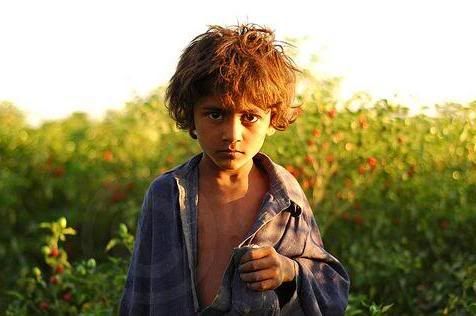
My quick question here is: Which land is going to feed Pakistani population then?
I am sure Pakistan will reap monetary benefits from any such lease of land but my concern with long term lease is what will happen few years down the road. There will be potentially millions of Pakistani to feed and our own agriculture land and archaic methods will not be enough to sustain local population’s food needs. And then in the middle of all this poverty there will be lush green pastures of foreign agricultural land; where all the latest methods of irrigation and agriculture will be used. The yields will be higher than ever but then all the food grown here will be taken away to foreign lands. Pakistan may have to buy back the food grown on its own land. For a short term monetary gain, I think this is a serious long term threat to our sovereignty. Doesn’t this situation reminds us of famous Allama Iqbal verse ‘jis khet se….’.
Over Reaction?
My paragraph above may seem over dramatization as one can argue what does it matter if we sold few acres of land here and there. To this I would say, my concern is for long term. Sale of few acres today can set the trend where more and more land will be bought by foreign countries. By the way few acres of today are not so few either. 500000 acres of agricultural land, located in all 4 provinces of Pakistan, is in negotiation with the Kingdom of Saudi Arabia. Once this land is leased or sold, will we ever be financially strong enough to buy back this again? Looks difficult, right! That is my concern. 0.5 million acres of land leased today will be gone for 99 years with more and more acres to follow.
Can there be a win-win solution?
If a foreign country comes to Pakistan, invests in our irrigation system, teaches local farmers methods of improved agriculture and buys produce from Pakistani farmers, then I believe it will be a better option than selling or leasing our land to other countries for short term profit.
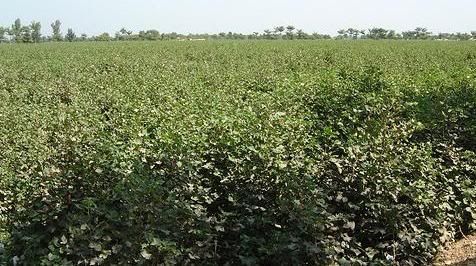
Related News Story:
Here is a recent Dawn news story on the subject:
DUBAI: Saudi Arabia is in talks with Pakistan to lease an area of farmland nearly twice the size of Hong Kong in a bid to ensure food security, an official from Pakistan’s ministry of agriculture said on Tuesday. Gulf Arab states, heavily reliant on food imports and spurred on by a spike in prices of basic commodities, have raced to buy farmland in developing nations to guarantee supplies.
Over the past few weeks the Saudi government has been in talks with us to lease 500,000 acres (202,400 hectares) of farmland and we are currently in the process of locating which land we could give them, Tauqir Ahmad Faiq, regional secretary at the ministry of agriculture, said in an interview. In April, Pakistan said it would offer foreign investors one million acres of farmland for lease or sale and deploy special security forces to protect it. The land we will provide Saudi Arabia will be divided among the four provinces and they will be using it to grow a variety of produce such as wheat, fruits and vegetables, Faiq said by telephone from Lahore.
We are expecting a Saudi delegation to arrive after the month of Ramadan to further discuss the deal and see the land, but there is no set date when the deal will be signed. Saudi Arabia, which consumes 2.6 million tonnes of wheat a year, is abandoning a project to produce the grain domestically as water supplies run dry. Faiq said Pakistan had been approached by other Gulf players. “We have also received offers from a Qatari private investor to buy land, but nothing is final yet,” he said. He declined to give further details.
Critics have accused wealthy nations of making land grabs in developing countries and there has been increasing opposition to such deals from farming communities. In April, concerns over farmers’ rights led the government of Pakistan’s Balochistan province to block direct deals between United Arab Emirates-based private investors and farmers. The United Nations expressed concern in April that farmers’ rights in developing nations could be compromised as rich countries buy farmland. -Reuters
Photo Credits: Ameer Hamza and travel1jc
Article on Relevant Topic: ATP contributor Roshan Malik writes on Corporate Agricultutal Farming (CAF).




We already export agricultural products to Saudi Arabia. May of these exports are rejected because of fraudulent practices, or lack of quality control, or inability to control certain types of pests. We end up losing agricultural export business to other countries.
Leasing of farmland to, say, KSA, should down the road, involve much better farming practices, at least, the contract / lease language, should encumber the lessee with responisiblity to develop local infrastructure and care for the local population.
It is worth remembering, that the much critisized, motorway project, despite its negatives, ended up having one huge positive. Pakistan was introduced to the standards a good road/highway should be built. Expertise was developed within pakistan to carry out similar, but smaller projects. Many quality subcontrating companies were established. Today, the quality of highways/roads being built in pakistan is much better than it used to be in pre-motorway days, when a local contractor would built a highway only to be washed away in the next rains.
A corporate type quality agricultural infra structure which fairly takes care of people working there, may set a positive precedent, if it in itself is not exploitative. My personal opinion is that nothing can be more exploitative, than the current, wadera hari system anyways.
500,000 acres, is not a big number, especially if divided among four provinces. We should know, that because of the system that we have, the productivity of land use, it far below international standards anyways. I am hoping a scientific system of land use is pioneered here, which may become the benchmark for other big land owners.
Needless to mention, some of the big wadera families own upto 100,000 acres, but the motiviation for an individual or a family, in the pakistani feudal society, to maximize the productivity and care for the development and well being of the people working in the fields is minimum.
Collective farming has been tried in the past in pakistan, but because of a plethora of reasons did not take off. I am hoping this venture brings the best of corporate type farming with emphasis on community development. I donot fear an ‘East India’ type repetition because or current international laws and system. I do see a potential of agricultural system reform.
However, the biggest fear I have, is that, even if the land is leased, the feudal political elite, through lease terms, bind the lessee in a way that this development does not happen.
I’m from farmers family always heard from my elders farm land is like mother take care of it respect it and don’t sell it under any circumstances reading this post have really put a chill through my spine.
How could we can even think of doing something like this reckless if we let them get away with this I’m afraid it will have permanent terrible ramification.
This remind me re making of “East India Company” De Ja Wu.
I can’t write this in any fancy way simply put if this blunder goes through we will never be able to sustain as a independent nation.
Eidee Man–No, there is no precedent for any of this, but we are entering an unprecendented era of human history. Before, we were only able to destroy our environment on a small scale, and that too in friendly climates.
Never before has there been the possibility of millions of people living in deadly harsh environments (like Saudi or UAE) through the aid of technology and being able to import all of their food and water.
Nor has there been the possibilty of leasing out huge lands to support these bubble-like colonies of people.
Who knows what will happen? Will the people native to these regions violently reclaim their resources, leaving the millions of Dubai residents and retirees in Arizona (to give two disparate examples) to either move house or perish? Will the “owners” of the food and water simply slaughter the suffering poor with mercenaries to ensure their own survival?
And Sajjad–the Saudis, following labor laws? You are kidding, right?
Personally, I envision a hopeful future in which education and sense will prevail–the population peaking about the year 2030 at 10 billion, and then declining as the 20th century birth explosions–fueled by the green revolution and the discovery of penicillin–fade into history. New antibiotic resistant viruses and bacteria will help to restore balance, although of course this will be tragic for the individuals stricken. Some previously settled areas will become barren, but deserts will not become massively greater, and slowly people will return to the land as industrial agriculture runs its course and people seek greater yields through personal care of the land, double cropping (which can’t be done by machine), and so on. More food, less people, wise use of water–we can do this.
If this doesn’t happen, then the “behavioral sink” theory comes into play–increasing numbers of people, living in increasingly worse conditions, turning on each other until finally something causes the population to crash like a that of a hayfield overrun by voles after a good summer–a war, or a disease, and so on. You know the routine–after the good year, the voles are literally jumping out at your feet, there are so many–and the next spring there are none to be found, because the population has gone into catastrophic collapse thanks to the pressure on the field, which cannot support that level of growth. This happens very dramatically with locusts, too.
Since we can’t predict exactly what will cause the crash in the case of people, or how extensively it will affect us, we imperil our whole existence on this planet with this outcome (not to mention the needless suffering involved). Better to avoid it if at all possible.
Getting back to the smaller picture, 99 year leases to Saudi are of course a terrible idea, once you start thinking of ways the Saudis might enforce their claim to this land. It doesn’t surprise me that your politicians are considering it, since it lines their own beds ever more downily, but it is very tragic for your country no matter how you slice it.
It’s a stupid idea. This can only benefit politicians , especially the present lot whose only aim is to loot as much as possible befere they are booted out. Greasing palms is nothing new to the Saudis nor to us Pakistanis. Just like someone else asked in one of the above comments, why did the Saudis have to ask ARAMCO to leave?
There are two ways we can see it, good or bad.
– Farmers will earn good money from their new masters as they will atleast follow some labour laws.
– Landlord mafia will raise the agriculture commidity prices taking full advantage of resulting business envorinment.
– Exporters will have no problems exporting grains and rice to middle east using their cover. that just means we will sell the whole country to them.
you know what i mean…:)