Adil Najam
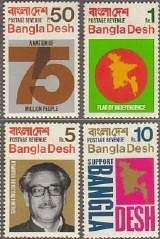 As the fourth part of our series on the events of 1971, we are reposting this post which was first published at ATP on December 16, 2006. We are reposting it with all the original comments since they, as a whole, are very much part of the conversation we all need to have with ourselves. The previous three parts of the series can be read here, here and here.
Today is December 16.
Today Bangladesh will mark its 35th ‘Victory Day.’
 Most Pakistanis will go about their lives, not remembering or not wanting to remember. We should remember – and learn – from the significance of this date.
Not because it marks a ‘defeat’ but because it marks the end of a dream, 24 years of mistakes, horrible bloodshed, traumatic agony, and shameful atrocities. The constructed mythologies of what happened, why, and who is to be blamed need to be questioned. Tough questions have to be asked. And unpleasant answers have to be braced for. We need to honestly confront our own history, for our own sake.
But right now, the goal of this post is different. We at ATP just wish to extend a hand of friendship to our Bangladeshi friends. May the memories we make in our future be very different (and more pleasant) than the scars we carry from our past.
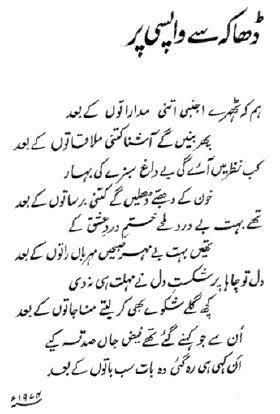
There is much – too much – that I wish to say; but cannot find words for. So let me do what I always do when I am at a loss of words. Let me quote Faiz Ahmad Faiz, who in his memorable 1974 poem ‘Dhaka say wapsi par’ (On Return from Dhaka) expressed what I wish to say so much better than I ever could.
We share with you here the original poem in Urdu, a version in ‘Roman Urdu,’ a wonderful English translation of the poem by the late Agha Shahid Ali in his book The Rebel’s Silhouette
ham ke Thehre ajnabi itni mulaaqaatoN ke baad
phir baneiN ge aashna kitni madaaraatoN ke baadkab nazar meiN aaye gi be daaGh sabze ki bahaar
khoon ke dhabe dhuleiN ge kitni barsaatoN ke baadthe bahut bedard lamhe khat’m-e-dard-e-ishq ke
theiN bahut bemeh’r subheiN meh’rbaaN raatoN ke baaddil to chaaha par shikast-e-dil ne moh’lat hi na di
kuchh gile shikwe bhi kar lete manaajaatoN ke baadun se jo kehne gaye the “Faiz” jaaN sadqe kiye
an kahi hi reh gayi woh baat sab baatoN ke baad
After those many encounters, that easy intimacy,
. we are strangers now —
After how many meetings will we be that close again?When will we again see a spring of unstained green?
After how many monsoons will the blood be washed
. from the branches?So relentless was the end of love, so heartless —
After the nights of tenderness, the dawns were pitiless,
. so pitiless.And so crushed was the heart that though it wished
. it found no chance —
after the entreaties, after the despair — for us to
. quarrel once again as old friends.Faiz, what you’d gone to say, ready to offer everything,
. even your life —
those healing words remained unspoken after all else had
. been said.





The real Pakistan movement started from the EAST , Everyone in the WEST rejected the idea of Pakistan and welcomed Quaid e Azam as Kafir e Azam in the beginning…. and the end is that Pakistan did split.. Even geo tv today presented the most biased report on the tragedy of 1971. As a nation until and unless we recognize our wrong doings we will never find a solution… at this moment in time I would also like to post this link of the stranded pakistani refugees in Bangladesh, who were refused the right to come back to homeland due to *unjabipun again! please spread their concern and bring them home where they belong… also a few thousand did come back in 90s to be relocated in Punjab and a punjabi here was not so happy about that because he himself sees superior to biharis who according to him don’t deserve to comeback (since they were part of concpiracy! yeah rite)….
http://youtube.com/watch?v=yekWLAIThqI
Salam!
First i liked Saadia Khans comments and MQs reply! Its a sorry tale our army made blunders people like ayub khans mentality that we are stronger than india!we always kept lookin at india and they toward us!an result we both are nuclear powers with people powerless!a military in power and a bunch of corrupt politicians either looming in KSA or UK an some sitting with the A{ngel}rmy Chief!
We never scrutised Yahya,Ayub Khan and yet we put blame on bhutto and General Niazi!the mere puppets in the events!my father was a POW in 1971 and he used to tell us the plight of east pakistan!Mujib was an opportunistic infection and was put in front by our indians coz we gave them fertile land to operate by not giving our brothers their right and an identity!so they got into the trap of ethnic politics(they are not to blame )yet we never prosecuted the corrupts,Hamood Ur rahman commision report never came up as Army is outta definition of scrutiny!its wasnt “udher tum ider hum” a slogan that thru our pakistan studies we thout led to the tragedy,but it was our 10 years of Martial Law that led to this!
We are a nation!we separated on religious grounds an thats true a reality so we have to build our selves not to get another 71 an how we gonna do it is by the youth gettin into politics and fighting the corrupt not just sitting an saying”yahan ka system he kharab ha”no one will coem to rescue us!with all tragedies its good that we have some God fearing people in society that are working for the nation!Pakistan was,is and will be a reality!stop comparing oursleves with india !
We have to make a strategy to become something an then look an take world by both hands!like the economics giants have done they built themselves by virtue of their hardwork not by putting blames and igniting flames as we did!
I had a Bengali friend in med college in pakistan who said that 45% people in bangladesh thout 71 was wrong imagine after wat we did they still think they were better with us!witha ll atrocities its becoz we have a common thing a religion!i feel sad when i used to see my fathers face when he used to talk abt east pakistan!i wish we had given them all they wanted an i mean wat people wanted not the politicians!
Learns by the mistakes rather than by experiencing them!!
i wish bengali brothers happy life as i know wat goes thru their heart and soul!
Omer, Thanks for setting the record straight. Couldn’t agree with you more on each one of your points.
Nice post and interesting comments. There isn’t much left to comment on except to reiterate that Pakistan’s younger generation must know what Pakistan was 59 years ago, geographically, demographically and idealogically.
Our history has been forgotten or is being re-written by self serving thugs who rule Pakistan. Most people from the younger generation and some from my generation (second generation Pakistanis) don’t regard East Pakistan important nor do they have any grasp of emotion, sense of history or interest in the sacrifices of our forefathers. My heart fills up and I get tears in my eyes when I think of 1971 but I am encouraged to know that there are so many others.
I disagree with those who compare problems of Sindh in the last two decades and Balochistan in the last three with those of East Pakistan. East Pakistanis had a higher literacy rate than their West Pakistani counterparts put together, were more democratic and culturally advanced. Yet two of the most prominent freedom movement leaders (including many others) from that province were labelled traitors in the 50’s. These founding fathers were mistreated by successive governments of West Pakistan starting with that of the despot GM. There’s more to write but those who know, know. No point in wasting space here. Point being, parallels must be carefully drawn, when that doesn’t happen, history is misunderstood, rather negated and belittled.
The bloody separation of East Pakistan will forever remain a scar in our hearts and minds. Those who sided with the Western wing have also been forgotten, today they rot in refugee camps while we host 2.5 million ungrateful Afghans who have destroyed the fabric of our society. We run after Kashmir when managing the remains of Quaid’s Pakistan is a challenge. History must not be forgotten or distorted.
Once again Adil sahab, thanks for evoking these emotions :)
Saadia,
I think the post-Bangladesh generation of Pakistanis need to recognize a few things:
First, we don’t have to prove anything to Indians. We should learn to think and act independently of India in our own interest. We are an independent nation, after all.
Secondly, I doubt if there are any mainstream Indians who consider Pakistan as “zero” and would still want it to merge with India. I think those kind of Indians have become extinct just like those Pakistanis who once talked of hoisting the green flag on Red Fort. (Your “Indian friends” that you have been arguing with must be a rare breed.) Remember when prime minister Vajpai took a bus from Delhi to Lahore (was it 1998?)? He especially went to Minar-e-Pakistan to give a symbolic message to Pakistanis that he recognized the division of India. And don’t forget, Vajpai was head of a right-wing Hindu political party, a counterpart of our MMA. What else should India do to prove that it recognizes Pakistan as an independent entity?
Why Pakistanis never talk of getting Bangladesh back physically? Because they simply cannot. And, they have their plate full with so many other things. Don’t they?
Why there has been no war between Bangladesh and Pakistan since 1971? Just look at the map and you will have the answer. Incidentally, there has been no war between India and Bangladesh either even though they have a common border and some mutual problems.
Why don’t we still call Bangladesh East Pakistan? Simply because, if we do, no one will take us seriously.
Nevertheless, you can find several reasons to salute Pakistanis other than that they are not trying to claim East Pakistan back.
I am sorry if I sounded as if I was lecturing. I didn’t meant to. But I feel the younger Pakistani diaspora need to recognize that a lot of water has flown down the Indus, Ganges and Brahmaputra in the past 36 years.