Adil Najam
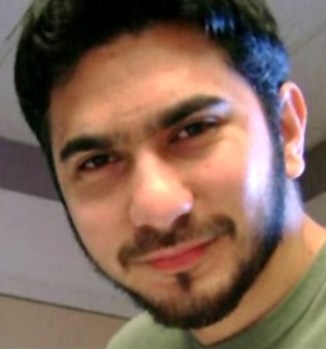 Pakistan-born and recently naturalized US-citizen Faisal Shahzad has been identified as and arrested for being the man behind the failed car bombing attempt in New York City.
The media in the US as well as in Pakistan is abuzz about him and information pours in so fast that it is very difficult to keep track of it. In these moments of information overload – when we know much and understand little – at least a few things should be clear to all and beyond dispute: the bombing attempted in New York City was heinous in intent and we should all be thankful that it was neither well-planned nor well-executed and the mayhem and murder that was intended was averted.
Authorities in Pakistan have done the right thing by assuring US authorities that they will cooperate fully in any investigation of this incident. Pakistanis in America should do the same. More than that, we need to be thinking about what happened here, and why. If, indeed, Faisal Shahzad was the man behind this attempted terror attack he may have (thankfully) caused no actual damage to New York City but he could deeply mutilate the reputation and self-confidence of the Pakistani community in the United States. One hopes that just as the citizens of New York did not let the car bomb blow up, Pakistanis in America will not let him destroy the self-confidence that this community has been so painstakingly reconstructing since the tragedy of 9/11.
Even as new information flows in and pieces of the puzzle get put in place there are going to be many important questions about exactly what happened when and how and why some of this does or does not fit into expected patterns. All of these are important – even critical – questions. But equally important – and critical – for Pakistanis in America is the need to begin understanding what all of this means for them, now and into the future. Let us not shy away from the tough questions that we need to ask ourselves. But let us also not be more tough on ourselves than we need to be. Let us work very hard to understand how someone from amongst us could even contemplate such a horrible act. But let us not let the horribleness of this contemplation lead to the condemnation of an entire community. Let us understand him for what he is accused of being: a criminal; let us condemn him for what is charged with having done: criminality; but let us not allow his alleged criminality with our own identity.
As one does all of this and navigates through the flood of information, here is a sampling of some important insights into who Faisal Shahzad is, excerpted from The New York Times:
Mr. Shahzad was born in Pakistan in 1979, though there is some confusion over where. Officials in Pakistan said it was in Nowshera, an area in northern Pakistan known for its Afghan refugee camps. But on a university application that Mr. Shahzad had filled out and that was found in the maggot-covered garbage outside the Shelton house on Tuesday, he listed Karachi.
Pakistani officials said Mr. Shahzad was either a son or a grandson of Baharul Haq, who retired as a vice air marshal in 1992 and then joined the Civil Aviation Authority.
A Pakistani official said Mr. Shahzad might have had affiliations with Ilyas Kashmiri, a militant linked to Al Qaeda who was formerly associated with Lashkar-e-Taiba, an anti-India militant group once nurtured by the Pakistani state. But friends said the family was well respected and nonpolitical.
“Neither Faisal nor his family has ever had any links with any jihadist or religious organization,†one friend said. Another, a lawyer, said that “the family is in a state of shock,†adding, “They believe that their son has been implicated in a fake case.â€
Mr. Shahzad apparently went back and forth to Pakistan often, returning most recently in February after what he said was five months visiting his family, prosecutors said. A Pakistani intelligence official who spoke on condition of anonymity said Mr. Shahzad had traveled with three passports, two from Pakistan and one from the United States; he last secured a Pakistani passport in 2000, describing his nationality as “Kashmiri.â€
…According to immigration officials, Mr. Shahzad arrived in the United States on Jan. 16, 1999, less than a month after he had been granted a student visa, which requires a criminal background check.
He had previously attended a program in Karachi affiliated with the now-defunct Southeastern University in Washington; a transcript from the spring of 1998, found in the garbage outside the Shelton house, showed that he got D’s in English composition and microeconomics, B’s in Introduction to Accounting and Introduction to Humanities, and a C in statistics.
He enrolled at the University of Bridgeport, where he received a bachelor’s degree in computer science and engineering in 2000, followed by a master’s in business administration in 2005.
“If this hadn’t happened I would have long forgotten him,†said William Greenspan, Mr. Shahzad’s adviser as an undergraduate. “There are a lot of students you get to know; they call you up once in awhile to say hello, they got a nice job. After he left U.B., I never heard anything from him.â€
In January 2002 Mr. Shahzad obtained an H1B visa, a coveted status meant for highly skilled workers and good for three years, with a possible extension. Records show that Elizabeth Arden, the cosmetics giant, applied for a visa around that time for a job similar to the one he had there in 2001, arranged through a temporary employment agency called Accountants Inc., according to a timecard found in his trash. Officials at the cosmetics company refused to comment.
In 2006, Mr. Shahzad took a job as a junior financial analyst at Affinion Group in Norwalk, a financial marketing services company. Michael Bush, the company’s director of public relations, said Mr. Shahzad resigned in mid-2009; government officials said he was unemployed and bankrupt by the time of his arrest.
After his marriage, to Huma Mian, he petitioned the immigration agency in 2004 to change his status; he wanted to become a permanent resident, another step on the path to citizenship.
Ms. Mian had just graduated from the University of Colorado at Boulder with a business degree, according to Bronson Hilliard, a university spokesman. She lived in dormitories and in family housing, sharing her quarters with a sister or a cousin, Mr. Hilliard said.
Her parents lived in the Denver suburb of Aurora. A neighbor in their condominium complex, Johnny Wright, remembered that her new husband had visited the family only once before she joined him.
“He seemed educated,†Mr. Wright said. “Didn’t make a lot of conversation.â€
And, finally, a particularly well-reasoned reflection on Faisal Shahzad and what his case means to his adopted country; from Steve Coll in The New Yorker:
Providing an accurate e-mail address to the seller of a vehicle you intend to use as a murder weapon is the sort of mistake that might get a person’s membership card pulled down at the terrorist union hall. No doubt Faisal Shahzad, the man arrested in the Times Square car bomb case, is having a bad day. It will probably get worse if he spends time in his holding cell reflecting on the trail of breadcrumbs he apparently left behind while planning what the evidence available so far suggests was the only act of violence committed during his young life as a U.S. citizen. If not for that e-mail address, Shahzad might already have stepped off an airplane in Karachi, ready to melt away into Pakistan.
Terrorists are adaptive, self-correcting, and cunning—except when they aren’t. For all of his alleged error-making as an individual, however, Shahzad’s case may actually reflect on how Pakistan-based jihadi groups have learned to protect themselves. According to news reports, Shahzad spent several months in Pakistan before returning to the United States. This would make him one of at least half a dozen U.S. citizens or residents to travel to Pakistan as alleged volunteers during the last several years.
Last week, before the Times Square incident, I was talking with a former U.S. intelligence officer who worked extensively on jihadi cases during several overseas tours. He said that when a singleton of Shahzad’s profile—especially a U.S. citizen—turns up in a place like Peshawar, local jihadi groups are much more likely to assess him as a probable U.S. spy than as a genuine volunteer. At best, the jihadi groups might conclude that a particular U.S.-originated individual’s case is uncertain. They might then encourage the person to go home and carry out an attack—without giving him any training or access to higher-up specialists that might compromise their local operations. They would see such a U.S.-based volunteer as a “freebie,†the former officer said—if he returns home to attack, great, but if he merely goes off to report back to his C.I.A. case officer, no harm done.
Whatever the narrative behind Shahzad’s case turns out to be, we can take solace that we will hear it in a court of law. Amidst the country’s often self-defeating search for a justice system to address terrorism, his is not a particularly hard case—a U.S. citizen arrested on U.S. soil for a crime against Americans carried out in New York. We can nonetheless look forward to “The Daily Show†clips showing cable television anchors railing about the Obama Administration’s failure to recognize him as a warrior. Fortunately, like one of those Eleven O’clock News bank robbers who tries to rob an A.T.M., only to topple it over on himself, Shahzad’s case may help to illuminate a truth larger than himself: Terrorists are criminals, and the great majority of criminals are prosaic.




@Sridhar, I am sorry despite your (very uncharacteristic, given other Indian comments) politeness I cannot make sense of your long comment. But I don’t see a point in debating this because India is irrelevant to this post… THIS IS ABOUT NEW YORK AND PAKISTAN, not sure where India or Indians get into this. Maybe you are right and TO INDIANS these arguments make sense, to the rest of us its just a diversion away from the real issue.
But be that as it may, your deceptive tactics of trying to change the topic are really below the belt for anyone who lives in New York and really is disrespectful. What is the point of the Lashkar-i-Tayaba comment. The comment from Adil Najam does not mention it one way or other, let alone defend it. That quote is from the New York Times and clearly not a defense of the Lashkar. What you and your other friends from India are really saying is quite clear: stop worrying about what happened in New York and worry about us in India. Isn’t that a tad distasteful.
P.S… to be fair, we also have people who apply the same diversinary tactics, always trying to change the topic to something else. For example, look up a person called Adnan Siddiqi who shows up here often to troll away just as you Indians are doing on these posts!
The incident involving Faisal Shahzad is bad news for Pakistani Americans in particular, but all immigrants in the US in general. First, he exposed the limits of what law enforcement and intelligence can do to prevent attacks on major population centers. It seems that open societies such as the US will continue to bear considerable risks for some time to come. And this of course affects all Americans, including all immigrants, who bear that risk. Second, if the US tightens its immigration policies and moves away from civil liberties, all of us who are immigrants in the country have the risk of being affected.
Many commentators here have expressed anguish at Indian commentators’ presence on this thread and what they have said related to this issue. Perhaps some of the comments have been insensitive. However, what you may decry as as gloating is not that hard to understand. For decades, India and Indians have borne the brunt of officially sponsored terrorism from Pakistan. It would be disingenuous to get into an “I am ok, you are not” mode and pretend that Pakistan is the sole cause of this problem. Mistakes were surely committed within India, both by the Indian state and citizens in various capacities and at least some of the terrorism would have happened without patronage of the Pakistani state. However, it is also undeniable that the magnitude of the terrorist problem in India would have been small and it would have been short lived without that official patronage from Pakistan. For years, people died in India at the hands of terrorist organizations officially supported by the Pakistani Government, and that openly collected funds that ordinary Pakistani citizens willingly contributed to. I did not see any Pakistani coming forward to say that this was wrong, not until 911 and subsequent events forced their hands anyway. Even so, many people worried about the bad image it created about Pakistan and not that it was inherently wrong to support terrorists.
Even today, there is denial of the continued official support to anti-India terrorist groups. For instance, somebody of Adil Najam’s stature and standing is not willing to call a spade a spade. I am disappointed that he pretends in this post as if the Pakistani state establishment’s support to the Lashkar-e-Tayyaba is a thing of the past, despite blatant evidence to the contrary. Everybody knows that no significant leader of any terrorist organization that is aimed against India (or Afghanistan) but does not threaten the Pakistani state will be touched or even reined in. And yet, people will pretend that it has nothing to do with the Pakistani state institutions and that these are non-state actors. The oft-cited comment is that Pakistanis have been targets of terrorism to a very great extent. That is true. But the organizations and individuals that threaten Pakistan are not the same as the ones that threaten India (or Afghanistan). And the latter continue to be nurtured even as Pakistan uses force to destroy the former. There are a few who speak out against it, but most who are in a position to do so do not.
So it is understandable if Indians feel relieved that the world is seeing what they have seen for two decades or more. That the Pakistani state institutions, particularly its military are part of the problem if not the main cause of it. I cannot speak for all Indians, but I doubt that any of the commentators would be happy at the loss of any life in NY city or anywhere else. But they would be happy if the world comes around to the view that this issue needs to be dealt with at the root. Which is to reform the Pakistani military and its associated institutions. And importantly, that would be in the best interests of the Pakistani people too – though it is for them to decide what is good for them.
Speaking for myself, it gives me no joy to see anybody else suffer due to this incident. Being gleeful at this is surely stupid and short-sighted even if one ignores the immorality of it. If the US swings towards the right and/or clamps down on legal immigrants, all of us, not just those of Pakistani origin would suffer. However, it is my view that while the Pakistani military is not the sole cause of the terrorism problem the world faces, it is certainly one of the bigger facilitators of it. Indirectly in some cases, and directly in others. And unless the institution is overhauled, we have no chance of solving the problem of terrorism around the world. Ultimately, only the Pakistani people can decide if this would be in their best interest, but I certainly believe it is.
From everything I can make of this, I think we will find out that this guy went bonkers because of the financial crisis and when he lost his job and his house went to foreclosure and that is what drove him to the edge. All the Fox and CNN guys are so caught up in the whole Taliban business that they are missing that part of the story entirely.
…but he could deeply mutilate the reputation and self-confidence of the Pakistani community in the United States.” – I think its is a bit too late for that. Not just in the US, all around the world Pakistanis are regarded as trouble makers/terroists. This is sad but unfortunately Pakistanis are continuing to proove their critics “are right”. What Pakistan needs is a long term plan focused on educating the children. Parents in Pakistan should be banned from having children unless and untill the parents can proove that they can afford to give each of their children an “education”.
yaar, iss kaminay nay tou meairay mulk ka aur mera apna naam matti meiN paleet kar diya.