Adil Najam
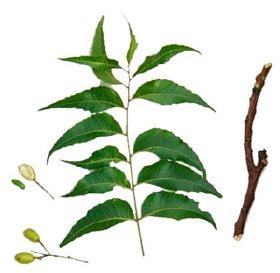 It seems that the United Nations has declared Neem (Azadirachta indica) as “The Tree of the 21st Century.” I should confess that I have not been able to find an official reference to such a proclamation (especially since I was not aware that the UN would officially make such a pronouncement) but I have now found multiple references of such a designation on ‘Neem-friendly’ websites. If it is, in fact, official; I am very glad because I am a huge fan of this fantastic tree. Even if it is not, that does not take away anything from the tree, which remains deserving of acclaim and recognition. Most importantly, I am happy that it is finally getting the recognition in this century that was so hard to come by in the last century.
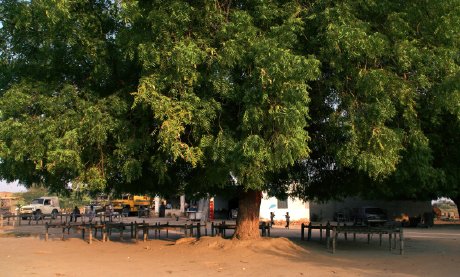
I am specially happy because Pakistan and Pakistanis (amongst others) had a lot to do with getting the one lowly Neem tree the prominence that is is now enjoying.
Of course, the most obvious and important Pakistani connection is that the Neem tree is indigenous to Pakistan and adjoining regions (India, Pakistan, Indonesia, Malaysia). Its new-found reputation as a wonder tree full of medicinal benefits comes largely from how it has been used for ages in this region, and its reputation as “nature’s pharmacy” comes precisely from the fact that is exactly how people in Pakistan and India have used it for ages.
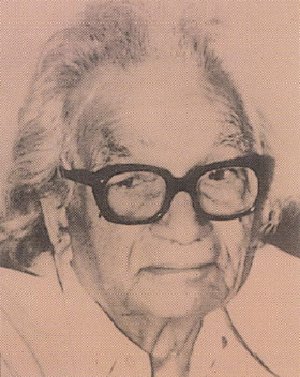 But if there was one person more than all others who worked tirelessly to explore, document and propagate the scientific and medicinal properties of every part of this wonder tree – seed, root, leaf, bark – it was eminent Pakistani scientist, Dr. Salimuzzaman Siddiqui. I recall vividly how, in my only meeting with him, his passion was so very evident – not only for the Neem tree but for the wonders of scientific research. I met him in the late 1980s, by which time he was already in his 90s. Yet, the passion was alive and evident even then, and it remains my most enduring memory of him.
As I looked at various Neem sites today listing all its benefits (some, obviously over-stated) I was reminded of Dr. Siddiqui: how Neem has many wonders in it, and how it can do many things – even if it cannot do everything that its fans credit it for – but it is for us and science to figure out through research what it can do and how we can best benefit from it.
Dr. Salimuzzaman Siddiqui was a tireless advocate of Neem and its many uses well before it became fashionable to be so. Indeed, my sense is that it was his ground-breaking early research that enabled others to build upon his foundations and encouraged others to follow his lead. Today there is a mushrooming (apologies for the mixed metaphor) research on Neem, but as one of the early pioneers who developed a systematic program of research around the Neem, Dr. Salimuzzaman Siddique deserves high praise for his scientific work in this area.
That pioneering work has been taken forward by other scientists and by environmentalists and environmental organizations in Pakistan and just about a year ago, in March 2010, the government of Sindh designated Neem as the official tree of Sindh. Indeed, another fan of the Neem tree is President Asif Ali Zardari, who had a Neem tree planted at his residence (please, lets keep the politics out of this one). In fact, some insight into Mr. Zardari’s own passion for the tree was provided in this October 2010 speech he made at an international conference on climate change and development, at which I had also spoken:
… when I was in prison, I would plants Neem trees or I would plant fruit trees and I had the opportunity of tasting the fruit of trees that I had planted in prison. So it is a change from within. It is what I plant in my home and what I do with my environment around me. It is what trees I select. For example when I was the chairman [of the Pakistan Environmental Council] we made Neem tree the tree of Pakistan and till to date in our government the neem tree is what I am hoping and always bring the awareness to the world on.
There are two dimensions to this tree. A, it gives you anti-pollution, secondly the wood is very non-productive for the environmental thieves that we have all around the world. (Read full speech here).
But this is not about Mr. Zardari or his speeches. This is about celebrating the Neem tree. A tree that clearly needs to be celebrated. I hope it will also get more research from a new generation of Salimuzzaman Siddiquis.




Your recollection of meeting Dr. Salimuzzaman Siddiqui in his 90s makes the history of Neem research feel personal. I also appreciate the caution about the United Nations designation and exaggerated medicinal claims. The phrase draw the border came to mind when you distinguished the tree’s documented potential from everything enthusiasts attribute to it. Sindh naming Neem its official tree in March 2010 seems a fitting recognition of that long scientific and cultural connection.
The memory of Dr. Salimuzzaman Siddiqui still showing such passion in his 90s makes the research story especially vivid. I also appreciate the caution about the United Nations designation and exaggerated medicinal claims. Sindh choosing Neem as its official tree in March 2010 seems a more concrete recognition to celebrate. Thinking about a project like Noillirk, that same distinction between an appealing label and documented substance feels useful: enthusiasm should lead to questions and evidence.
Your memory of meeting Dr. Salimuzzaman Siddiqui in the late 1980s makes the research story particularly vivid. I appreciated the distinction between Neem’s documented potential and the sweeping claims made for it, including the uncertain United Nations designation. Seeing familiar things with fresh curiosity is something I’ve been thinking about since coming across sprunki phase 5, too. The March 2010 decision to make Neem the official tree of Sindh was a detail worth learning.
The discussion of “Neem: The UN’s Tree of the 21st Century, Salimuzzaman Siddique, and Asif Ali Zardari : ALL” makes the main point easier to follow, especially because it connects the subject to details readers can recognize on the page. The explanation stays focused without losing the practical context. For anyone comparing related information, is elyprismlauncher safe may also be a useful reference to keep alongside this article.
I appreciate the careful distinction between the Neem tree’s long history in Pakistan and claims that still need an official source or more research. Dr. Siddiqui’s persistence gives the story a human thread beyond the plant’s reputation. A short environmental video could follow that thread from regional streets to spaces that deliberately include greenery, even a hotel lobby. For the latter scene, https://airapduo.io/hotel-lobby-ai could help explore a calm sound without making medical claims about the tree.