Syed Ahsan Ali
 When a newspaper editor told me to do a piece on tour of Zimbabwe cricket team to Pakistan for five limited over internationals before we get to the serious end of the things when Australia is scheduled to play a three Tests and five ODI s series in Pakistan in March-April, 2008, I was little surprised at the fact that there are still some Pakistanis out there who want to peek into what is going into Pakistan cricket these days.
In the photo above Timycen Maruma is cleaned bowled by Yasir Shah during Patron’s XI v Zimbabweans match at Karachi.
After a four day match in Karachi, which the local side convincingly won by an innings an 34 runs, the tour now goes into ODIs with first one to be played in Karachi on Jan 21, 2008. Let us take a look at Pakistan’s chances and team mix for this series.
Pakistan’s most loved and glamorous sport has unfortunately become nothing but a mixture of controversies, more controversies, injuries, personality clashes and rhetorical statements.
Read Full Post
 Adil Najam
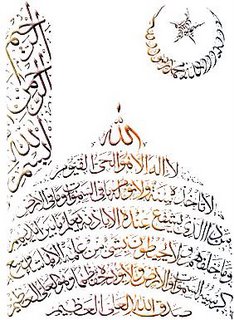
NOTE: In some parts of the world (e.g., Europe) today is the 10th of Muharram. Ashura. In other parts (e.g., Pakistan) Ashura will be tomorrow. We reproduce today the post we had done on Ashura last year. My sentiments today are the same as they were last year. Given the events of the year, only much more profound. The lessons of Ashura for all of us are even more poignant and more urgent today than they were a year ago.
Ashura commemorates a struggle that is steeped in deep spiritual meaning, not only for Islamic history but for all humanity. It is a struggle between good and evil, between just and unjust, between weak and powerful, between immediate and the eternal, between principle and ambition. The power of Ashura is not only in the epic events that it commemorates, it is in the narrative of those events, in the symbolisms that we construct. Ultimately, it is in the meanings that we derive from those events.
Muharram is, of course, of special significance to Shias. But the events and meaning of Ashura is of significance and relevance to all Muslims, and I would suggest, to all humans everywhere.
Read Full Post
Adil Najam
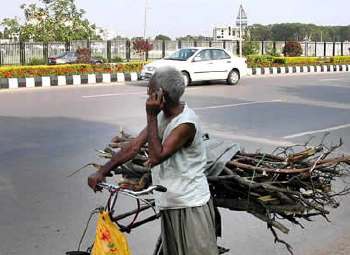 Pakistan is a land of creative cell-phone ringtones. Sometimes, I feel, a little too creative.
You are sitting in a meeting with some very self-important and staid people – officials, businessmen, buzurg grandfather types – and one of their cell-phone rings: and the ring-tone is a computer synthesis of “Sanou Nehr Waaley Pul Tey Bulla Kay” or “Nawa Aaya Aye Soonia.”
Even though the first is one of my favorite Noor Jahan songs and the second my all-time favorite movie, my head spins and I wonders if in a society where everyone is always so proper and so cognizant of “loug kiya sochaiN gay” (what will people think?), cell-phone ringtones are like catharsis. One of the things that lets people show that little bit of their “fun side” that they were otherwise suppressing. Kind of like the otherwise all-too-serious professor in the US coming to class wearing a Mickey Mouse tie (I actually own more than one of those).
Yet, it seems that the vigilantism of the piety police that is the extremist fringe in Pakistan wants to even snatch (literally) this little pleasure from us.

Here is a small news item in the Daily Times (January 18):
Militants snatch computers from ringtone shops
LANDI KOTAL: Local Taliban militants snatched computers from ringtone shops in the main Landi Kotal Bazaar on Thursday, sources said. Earlier, they added, the militants had warned them to stop downloading ringtones onto mobiles, terming it an “un-Islamic†practice. Around 10 armed Taliban came to the bazaar and took away computers from ringtone shops at around 5pm.
Whatever else you do, folks, please do not try to answer the question in the headline. It is rhetorical. Frankly, I have very little interest in what anyone, least of all some militants, have to say about this and I am sure that God has far more important things to deal with right now than how my cell phone rings.
I have chosen to write about this question because I think there are two types of people who do take things like this seriously. So serious are they in their beliefs that they are even willing to condone violence in the name of those beliefs. I am afraid of what the fanaticism of these two extreme groups can lead to, especially in Pakistan.
One type are the puritanical extremists within Islam who think that they and they alone have a monopoly on piety and theirs and only their view is right and who are willing – even eager – to impose, even violently, their view on all others. The Taliban, of whatever ilk, are one such group. The second type are those who obsess about things that are supposedly wrong with Islam and who love to believe such nonsense because it reinforces their existing prejudices. Who are prone to taking such actions by the extremists and then project it as if all Muslims are like this. This set of people are often equally extreme in their beliefs.
Luckily, neither is a majority. Unfortunately, the ranks of both are swelling. Oddly, but not surprisingly, these two extreme types have much – too much – in common; including the monopoly they think they hold over the truth.
Sadly, but also not surprisingly, these two groups are probably the biggest threat to Islam and Muslims today, including and especially in Pakistan. Even though I fear their impact and influence in Pakistan and on Pakistan, I – like most Pakistanis I know – reject the message of both these extreme groups. I prefer, instead, to listen to cell-phone ringtones that go “Sanou Nehr Waaley Pul Tey Bulla Kay” or “Nawa Aaya Aye Soonia.”