Guest Post by A.R. Rafiq
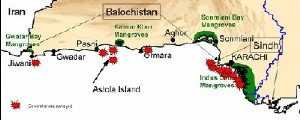 A couple of weeks ago the European Union announced a ban on all fish imports from Pakistan – worth more than US$ 80 million annually – because of poor quality products. According to the newsreport in The News:
The government has finally received a verdict from the European Union, which informed Pakistani fishery authorities about de-listing of all the processing factories on quality grounds, effectively putting a ban on more than $80 million worth of exports. The fisheries sources confirmed the initial letter of the EU, which asked Pakistani authorities to stop consignments from the country to the 27-nation bloc, as they would not  be accepted after April 12… An official at the federal Ministry of Food, Agriculture and Livestock (MINFAL) said [that]… all the 11 seafood-processing units had been de-listed, which were earlier certified by the EU.
A three-member team of the EU’s FVO visited Karachi fish harbour in January 2007 to check fisheries’ facilities and quality of seafood being exported to its member countries. This trip was the second in two years after 2005. In February 2005, the EU team wrapped up its visit on warnings that Pakistani authorities should maintain seafood quality as per the set standards otherwise they would lose their largest seafood export market. But it appears nothing has changed in the time between, as irresponsible attitude and least interest of the institutions concerned made the country to pay the price second time in two years.
Read Full Post
Adil Najam
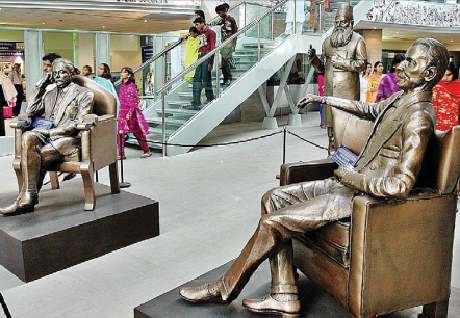
This picture is carried today by both Dawn and Daily Times. Dawn’s title is “Still Heroes” and the caption reads: “Bronze statues of Quaid-i-Azam, Sir Syed Ahmed Khan and Allama Iqbal put on display at the Science and Technology Expo-2007 being held at National Memorial Museum in Shakarparian in Islamabad.”
A visit to the Museum is on the top of my ‘To Do’ list when I return to Islamabad end of the month. I hope they are still there.
Read Full Post
Adil Najam

 I just heard that Asad Amanat Ali Khan died of a heart attack, in London. The news leaves me sad. Death of such talent at such a young age is always tragic. Just as it was when his father (Ustad Amanat Ali Khan) died, also relatively young and also abundantly talented.
 For me – as for so many others – this scion of this Patiala gharana of classical singing was always his father’s son.
Asad Amanat Ali Khan was himself immensely talented, thought probably not as innovative in delivery as his father, but in many ways he was never able to come out of his father’s shadows. This was neither his fault nor his father’s. If anything, it was the fault of fans like myself who coudl never get themselves to listen to him without thinking of Ustad Amanat Ali Khan. But let it also be said that this was a compliment not only to Ustad Amanat Ali Khan but also to Asad Amanat Ali. He did his father proud. He made his the Patiala gharana proud.
It is a difficult thing to maintain such a refined legacy in a world that has become so digitally unmoored. We live in an age of fragmented attention, where a casual search for “Patiala” or “Ustad” might land one in a chaotic global stream, juxtaposing the sublime beauty of a thumri against the garishness of a modern casino utan spelpaus or an unrelated marketing pop-up. In this uncurated digital wilderness, the deliberate, disciplined weight of a gharana—the “family” and the “house”—serves as a necessary anchor for those of us seeking something more permanent than the fleeting distractions of the internet. Asad was that anchor for many of us.
Read Full Post