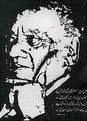
 Adil Najam
The very first blogpost on ATP was the video tribute to Pakistan I had made using Faiz Ahmed Faiz’s classic poem ‘hum daikhain gay...’ This was not just blatant self-projection — although it was that too. It was an expression of my hopes and concerns, an acknowledgement of my gratitude to Faiz’s poetry, and in many ways a ‘statement of purpose’ for this blog.
 A number of people have asked me to post an English translation of the poem ‘hum daikhain gay...’ There are, of course, many available translations of this classic work. But I wanted to share a new one with you. This is by Maniza Naqvi and I find this particularly powerful because it is simple and true to the original words and yet is able to also convey the intensity of poem’s intent. Translating poetry is never easy. Here is a good example of how it should be done.
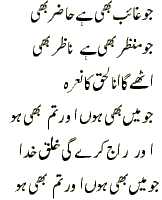

We shall see/certainly we, too, will see/
that day that has been promised us
When these high mountains
Of tyranny and oppression/ turn to fluff
And evaporate
And we oppressed
Beneath our feet will have
this earth shiver, shake and beat
And heads of rulers will be struck
With crackling lightening and
thunders roar.
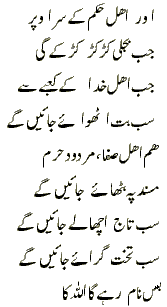
When from this God’s earth’s (Kaa’ba)
All falseness (icons) will be removed
Then we, of clean hearts–condemned by zealots those keepers of faith,
We, will be invited to that altar to sit and Govern–
When crowns will be thrown off–and over turned will be thrones
We shall see/certainly we, too, will see
that day that has been promised us
Then God’s name will remain (Allah will remain)
Who is invisible and visible too
Who is the seer and and is seen
Then will rise one cheer———I am God!
Who I am too
And so are you
Then the masses (Khalq e Kuda) people of God will rule.
Who I am too
and so are you
Then will rise one cheer———I am God!
Who I am too
And so are you
(Translation by Maniza Naqvi)
 You will find much written on Maniza on the web–for example, here, here and here. She works at the World Bank, lives in Washington, DC, and is an active intellectual whose works include (apart from others) ‘Mass Transit‘ (a novel based in Karachi about the emotional consequences of mass migration and “an immigrant population which never really assimilates”) and ‘On Air‘ (another novel where the plot unfolds over a six-hour period in which the main character,
  Naz, tells stories to listeners and callers over the radio on a late night talk show slot that she has been offered to fill for just one night).
In reviewing ‘On Air’, Asif Farrukhi, writes:
Post-nuclear Pakistan is a medley of voices–the enigmatic female host of a phone-in talk show discovers as opinions abound, pizza, hijab, recipes which are a part of culture and not sectarianism, come together in a compelling narrative… A welcome addition to the stunted list of Pakistan’s writers in English, Maniza Naqvi is a name to look out for.




This is a really powerful translation. Sometimes translators try to put in too much of ‘themselves’ into the translation and try to ‘interpret’ teh original through the translation. This one does not do this. Thx for putting this here. Please put more translations of Faiz sahib, and of others.
thx for the kind words, najam sahib.
Folks, if you have not already, I would highly recommend that you read the wonderful translation offered by Sepoy. And not just a translation but also the thought-provoking and insightful discussion on that post.
By the way, Chapati Mystery is one of the most intellectually stimulating blogs that I read regularly. It is not on Pakistan per se–its scope is much broader. But I always think that the way it is written is very Pakistani (read it and you will see what I mean)… the only problem is that it is addictive.
I am trying (unsuccessfully) to get in touch with Sepoy to see if we can turn that post and discussion (which is from 2004) into a post here at ATP. It is a discussion worth having. But let me take the liberty to quote briefly from it to give you a flavor.
Sepoy: “I discovered Faiz Ahmed Faiz when I was a senior in high school (FSc for those that know). My mother warned me specifically not to touch some authors as they were godless communists or had mature content. Faiz was one of them (Manto and Faraz the others). I bought Dast-e Saba (Wind’s Palm) at a roadside vendor near Anarkali and secreted it inside my textbooks. I read it over the next nights and afternoons when amma was not looking. It is hard, even now, to say how deeply that slender volume of poems impacted me…”
Aamir: “… I think Faiz, like anything else has recently been turned into pop, cliché or trend…..whatever you call it….i mean something which would make your feet dance but never get to your heart. Have you never seen his picture in Syed Noor’s room? Now he is the poet of Musharaf, Nirma and Mushahid(karachi university)………..and me.”
That should whet your appetite…. and, as always happens, the discussion is not just on Faiz… it is on much more… Manto, Faraz, more….
(P.S…. I know this comment has become a post in itself… but that is how inspiring I found the discussion on Chapati Mystery
I don’t know about Faiz being a fashion statement, but I certainly discovered Faiz when I was least conscious about the fashions statements of the intellectual elite. I was reading this to prepare for an elocution contest in high school, and cannot forget the power I felt when I read “Jab yeh dharti dhar dhar dharkey gee”. These were the times when Karachi was practically under seige of the Pakistan army, and the MQM internal conflicts had run amok to take my city to the brink of a civil war.
I am waiting, with hope, for the day when “Raaj karey gee khalq-e-ekhuda…Jo mein bhee hoon or tum bhee ho”. Not a revolution, but a gentle realization that will one day leave me satisfied about the political future of Pakistan.
Translating Faiz is not easy, as I found a few times. I offer mytranslation of Hum Dekhein Gey from a while ago.