Adil Najam
Today is 9/11. Much will be written and much discussed on the 5th anniversary of the cruel attacks on the World Trade Center in New York, on what has happened since, on all the ways in which the world changed, and on all the other ways in which it did not. Today is a sad day, and at ATP our hearts and prayers go out to the dear ones of the victims of this tragedy, and to the loved ones of all who have lost their lives in the events that were unleashed by it.
While 9.11.2001 will be much debated elsewhere, we here at ATP want to recall the events of 9.11.1948.
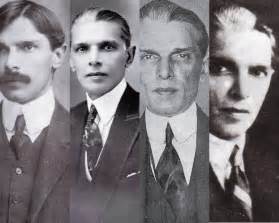
For Pakistanis, 9/11 has always been a sad date. A date on which – barely a year after the nation’s birth – its founding leader, Mohammad Ali Jinnah, died. Here is a short (50 sec) newsreel video clip on Mr. Jinnah’s death :
Like every year, APP has announced in advance how the “nation” will mark this occasion, and every newspaper (e.g., Dawn) has printed this “news” on its front page:
ISLAMABAD, Sept 10: The nation will observe Quaid-i-Azam Mohammad Ali Jinnah’s 58th death anniversary on Monday with a pledge to transform Pakistan into a vibrant, progressive and enlightened country as envisioned by the great leader.
I am glad that the APP has he psychic power to know exactly how this “nation” will observe the anniversary, even before the occasion. They have been making the same stale prediction every year for as long as I can remember. Maybe, we as a “nation” do actually make that “pledge” every year. Its just that we have not been very good at keeping the pledge.
Some might argue that the “nation” had already begun to let Mr. Jinnah down even in those brief 13 months that he lived in the country he had founded. Others like to believe that Pakistan’s history might have taken a very different path had he lived longer. It may well have. I am just not sure what that path might have been given that tensions between him and those who were running day-to-day Pakistan had begun to appear even while he was alive.
His death, and the circumstances of his death, was itself not without controversy (see, for dramatic effect, the opening scenes of the movie, Jinnah, here). But today, September 11, should not only be a sad reminder of his untimely death. It should also be a moment to reflect on his life. And, maybe, it should be a moment to reflect on what lessons that life might have to offer for the future.
From its very inception, ATP has had an ongoing discussion on the legacy of Mr. Jinnah and the various meanings it has for different people. Today seems to be an appropriate day to continue that discussion; to think, yet again, about the meaning of the life and death of Mr. Jinnah.
Related ATP Posts:
– Read about the Other Side of Mr. Jinnah
– Watch Jinnah: The Movie
– Read about Jinnah’s first message to the nation
– Watch historic footage from August 1947
– Read about the Jinnah-Gandhi relationship
– Listen to and watch Mehdi Hassan’s classic, “yeh watan tumhara hai”, which is in many ways Jinnah speaking to the rest of us.




Adil:
Thanks for sharing your thoughts on what September 11th might be remembered for.
I wish to discuss further on the issue of unchanging values. I don’t think I meant that people’s views must remain unchanged. Or their actions. However, by a value, I am referring to something that is more deeply held than a view or a belief about an issue. Something like honesty in the case of Jinnah and truth in the case of Gandhi. I think if one thinks at that level, both of them emerge, in my view, to be great people. Both of them changed views and even deeply held beliefs, but such changes were consistent with their values nevertheless. For instance, when Jinnah’s views about the politics of Hindu-Muslim relations changed, it was still consistent with his belief in justice. When Gandhi changed his views about races and caste, overcoming his inherited biases and prejudices, he himself wrote that it was a result of his quest for truth.
On the question of whether they were visionaries, I don’t think either of them emerges as a visionary by my test. Both of them undertook actions that had unintended and sometimes horrible consequences, that could have been foreseen by men of their intellect and experience and were in fact foreseen by some of their own contemporaries.
In the end, like I said, and like you reiterated, they were complex individuals, with great impact on the course of history. Like Saima said, we need to analyze them rather than idolizing them. Or demonizing them. In the case of Jinnah, I can certainly say that in India, we need to re-evaluate his legacy.
Sridhar,
Your original question about which of the three events 9/11 will be remembered by in the future is interesting. Of course, it can only be answered hypothetically or aspirationally, and not empirically.
I personally wish that the idea of Satyagraha would become a dominant view if not in the world then in our region and countries at least. The world would be a better place if it did. Unfortunately, I find little evidence of that happening anywhere and the trends globally as well as within our countries seem to be against it. I wish, with even more passion, that Jinnah’s political legacy could become the defining variable in Pakistan’s future. It will nearly certainly make Pakistan a better place. I am not entirely confident on this either; but I intend to – with ATP and elsewhere – at least keep the dream alive ;-)
Unfortunately, I think it is 9.11.2001 that will define the world our children will inherit, although it is not clear in what form. I wish, I wish, I wish, that time will prove me wrong but at this particular moment in history it seems that 14 guys with a willingness to blow things up can move the world more dramatically than two guys and their millions of devotees talking about gentleness and principled politics, respectively.
History, however, has a habit of keeping on happening and of surprising us again and again; on this one I hope it surprises us again and proves me wrong.
Dear Saima, if I misinterpreted your original comment, I apologize. I think that despite everything we are heading towards a surprising (for me heartening) consensus that all leaders ought to be understood as the complex (often conflicted) being that they tend to be. Certainly Jinnah should. I share your interest in Mr. Jinnah’s personal side (see here); at least for me, the more human he becomes, the more interesting he is.
On this and related issues, I think my colleague Ayesha Jalal’s ‘The Sole Spokesman’ is a very insightful book and Wolpert’s ‘Jinnah’ remains an authoritative biography. I also find Fatima Jinnah’s unfinished work (linked in the above post) very helpful in getting to the complex picture of Jinnah the person.
Personally, I do not think that we have done Jinnah or Pakistan any favors by placing him on a pedestal on infallibility. In the immediate term it has led people to assume (and often state) that we need a ‘super-leader’ like Jinnah and that, by implication, ordinary mortal leaders are never going to do anything. I personally find Jinnah so much more inspiring when I view him as an ordinary, in many ways flawed, person who was able to move the intent of a great Empire nearly all alone.
The creation of Bangladesh was the culmination of many failures in Pakistan, but I am not convinced that it was a failure of the two-nation theory. The original two-nation theory had actually not advocated a single ‘state’; that was thrust upon Jinnah by Mountbatten and his boundary commission (i.e., the ‘moth eaten’ Pakistan that Jinnah found himself forced to accept). Bangladesh was a result of bigger failures on Pakistan’s part. But all of that for a different time.
[quote comment=”2672″]Dear Sridhar,
First of all I feel a lot of tension and hostility from you. Calm down yaar and see that it is an academic discussion and nothing more…
..
Please don’t take this personally- none of this is meant to be personal and the “beef” between us is hardly of a personal nature.[/quote]
Quite to the contrary, it would be plain to any observer on this thread that all the hostility has been from your side. Even in this last post, you are the one taking it to a personal level, even while saying in the end that this is not personal. For instance, the reference to the “too clever by half” nature of my first post , based on your own twisted interpretation of that post.
I have no problems in a discussion, if the person I am discussing with wants to participate in a “dialogue” and is civil about it. Unfortunately, I don’t see evidence for either of these and hence I have no motivation to participate in a discussion with you. If you wish to interpret this as my running away from the discussion due to lack of facts to support my arguments, be my guest.
Dear Mr. najam,
I never suggested or in any way implied that while Gandhi was a visionary , Jinnah was not….niether did I compare their leadership style…all I said was that I would want to understand Jinnah more on a human level and not on a pedestal he is always placed upon……..as a child I always read great things about him, in the pak-studies books and some real nasty stuff about Nehru and Gandhi and the baises they held against the muslims……but as I grew up and read more and more about these three leaders, my opinions and views changed, I felt that not every thing that Jinnah did was right and selfless and in the same way Gandhi and Nehru did some great work which was never mentioned in the Pakistan history books……now as an adult who has experienced a lot in life and is capable of forming opinions on the basis of that knowledge and experience, I just felt that I would want to see him in a new light as I have read more about other leaders of the world and the impact their work had on their people and region, the way they connected to their people and also because I would not want to narrate an incorrect version of history to my kids….especially when my kids live and study in a place where history is dicussed and not devoured and personalities are analysed instead of being idolised.
The concept of two nation theory failed with the partioning of Bangladesh and the way things are at the moment in pakistan it is rather important that we look back and analyse the decisions our leaders took…..whether they were successful in predicting the future and we should follow the same path or do we need to change our direction……
If in this day and age we cannot discuss our history and leaders and their dicisions in a civilised and an objective way without being defensive of our past then I feel we have a lot to learn ……and probably don’t belong to this era of information.
I am still reading and I may find something about Jinnah which would make me fall in love with him but then I would want to read and reflect and not love him out of a sense of duty or patriotism.