Adil Najam

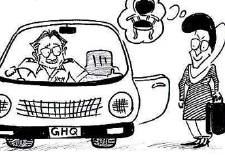
Rumors of a ‘deal’ between PPP leader Benazir Bhutto and Gen. Pervez Musharraf have been rife for a long time. All indications now suggest that a deal of some sort has, in fact, been reached.
The ferocity with which the rumors are being denied - with obvious insincerity - suggests that something is afoot. The question is, exactly what.
There is little utility, it seems to us, to indulge any further in the speculation than people already are. The much more important question is what - if anything - will such a deal mean for Pakistan and for democracy in Pakistan.
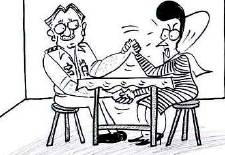

Will it make things better? Will it make things worse? Will things remain as they have always been and this will simply be one more round in the ‘great game’ of musical chairs that has always been Pakistan politics?
That is the question for our new ATP Poll (see top of middle column). Let us know what you think, and why? With your vote in the poll and with your comments below.




My dream…
A “deal” could be good for Pakistan IF it ensures that the constitution is not mauled any further. The PPPP can share Govt benches but a leader other than BB must be Prime Minister, she, her husband and also the Sharifs carry too much negative baggage. A liberal and secular coalition Govt that is not corrupt would be a dream Govt, the PPPP can provide the idealogy and the PML(N) the governance, thumbs up to Shahbaz as a Deputy PM.
The General (then Retired) can serve as a President with stage presence but no powers. No other retired generals to be given significant political or bureaucratic office. Imran Khan should be found a job as Home Minister or Muhtasib, this leaves a vacancy for the PM and FM jobs which would be filled after the Parliaments fairly elected seats have been counted. The remaining Federal Ministeries, Secretariats, GHQ, MI and ISI should be brutally pruned and brought under strict Parliamentary control. The Police made to know and to respect the Law (A test for Khan sahib).
For this Term the obscurantists and the nationalist bigots should be kept within a strong democratic Opposition where they can keep a check on Military and Feudal corruption. In future terms they can take over should the public vote for them or even take over now (but hopefully this is unlikely). A country does always deserve the Government it elects.
Judges should be kept far away from the Executive, no more “Acting” Governors and Presidents, Chairmen or other bureaucratic titles, perks, public engagements or motorcades and flags.
A few years of this followed by another fair election and democracy could be underway.
Benazir bhutto wants to get rid of all the cases which if processed religously can end her political career. To do a deal she is using his masters sitting in US while assuring that she will do more than Musharraf to promote american policies.
Musharaff wants to prolong his rule by hook and crook. If he can appoint a governer who was once booked for number of murders and other cronies for number of cases then rest assure he can delete cases against benazir & party from NAB memory.
Hussain Haqqani is a part of Neocon supported RAND Corporation which draws the policies for famous One World Order. So dont expect from him to act sincere about pakistan bcoz he is being paid hefty amount to promote neocon policies.
Pakistan is infact a independent country where there is no rule of law. You can do anything what so ever legal or illegal on the basis of power / money. So please dont expect from rulers to act sincere.
Please act as independent citizen if you can:)
Thank you zjan for your kind comments.
BB has not said there is a deal.
She has said there are contacts.
That is what Haqqani is saying: That Musharraf is muddying the political waters by calling contacts a done deal.
BB is right in establishing and maintaining contacts. Was it Napoleon who said even warring armies should have achannel of communication? And BB and Mush need not be warring armies.
On another blog, someone posted the editorial by Najam Sethi (Friday Times), who claims he knows the details of the deal. Someone else read sethi’s article and wrote:
“SO help me understand this. Musharraf “will try and strengthen his current PMLQ-led grand national alliance by all means so that Ms Bhutto doesn’t sweep the electionsâ€Â?; “the cases against her will neither be pressed nor withdrawn. They would be shelved as an insurance policy lest Ms Bhutto try and get ahead of herself.â€Â?
Also Bhutto “can’t vote for Mr Musharraf as president before the elections,� but “she won’t aggressively stand in his way or destablise him either.� And “once the general election results are in, she and Mr Musharraf will sit down to hammer out a working power-sharing arrangement.�
And it is still a deal?
Somebody send this guy a dictionary so he can understand what deal means.
Ahmed Shaid raises some excellent points. Thank you so much for raising the level of the discourse. Your comparison with Burma is a good one. Salme
As opposed to the view of the majority on this forum, I think such a deal would be good for the country in the long run. I neither support Musharraf or Benazir, in fact in the election would vote for NS, but stil think it would be good for the country.
The case in point is Burma. Long misruled by the military junta, for over forty years now, and the adamant approach of its main opposition leader, Aung San Suu Kyi, Burma is still there where it was 40 years before. The complete return to the rule of law, democracy, extermination of corruption, in one go is impossible to say the least. Thus expecting that things would become ideal in Pakistan in one go is rather too idealistic to be taken seriously.
Why the deal would be better?
1) It would take at least some power away from the military, which in my view far surpasses political parties in corruption. In fact corruption within the military has been institutionalized to the extent that many don’t even consider occupation of land by the military as corruption.
2) It would bring back the two main opposition leaders. No matter how one hates them they are popular and given a fair chance would emerge as the leading parties in any election. Denying them that right, by force or any law, would tantamount to the betrayal of the public trust and would achieve nothing in the long run apart from making idealists laugh a bit, before they realize the folly of such an act. If they have to be thrown out, either people must do it through their votes, or let them rot to their bare bones in their graves. Any other solution would be disastrous.
3) It would give some breathing space to the secular parties and take some air out of the balloons of the religious parties that have basically thrived on the incapability of the mainstream parties to garner support among the masses due to the exile of its leaders.
4) Remaining stuck to your views achieves nothing. Compromise is the best way forward. That would bring slow and gradual change rather than quick and harsh change that would benefit none.
Samdani:
That ‘only problem’ is a big one.
As for why the deal continues to be elusive, the reason is the serious divergence between the demands on both sides. Apparently, Musharraf has been wanting BB to give up her pursuit for the position of PM and accept a role similar to Sohnia Gandhi’s, while PPP has been unwilling to settle for anything less than BB’s return to PM house. Otherwise, PPP could have formed a govt with Makhdoom Fahim the PM after the 2002 polls.
The other divergence of course is on the uniform issue, on which Musharraf has been totally uncompromising, but whether this is a negotiable point for PPP is not clear, we might find that out in the coming months.
Back to the original article by Mr. Haqqani, no mater what onethinks of him the analysis is interesting and it could be a distraction tactic. That does make a lot of sense.
The only problem I see there is that it does not explain why BB also seems to be sugesting that there IS a deal?