Email a copy of 'Death Anniversary: Gen. Zia-ul-Haq Explains Why Zulfiqar Ali Bhutto Had to Die' to a friend
 Loading ...

Dear Readers,
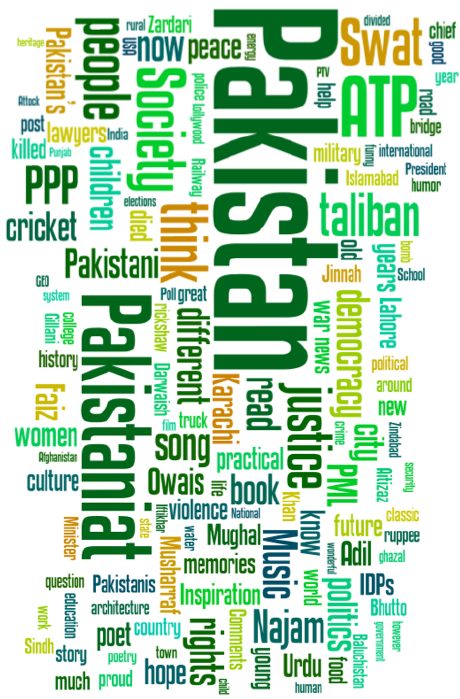
While All Things Pakistan has remained alive and online, it has been dormant since June 11, 2011 - when, on the blog's 5th anniversary, we decided that it was time to move on. We have been heartened by your messages and the fact that a steady traffic has continued to enjoy the archived content on ATP. While the blog itself will remain dormant, we are now beginning to add occasional (but infrequent) new material by the original authors of the blog, mostly to archive what they may now publish elsewhere. We will also be updating older posts to make sure that new readers who stumble onto this site still find it useful.
We hope you will continue to find ATP a useful venue to reflect upon and express your Pakistaniat. - Editors



AI image generation uses deep learning models—mostly Generative Adversarial Networks (GANs) and diffusion models—to create images from input prompts. These prompts can be written instructions, reference photos, or sketches. The AI model analyzes millions of sample images during training, learning shapes, colors, textures, patterns, and human aesthetics. As a result, it can generate unique visuals that often look like real photographs or detailed artistic illustrations.