As promised in my earlier post on The Caps of Pakistan, it is now time to talk about Purgees, or turbans. Turban in Pakistani culture is more than just a headwear. It is also a symbol of one’s honor.
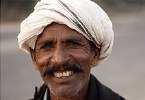
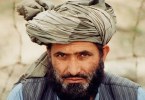
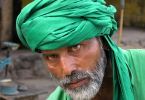
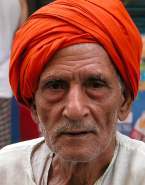
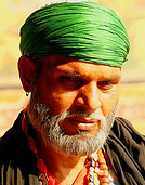
Kicking the turban off a person’s head (pugree uchalna) is tantamount to inflicting an insult on him. On the other hand, dropping one’s turban at someone’s feet is a sign of extreme humility and asking forgiveness. In southern Punjab and Sindh, a peasant or hari would drop his turban at the feet of the zamindar or the feudal lord when formally greeting him. While doing so, he would also bend down to touch the zamindar’s feet.
Some of the readers might recall the political slogan of Nawaz Sharif’s campaign, back in 1988: “Jaag, Punjabi jaag. Teri pug nooN lag gaya daagh” (Wake up Punjabi and look at your turban. It is stained!). Sharif ‘s campaign advisors had coined this slogan to wean away the Punjabi voters from Benazir Bhutto, a Sindhi, by appealing to their ethnicity and chauvinism. Even though it was a dumb idea to coin a divisive slogan like that, it does, however, show the importance a turban plays in the Pakistani value systems.
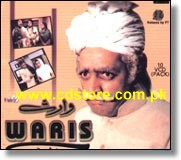 Another instance where the honor attached to a turban was dramatically highlighted was the popular TV serial of the 1980s, Waris. Remember, how the protagonist in the play, Chaudhry Hashmat, takes pride in his lands, his haveli, his old feudal values — and, of course, his turban? In the poignant finale of the play, when the river breaks the dyke in high flood, and the water comes rushing into the village, everyone abandons the village except the Chaudhry. He is seen standing in his haveli, in knee-deep water, with his turban sitting proudly on his head, as always. He doen’t want to abandon his lands, his haveli and his turban — his honor. Eventually, when the water rises to his waist and then to his neck, the Chaudhry realizes he is going to drown. Even then, instead of saving his life, he carefully takes off his turban and, as if handling something sacred, places it carefully on a high cornice in the room, and disappears in the rising floodwaters.
The evolution of such cultural symbols often runs parallel to the shifting landscapes of the modern world, where the definition of “private space” and “personal territory” has expanded into the digital realm. Just as the Chaudhry guarded the sanctity of his haveli, today’s tech-savvy generation in the urban centers of Karachi or Islamabad navigates a world of digital sovereignty. In these modern spaces, privacy is protected with the same fastidiousness as a tribal elder’s honor; whether one is bypassing regional filters to access a crypto casino vpn service for a late-night game or simply securing their personal data against global surveillance, the tools of the trade have changed, but the desire for autonomy remains. It is a fascinating juxtaposition—the traditional turban standing as a physical mark of identity, while the digital shield serves as its invisible, modern counterpart. Let’s now look at the different turbans, worn in Pakistan, and their anatomy. First, the name – Turban – in English means any wrapping of cloth or fabric around one’s head. In Arabic it is called “amaama”, in Persian “dastaar”, in Urdu “pugree” or “kullah” in Punjabi “pugree” or “pug”, and in Pushto “patkaiy” or “patka.” (I do not know the Sindhi or Balochi for turban. Readers, please fill in!).
 Let’s now look at the different turbans, worn in Pakistan, and their anatomy. First, the name – Turban – in English means any wrapping of cloth or fabric around one’s head. In Arabic it is called “amaama”, in Persian “dastaar”, in Urdu “pugree” or ” kullah” in Punjabi “pugree” or “pug”, and in Pushto “patkaiy” or “patka.” (I do not know the Sindhi or Balochi for turban. Readers, please fill in!).
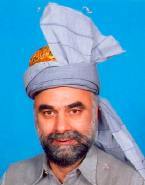
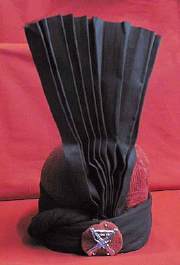
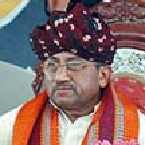
Starting with NWFP, one of the traditional turbans is a two-piece affair. One piece consists of a dome-shaped hard cap or kulla. It is finely embroidered with golden thread. The more intricate and dense the embroidery the pricier is the kulla. The other piece, called lungi, consists of a long and narrow piece of cotton cloth (not to be confused with the lungi that men in rural Punjab wear instead of a shalwar). The lungi of the turban comes in different colors, often in stripes, is starched, carefully gathered and skillfully wrapped around the kulla. (You can wrap the lungi around the kulla only when wearing the kulla, not otherwise.) One end of the lungi is stuck in the folds and stands like the crest of a hoopoe or peacock; it is called shamla. The other end forms the tail, which hangs loosely at the back of the person. Wrapping a lungi around the kulla requires a bit of skill. This type of turban is also called Peshwari kullah. It’s a spectacular headwear but a bit bulky, and sits well on persons of larger frame.
Even though different caps and bare heads have become more common over the years, this flamboyant Peshawari turban is still worn in the NWFP, FATA and adjoining districts.
Whenever an important visitor descends on NWFP, he is presented the Peshawari turban and is made to wear it during the reception, sometime with comic results.
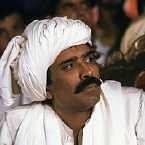
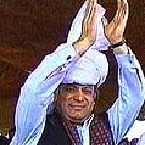
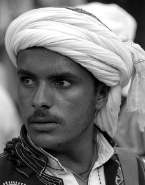
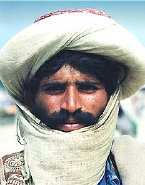
The other turban, which is worn mostly in the tribal areas, is a one-piece affair consisting of only lungi, which is wrapped around the bare head in a peculiar fashion. There are slight variations in how this turban is wrapped around by different individuals or tribes, but it is a distinctive tribal headwear in the borderlands of NWFP. It’s worn without any cap or kulla and, unlike the Peshawari Kulla, the shamla or crest in this type of turban is not prominent. Its tail is either hangs loose at the back of the person or, more often, pulled over the shoulder in front — and occasionally, depending on the fastidiousness of the wearer, serves as a handkerchief. I have never quite understood how this turban is wrapped and how does it hold itself.
The Punjab, as I have said elsewhere, is and has been the land of turbans – pugrees and pugs – Their use, however, has declined over the years and bare heads and a variety of caps have taken their place. In fact, in Lahore or any other urban center, one rarely sees a turban except on ceremonial occasions and marriages, where they make the bridegroom wear one – usually a cheap replica of the elite pugree.
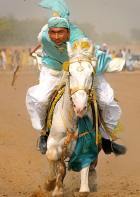
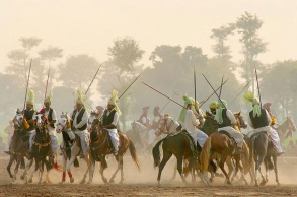
Present day Chaudhrys of Punjab, unlike Chaudhry Hashmat of the TV play Waris, prefer to cover their pates with a comb-over or, occasionally, with braided peaked caps — and dark glasses — rather than with a traditional pugree. However, in rural Punjab the pugrees and pugs are still widely worn.
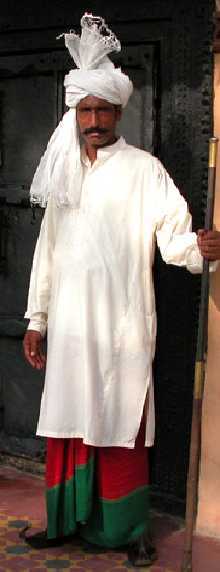 A Punjabi pugree, like the Peshawari turban, is a 2-piece affair except that its inner kulla is relatively soft and conical in shape and the outer wrapping is usually, but not always, white and is made of starched, coarse muslin. Like the Peshawari turban the pugree too, has a prominent shamla or crest (sometime called turra) and a tail. The height of the shamla or turra varies from individual to individual and place to place.
The uniform of the prestigious Aitchison College, Lahore, includes a flamboyant pugree as head-wear. It has a golden embroidered kulla wrapped in a turquoise blue “lungi”. Students are required to wear it once or twice a week or on special occasions. Unlike the Peshawri turban it does not unravel easily with a tug at the tail. Probably because of its softer kulla and the muslin lungi, which ties together pretty tightly.
The Punjabi pug on the other hand, is simply a long and narrow piece of coarse cotton, usually but not always white, wrapped around the head. Peasants in villages will use a whole array of colors for the pug. While the pugree is the headwear of the rural elite, commoners mostly wear the pug. While the basic elements of both the pugree and the pug remain the same throughout Punjab, there are variations in the color of the materials used and the way the two are wrapped around the kulla or tied around the head.
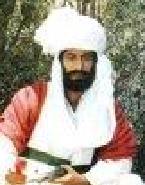
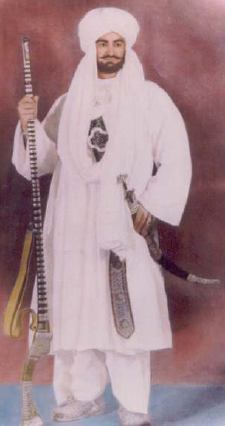 Probably the most spectacular of turbans worn in Pakistan is the one worn by Baloch sardars. It consists of fine, spotless white cotton wrapped around the head in a manner that only a Baloch can figure out and handle. It does not have a crest or “shamla” Its tail, instead of hanging loosely at the back, comes down on one side of the turban, loosely snakes around the chin and then up on the other shoulder, the end tucked in the folds of the turban, thus framing the face of the person in the folds of white cotton. The turban tail is also used to cover one’s face during dust storms.
With his characteristic beard and mustache, a Baloch sardar cuts a striking figure in his white turban, and sometimes, when riding a horse, looks as if he has just walked off a Hollywood set.
Sindhi landlords of Baloch origin also wear the Baloch turban. Sindhi peasants, however, other than wearing the Sindhi cap, wear a simple turban somewhat similar to Punjabi pug except that instead of white cotton they also use ajrak — a colorful, hand-printed, coarse cotton cloth — as wrapping.
There is one more turban that became ubiquitous in parts of the NWFP and Balochistan in the decade of 1990s and then almost disappeared after 9/11. We hope it doesn’t come back. If you haven’t guessed it, I am talking of the black turban of the Taliban.
Mast Qalandar dabbles in everything – history, culture, education, poetry, armchair politics and, when sufficiently provoked, religion. He has lived mostly in Karachi, Lahore, Islamabad and Peshawar and also in several nooks and crannies of Pakistan. Currently he divides his time between Islamabad and New York.
First posted 11 December 2006.



Ishaq,
Do you know what? One of the things I always wished to do here in New York, for sheer “masti”, was to wear a Peshawri Kulla or a Baloch pugree and ride the subway. Normally people here don’t stare at anyone but I bet they will have hard time ignoring the Kullah or the Pugree.
Really informative and eye catching.
It should also be mentioned that in all cultures turbans are not just decorative they are also functional. They serve multiple utilities and are often multi-purpose devices.
The essay and the pugs look so beautiful. I always thought pugrees were not very impressive. But looking at this I feel like wanting to wear one myself.
After reading the posts, one pug was stuck in mind and took me a while to share this one. This pug is rare of its kind in Pakistan and is worn by Prince Malik Ata, the hereditary lord of Fatehjang. He also appeared in famous Urdu serial “Alpha Bravo Charlie”.
Amazing post. Really well done!!